










Introduction
The field of robotics is undergoing a revolution, with a growing emphasis on adaptability, dexterity, and precision. Traditional robotic grippers, while effective for certain applications, have limitations in terms of flexibility, scalability, and the ability to handle a wide variety of objects with varying shapes, sizes, and textures. To address these shortcomings, the development of modular “crawling” grippers has emerged as a breakthrough innovation, enabling robots to achieve far greater levels of dexterity and functional versatility in real-world applications.
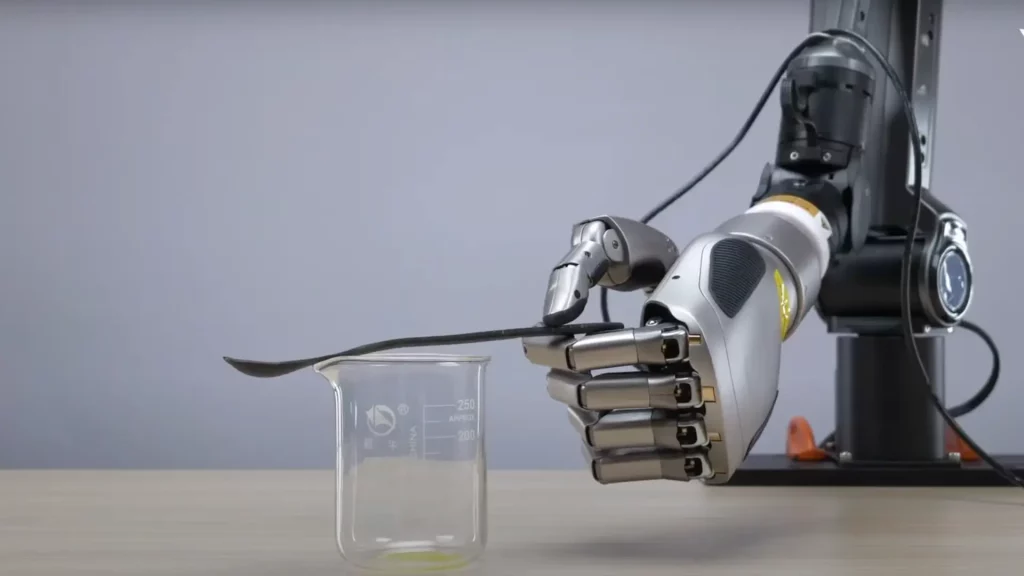
In recent years, a team of engineers and roboticists has developed a cutting-edge modular “crawling” gripper, which enhances robotic grasping capabilities by leveraging a modular design that can adapt to a variety of tasks. This gripper not only provides greater flexibility in how objects are handled but also revolutionizes the interaction between robots and the environment by introducing new forms of mobility and precision in gripping.
This article delves into the technical details, benefits, applications, and future implications of the modular crawling gripper—a key advancement that is poised to redefine how robots interact with objects and perform tasks across multiple industries.
1. Understanding the “Crawling” Gripper Concept
1.1 The Evolution of Robotic Grippers
Robotic grippers have come a long way since the inception of industrial robotics in the 1960s. Early grippers were essentially mechanical jaws or pincers designed to pick up and manipulate large, simple objects. Over time, the need for greater dexterity and adaptability led to the development of more complex mechanisms, such as:
- Two-fingered parallel grippers
- Vacuum-based grippers
- Soft actuators and flexible fingers
While these systems allowed for a greater range of tasks, they still faced limitations in their ability to adapt to objects of different shapes, softness, or delicate structures.
1.2 The Advent of Modular “Crawling” Grippers
The modular “crawling” gripper is a new class of gripper system that combines multiple components, each of which can work independently or together to achieve a variety of movement patterns and levels of force. Unlike traditional grippers, the “crawling” mechanism incorporates modularity, which means the gripper’s components can be adjusted, replaced, or reconfigured according to the task at hand.
The term “crawling” refers to the gripper’s ability to move in a manner that mimics crawling animals or insects. Each segment of the gripper can move independently, allowing it to adapt to different objects and manipulate them with high precision. This feature is particularly useful in scenarios where conventional grippers are limited in their ability to handle complex shapes or delicate materials.
2. Key Features of the Modular “Crawling” Gripper
2.1 Modularity for Enhanced Flexibility
One of the defining features of the modular crawling gripper is its modular design. The gripper is made up of multiple interconnected units, each of which performs a specific function. These modular components can be easily swapped out or rearranged, offering a level of customization previously unavailable in traditional robotic systems. This modularity provides several benefits:
- Scalability: The gripper can be scaled up or down depending on the size and complexity of the task.
- Adaptability: Each module can be reconfigured for different types of movements or gripping techniques.
- Maintenance: In the event of failure, individual modules can be replaced, reducing the need for full system replacements.
2.2 Soft Actuators for Delicate Handling
A key aspect of the crawling gripper’s design is the inclusion of soft actuators. These actuators use materials such as silicone or elastomers, which can deform and adapt to the shape of the object being grasped. This makes the gripper particularly well-suited for handling fragile, delicate, or irregularly shaped objects without causing damage.
Soft actuators enable the gripper to perform a wide range of motions, from light, delicate pinching to full, firm gripping. The flexibility provided by these materials is essential for industries such as agriculture, healthcare, and electronics, where precision is paramount.
2.3 Crawling Movement for Precision Gripping
The “crawling” movement mechanism is based on principles inspired by nature, where animals like octopuses and certain species of insects use multi-limb coordination to move effectively. Similarly, the modular crawling gripper operates by coordinating the movement of its individual segments. This allows the gripper to:
- Traverse uneven surfaces
- Reach tight spaces
- Apply variable force on different parts of an object
Such fluid, adaptive motion ensures that the gripper can maneuver with a high degree of precision, making it invaluable for applications where the gripper must manipulate objects in complex, confined environments.
3. Technical Considerations Behind the Development
3.1 Advanced Sensors for Object Recognition
The modular crawling gripper is often paired with advanced vision systems and force sensors that allow it to assess and adjust its grasp based on the object’s properties. These sensors provide critical data such as:
- Object shape and size
- Surface texture
- Weight distribution
- Material stiffness
With real-time feedback, the gripper can adapt its movements to accommodate different objects, optimizing for both safety and efficiency.
3.2 Control Systems and Algorithms
To coordinate the movement of the modular components, sophisticated control algorithms are employed. These algorithms are often based on machine learning and robotic planning techniques, enabling the gripper to autonomously adapt to varying tasks and environments. These algorithms allow the gripper to:
- Predict the optimal movement path for each module
- Adjust the force distribution based on feedback
- Integrate seamlessly with robotic arms or autonomous vehicles
The combination of sensors, algorithms, and soft actuators results in a highly dynamic system capable of performing complex operations with minimal human intervention.
4. Applications of the Modular “Crawling” Gripper
4.1 Industrial Manufacturing and Automation
The modular crawling gripper is poised to transform industries by offering a more versatile tool for industrial automation. In manufacturing environments, robots equipped with crawling grippers can:
- Pick and place delicate or irregularly shaped components
- Perform quality control and inspection tasks with high precision
- Handle materials that are difficult for traditional grippers, such as flexible electronics or fabric
These capabilities enable higher throughput, lower error rates, and the reduction of damage during handling.
4.2 Agriculture: Precision Harvesting
In the agriculture industry, robots with modular crawling grippers are being developed for precision harvesting. These robots can gently pick fruits or vegetables without bruising or damaging the product. Their ability to navigate complex plant structures and work in unpredictable outdoor environments makes them a game-changer in large-scale farming operations.
Furthermore, the modular nature of the gripper allows it to be reconfigured for different crops, making it highly adaptable to various types of harvesting tasks.
4.3 Healthcare: Surgical and Rehabilitation Applications
In healthcare, the gripper’s soft actuators and precise movement make it an ideal candidate for applications in surgery and patient rehabilitation. For instance:
- Robotic surgery: The gripper can be integrated into surgical robots to handle delicate tissues or instruments with extreme care.
- Prosthetics and rehabilitation: The gripper can be used to assist patients in rehabilitation exercises by gently guiding their movements or providing assistive force.
The adaptability and flexibility of the modular crawling gripper make it particularly useful in settings that require high levels of precision and safety.
4.4 Logistics and Warehousing
In logistics, the ability to grasp and move various types of items, ranging from boxes to fragile goods, is crucial. A modular crawling gripper can:
- Retrieve packages from cluttered environments with ease
- Navigate through tight warehouse spaces to handle inventory
- Use its adaptability to automate sorting tasks
With the integration of AI-powered vision systems, the gripper can even perform complex operations such as item recognition, sorting, and inventory management autonomously.
5. Advantages Over Traditional Robotic Grippers
5.1 Increased Flexibility and Dexterity
Unlike traditional grippers that are limited to simple on/off actuation, modular crawling grippers can:
- Grip in multiple orientations
- Move objects without causing damage
- Adjust to objects of varying shapes and materials
This flexibility allows robots to handle a far wider range of tasks, making them suitable for more industries and applications.
5.2 Reduced Maintenance and Downtime
With modular design, individual components can be easily replaced or upgraded, ensuring minimal downtime. This is a significant improvement over traditional grippers, which may require the entire system to be replaced in case of failure.
5.3 Cost-Effectiveness
The modularity of the system can also make it more cost-effective in the long term. Companies can purchase a set of basic modules and reconfigure them for different tasks, reducing the need for specialized equipment for each application.
6. Challenges and Future Directions
6.1 Complexity in Control Systems
One of the key challenges in the development of modular crawling grippers lies in coordinating the movement of the modular components. This requires highly sophisticated control systems and software that can manage the real-time interactions between sensors, actuators, and environment dynamics.
6.2 Materials and Durability
While soft actuators offer tremendous benefits, they can also present challenges in terms of durability and material fatigue. Ongoing research is focused on improving the longevity and robustness of the materials used in the gripper components.
6.3 Integration with Other Robotic Systems
For full commercialization, the modular crawling gripper must be seamlessly integrated into existing robotic platforms. Ensuring compatibility across different robotic arms, sensors, and software platforms will be essential for widespread adoption.
Conclusion
The modular crawling gripper represents a significant leap forward in robotic design, combining flexibility, precision, and adaptability in ways that were previously impossible with traditional grippers. By enabling robots to handle a wider range of tasks and interact with their environment in more dynamic ways, this technology is set to have a profound impact on industries ranging from manufacturing to healthcare to agriculture.
As advancements continue in materials science, AI, and control algorithms, the potential applications of modular crawling grippers will only expand, furthering the vision of versatile, autonomous robots that can operate seamlessly in diverse, real-world environments. The future of robotics has never been more promising, and the modular crawling gripper is at the forefront of this new era.