









Introduction
The Ukrainian conflict has become an unintentional yet significant proving ground for the integration of robotics in modern warfare. Beyond conventional arms and human-led maneuvers, the battlefield is witnessing the operational deployment of robotic systems in combined tactical formations, often described as “robotic swarms” or combined robotics tactics. These deployments illustrate how unmanned ground vehicles (UGVs), aerial drones, and semi-autonomous robotic platforms are evolving from experimental prototypes to strategically relevant combat assets.
The adoption of robotics in Ukraine reflects a convergence of technological maturity, battlefield necessity, and tactical innovation. Forces are integrating multi-platform robotics, combining reconnaissance, strike, logistics, and electronic warfare capabilities, thereby reshaping traditional operational doctrines. The use of these systems demonstrates a shift toward distributed, coordinated, and networked combat operations, where humans and robots operate in hybrid formations to enhance situational awareness, operational speed, and precision.
This article provides a professional, in-depth analysis of the emergence and impact of combined robotics tactics on the Ukrainian battlefield. It examines the types of robotic systems in use, tactical doctrines, operational outcomes, technological enablers, and broader implications for military strategy, defense industries, and international security. The discussion highlights how real-world combat operations are accelerating the maturation of autonomous and semi-autonomous warfare systems.
1. The Evolution of Robotic Warfare
1.1 From Concept to Battlefield Reality
Robotic systems have long been part of military experimentation, from explosive ordnance disposal (EOD) robots to unmanned aerial reconnaissance. However, these platforms were largely support tools rather than integrated combat assets. The Ukrainian battlefield represents a paradigm shift:
- Robotics are integrated into tactical formations rather than being isolated assets
- Semi-autonomous systems are used for reconnaissance, strike, and supply chain disruption
- Coordination between human operators and robotic platforms enables hybrid operational concepts
This evolution reflects the maturation of robotics technology, including AI-enabled autonomy, high-fidelity sensors, and secure communications.
1.2 Defining Combined Robotics Tactics
Combined robotics tactics refer to the orchestrated deployment of multiple robotic platforms—ground and aerial—under a single operational framework. Key characteristics include:
- Synergistic capabilities: Different robots perform complementary roles, such as reconnaissance, suppression, or payload delivery
- Distributed operations: Robotic units operate semi-independently but communicate for coordinated action
- Human oversight: Operators manage strategic objectives while robots execute tactical maneuvers autonomously
This approach enhances battlefield flexibility, reduces human exposure to risk, and accelerates operational tempo.
2. Robotic Platforms in the Ukrainian Conflict
2.1 Unmanned Ground Vehicles (UGVs)
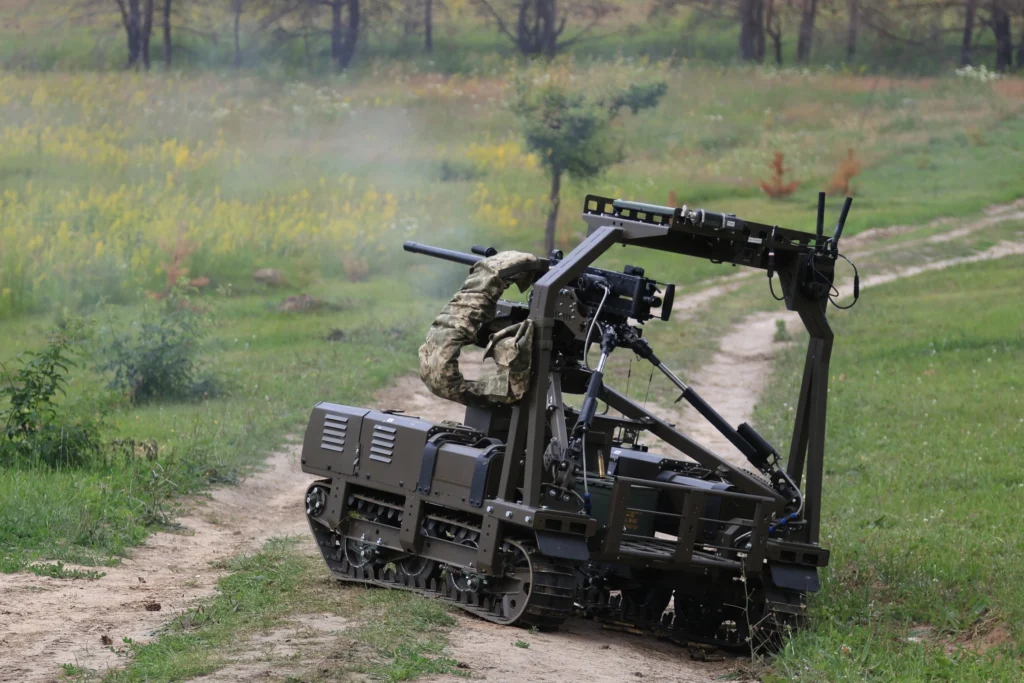
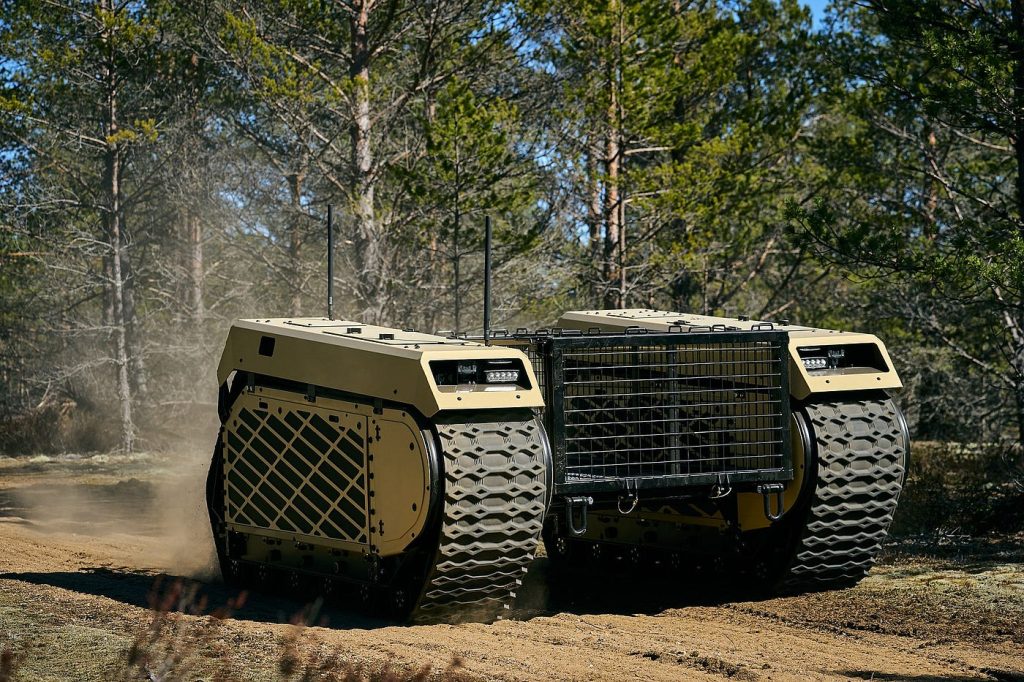
UGVs are increasingly deployed for direct and indirect tactical operations:
- Reconnaissance and scouting: Small, agile UGVs equipped with cameras, LIDAR, and thermal imaging provide real-time intelligence
- Combat and strike roles: Armed UGVs can engage light fortifications or provide suppressive fire
- Logistics and resupply: Larger UGVs transport ammunition, medical supplies, and equipment through contested zones
These systems often operate in autonomous or semi-autonomous modes, integrating obstacle avoidance, path planning, and target recognition.
2.2 Aerial Robotics: Drones and UAV Swarms
Aerial drones have become ubiquitous for surveillance, targeting, and precision strike:
- Reconnaissance drones provide live situational awareness to both frontline units and command centers
- Strike drones are capable of delivering munitions with precision, often autonomously
- Swarm tactics involve coordinated drone formations that overwhelm defenses or execute multi-angle strikes
These aerial platforms extend the operational reach of combined robotics, complementing UGVs on the ground.
2.3 Hybrid Systems and Integration
The most effective tactical concepts involve integrated ground–air robotics, where:
- UGVs maneuver into tactical positions while drones provide overwatch
- Autonomous targeting data from drones is transmitted to robotic ground units
- AI-driven coordination enables rapid adaptation to changing battlefield conditions
This integration demonstrates a network-centric warfare model that leverages robotic intelligence alongside human command.
3. Tactical Doctrines and Operational Approaches
3.1 Swarm and Distributed Operations
Robotic swarms enable distributed attacks that are difficult for adversaries to counter:
- Redundancy: Multiple units ensure mission continuity even if some are lost
- Saturation attacks: Simultaneous multi-directional operations create pressure points in enemy defenses
- Dynamic task allocation: AI algorithms redistribute tasks among available units in real time
These tactics reduce the predictability of robotic actions and maximize battlefield effectiveness.
3.2 Force Multiplication and Human–Robot Collaboration
Combined robotics tactics serve as force multipliers:
- They allow fewer human soldiers to achieve objectives traditionally requiring larger units
- Robots perform high-risk tasks such as breaching, surveillance under fire, and ammunition transport
- Human operators focus on decision-making and strategic coordination rather than direct exposure
The human–robot hybrid approach ensures operational efficiency while minimizing casualties.
3.3 Reconnaissance and Situational Awareness
Real-time data collection and processing are central to effective combined robotics tactics:
- Drones relay live video feeds to command centers
- Ground robots map terrain, detect obstacles, and identify enemy positions
- AI systems process sensor data to identify patterns, predict threats, and propose maneuver strategies
This capability shortens the decision-making loop and increases battlefield responsiveness.
4. Technological Enablers
4.1 AI and Autonomy
Artificial intelligence powers the adaptive behaviors of robotic units:
- Path planning and obstacle avoidance
- Target recognition and prioritization
- Coordinated maneuvers among multiple units
Machine learning models enable robots to learn from past engagements, enhancing future performance.
4.2 Communication Networks
Secure, high-bandwidth communication is critical:
- Enables real-time coordination between UGVs, drones, and human operators
- Supports distributed decision-making and swarm management
- Mitigates the risk of signal jamming or interception
The Ukrainian deployment demonstrates robust network architectures designed for contested environments.
4.3 Sensor Fusion and Precision Targeting
Robotic systems combine multiple sensor modalities:
- LIDAR, radar, infrared, and visual cameras for terrain and obstacle mapping
- Acoustic and electronic sensors for enemy detection
- Integration of data streams for AI-driven analysis and action
Sensor fusion ensures accurate decision-making and reduces operational errors.
5. Operational Impact on the Battlefield
5.1 Force Efficiency and Risk Reduction
Robotics integration allows forces to:
- Execute complex maneuvers with fewer personnel
- Minimize exposure to high-risk operations
- Extend operational reach in contested or hazardous environments
This capability changes the calculus of modern engagements, offering both tactical and strategic advantages.
5.2 Psychological and Strategic Effects
The use of robotic swarms has broader implications:
- Creates uncertainty and stress for adversary forces
- Enables continuous surveillance and rapid strikes without fatigue
- Signals technological sophistication, influencing geopolitical perceptions
Robotics becomes both a tactical tool and a strategic deterrent.
5.3 Lessons Learned
The Ukrainian experience demonstrates key lessons for future conflicts:
- Integrated robotics require rigorous training, coordination, and maintenance
- AI-enabled autonomous systems must be tested under realistic conditions
- Human oversight remains critical for complex ethical and strategic decisions
6. Challenges and Limitations
6.1 Technical Constraints
Despite successes, robotics deployment faces challenges:
- Limited endurance for UGVs and drones
- Vulnerability to electronic warfare and signal disruption
- Difficulty operating in highly dynamic or densely obstructed environments
Continued research and iteration are essential to improve reliability.
6.2 Logistics and Maintenance
Robotics operations require extensive support:
- Spare parts, battery supply, and repair infrastructure
- Skilled operators and technicians for troubleshooting
- Integration with traditional supply chains
6.3 Ethical and Legal Considerations
The battlefield use of autonomous systems raises complex issues:
- Accountability for actions taken by AI systems
- Compliance with international humanitarian law
- Risk of civilian harm or unintended escalation
These considerations will influence future deployment policies.
7. Implications for Military Strategy and Defense Industry
7.1 Shift Toward Networked Warfare
The success of combined robotics tactics highlights the networked warfare paradigm:
- Multiple platforms coordinated in real time
- Decision-making distributed across human and machine agents
- Rapid adaptation to fluid battlefield conditions
This paradigm will likely reshape military doctrines globally.
7.2 Accelerated Defense Innovation
The conflict demonstrates that real-world operational feedback accelerates innovation:
- Defense industries are rapidly iterating designs based on battlefield performance
- AI and robotics technologies are maturing faster than in traditional test ranges
- Collaborative innovation between governments, militaries, and private sector is increasing
7.3 Future Force Composition
Robotic integration will influence future force structures:
- Smaller, more agile human units supported by robotic assets
- Increased reliance on AI-enabled reconnaissance and strike capabilities
- Emphasis on interoperability, modularity, and scalability
This trend signals a redefinition of conventional force balance.
8. Strategic Lessons for Global Militaries
8.1 Investment in Robotics and AI
Global militaries are observing the Ukrainian deployment as a case study:
- Emphasis on dual-use technologies for civilian and military applications
- Need for investment in secure communications and AI integration
- Prioritization of modular, interoperable robotic systems
8.2 Training and Doctrine Development
Operational effectiveness depends on:
- Human operators trained in hybrid human–robot operations
- Doctrines that incorporate autonomous and semi-autonomous units
- Ethical frameworks for decision-making in autonomous engagements
8.3 Implications for International Security
The Ukrainian battlefield illustrates broader geopolitical consequences:
- Robotics and AI may shift the balance of power in asymmetric conflicts
- Rapid adoption could trigger an arms-race dynamic
- Regulation, international norms, and treaties may need to evolve
Conclusion
The Ukrainian conflict provides a compelling demonstration of combined robotics tactics, illustrating how unmanned ground vehicles, drones, and AI-enabled systems are integrated into modern combat operations. These deployments showcase the potential of robotics to enhance operational efficiency, reduce human risk, and create new tactical and strategic options.
The experience in Ukraine also underscores the complex interplay of technology, doctrine, and ethics in modern warfare. While robotic systems offer clear advantages, their successful deployment depends on secure communications, robust AI, logistical support, human oversight, and compliance with international norms.
Looking forward, the lessons from Ukraine will shape future military innovation, force composition, and strategic planning worldwide. Combined robotics tactics, once an experimental concept, are now a proven operational reality—signaling a new era of hybrid warfare where humans and intelligent machines operate side by side to redefine battlefield effectiveness.