









Introduction
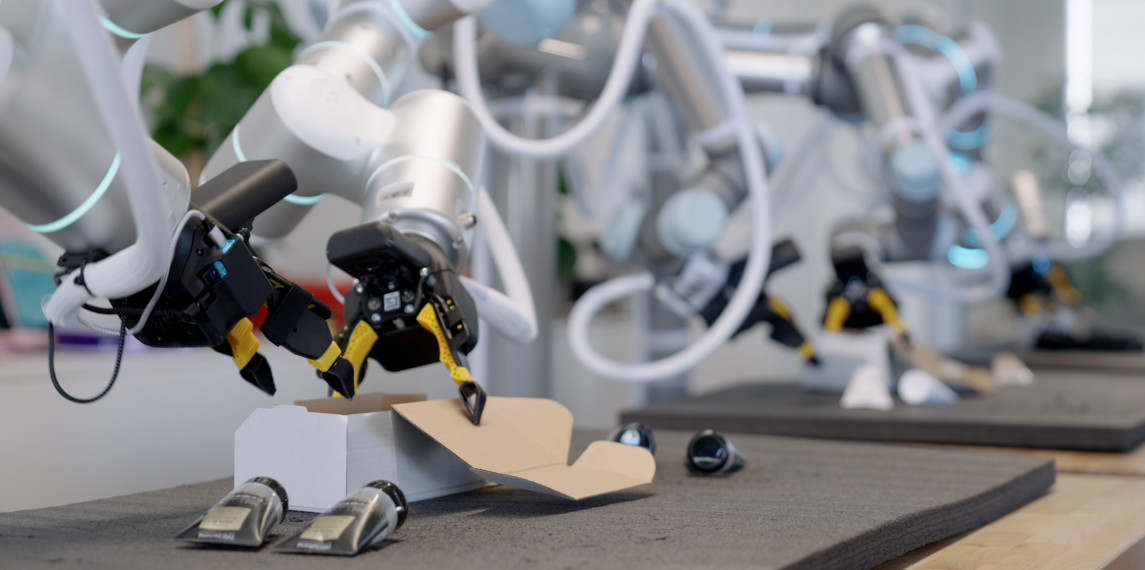
The robotics field is undergoing a fundamental transformation. Historically, robots were designed—and programmed—to perform narrow, single tasks within constrained environments: welding automotive parts, moving pallets in warehouses, or vacuuming floors. These task‑specific robots excelled at repetition and precision but lacked adaptability when faced with new tasks or changing surroundings.
Today, however, a powerful shift is underway. Artificial intelligence (AI)—particularly general models and their integration into robotic systems—is enabling robots to transcend these limitations and transition toward cross‑domain autonomy and broad capability execution. Instead of rigidly following preprogrammed instructions, robots are beginning to reason, generalize, and adapt in ways previously considered the realm of science fiction.
This article provides a detailed, professional, and richly contextualized analysis of how AI and general models are transforming robotics. We will explore the technical foundations, architectural paradigms, key research developments, practical use cases, and the challenges and ethical considerations inherent to this transition. By the end, you’ll understand why AI‑driven general models are the core driving force propelling robotics into a new era of capability and autonomy.
1. From Single‑Task Robots to Autonomous, Cross‑Domain Agents
1.1 Traditional Robotics: Strengths and Limitations
Traditionally, robots were engineered for specific, well‑defined tasks in structured settings. These robots relied on explicit programming and modular control architectures tailored to specific sensors and actuators. While this approach enabled high precision and reliability within narrow domains, it did not scale well to complex or variable real‑world conditions.
Key limitations of traditional approaches included:
- Inability to generalize beyond trained tasks
- Heavy dependence on hand‑crafted rules
- Limited perception and reasoning capacity
- Rigid control architectures that struggle with variability
To overcome these issues, robotics needed a paradigm shift—one that could allow robots to learn from broad experience, infer new skills, and handle diverse tasks without bespoke programming for each one.
2. The Rise of AI and General Models in Robotics
2.1 What Are General Models?
General models—often called foundation models in AI literature—are large, pre‑trained machine learning models that capture broad knowledge across modalities, domains, and contexts. In natural language processing, models like GPT‑4 are trained on massive corpora of text, enabling them to generate coherent responses and adapt to many linguistic tasks with minimal fine‑tuning.
In robotics, general models combine multimodal perception, reasoning, and action to form a unified framework that can interpret sensory data and translate it into robot actions in a wide range of tasks and environments. Often, these general models leverage:
- Vision and language understanding
- Action and control policies
- Simulation and environment modeling
- Multimodal integration for perception and reasoning
These models shift robotics from engineer‑designed pipelines to data‑driven capabilities, where robots learn generalized skills from diverse datasets and experience.
3. Vision‑Language‑Action Models: A Key Architectural Paradigm
A prominent class of general models in robotics is the vision‑language‑action (VLA) model. These models integrate perception (often through vision), natural language reasoning, and action generation to enable robots to interpret high‑level instructions and execute them in physical space.
3.1 VLA Model Architecture
A typical VLA model works in two stages:
- Perception and reasoning: A vision‑language model encodes visual inputs and textual instructions into a shared latent space that captures semantic understanding of the scene.
- Action decoding: The perception output is transformed into command sequences that a robot can execute, producing continuous motion outputs or control signals for actuators.
Originally proposed with architectures like RT‑2, these models enable end‑to‑end robotic control where robots can interpret complex tasks from language and perform multi‑step actions without hand‑crafted heuristics.
3.2 Practical Impact
VLA models blur the line between perception and action. Rather than following rigid perception pipelines that generate object labels and then map them to control commands via separate logic, robots trained with VLA models learn direct associations between understanding and movement—an essential step toward true autonomy.
4. Notable Industry and Research Developments
Several cutting‑edge initiatives exemplify how foundation models and general AI systems are being integrated into robotics systems to enhance generalization and autonomy.
4.1 Skild AI’s Foundational Model for Multipurpose Robots
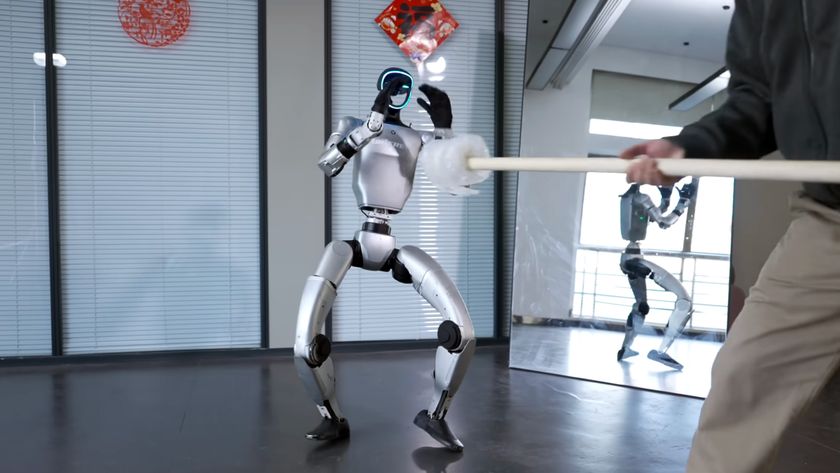
Skild AI, backed by Amazon and SoftBank, has introduced a foundational model called Skild Brain designed to operate across diverse robot types—from industrial arms to humanoids. The model enables robots to perform human‑like tasks such as navigating stairs, maintaining balance after perturbations, and interacting with cluttered environments.
This represents a dramatic departure from single‑task robots. Instead of requiring bespoke programming for each scenario, robots powered by Skild Brain can learn and adapt through general reasoning processes.
4.2 Nvidia’s Isaac GR00T Foundation Model
Nvidia’s Isaac GR00T N1 is an open‑source, pretrained general model for robotics that integrates a dual‑system architecture: one that handles fast reflex‑like responses and another that undertakes higher‑level reasoning using vision and language. Early access implementations show robots performing diverse tasks autonomously, such as tidying and object manipulation.
4.3 Google DeepMind’s Gemini Robotics Models
Google DeepMind’s Gemini Robotics models (including Gemini Robotics and Gemini Robotics‑ER 1.5) extend general AI paradigms into robotics by enabling robots to perform multi‑step, real‑world tasks—such as sorting laundry—based on comprehensive reasoning rather than narrow preprogrammed behaviors.
These models demonstrate the potential for robots to plan ahead, incorporate contextual information, and execute complex sequences of actions in real environments.
5. Academic Research: General Models for Dexterity and Coordination
5.1 OmniDexGrasp: Foundation Models in Dexterous Manipulation
The OmniDexGrasp framework leverages foundation models to generalize dexterous grasping tasks beyond narrowly defined object sets. By combining human demonstration transfer strategies and force‑aware adaptive control, this research shows how models trained on broad data can enable robots to manipulate diverse objects robustly—an essential capability for cross‑domain autonomy.
5.2 CoinRobot: Generalized End‑to‑End Robotic Learning
CoinRobot proposes a generalized learning framework that facilitates cross‑platform adaptability across various robotic architectures. By focusing on multi‑task learning and scalable network designs, it demonstrates that general models can produce consistent performance across diverse manipulation tasks—pointing to a future where robots can generalize learned behaviors across embodiments.
5.3 AutoRT: Scaling Robot Teams with Foundation Models
Google DeepMind’s AutoRT framework uses foundation models to orchestrate multiple robots across buildings, significantly expanding the scale and diversity of robot operational experience. It leverages vision‑language models for scene understanding and language models for instruction generation, enabling coordinated autonomy across agents and environments.
6. Simulation and Synthetic Data: Fueling General Model Training
6.1 Synthetic Training Pipelines
One of the main impediments to generalist robotic learning has been the lack of large, diverse, real‑world robot data. To address this, researchers increasingly rely on synthetic data and world models that simulate high‑fidelity environments. For example, Nvidia’s Cosmos world foundation models generate predictive imagery and simulated sequences from single inputs, enabling robotic systems to anticipate and learn from a wide range of scenarios.
6.2 Sim‑to‑Real Learning
Blending simulation data with real robot experience—via sim‑and‑real co‑training—improves robustness and reduces reliance on expensive physical trials. This approach allows models to generalize from simulated diversity to practical real‑world behaviors efficiently.
7. Real‑World Implications and Use Cases
7.1 Flexible Manufacturing and Logistics
General models allow robots in manufacturing to adapt in real time to new tasks—for example, changing assembly requirements or differing object geometries—without human engineers rewriting code for each new scenario.
7.2 Service and Assistance Robots
Robots powered by general AI can perform tasks such as tidying homes, assisting with chores, or aiding the elderly by interpreting natural language instructions and responding appropriately to varied requests—a stark contrast to earlier robots limited to scripted interactions.
7.3 Autonomous Exploration and Inspection
In unpredictable environments such as disaster zones, warehouses, or extraterrestrial surfaces, general models provide on‑the‑fly reasoning, planning, and adaptability, enabling robots to cope with unforeseen challenges.
8. Challenges and Limitations
Despite rapid progress, several challenges remain:
8.1 Data Requirements and Scalability
General models require vast datasets and diverse training inputs to perform reliably across domains. Collecting such data—especially for physical robot actions—is expensive and difficult without simulation augmentation.
8.2 Real‑World Safety and Robustness
Models trained in simulation or on broad data may not always translate perfectly to unpredictable real environments. Ensuring safety and robustness in edge cases requires rigorous testing and safety‑aware design.
8.3 Computational Load and Hardware Constraints
Large models often demand significant compute resources, raising challenges for deployment on physical robots with limited onboard processing. Approaches such as model distillation and edge optimizations are active research areas.
9. Ethical and Societal Considerations
The increasing autonomy endowed by AI general models also raises ethical questions:
- Accountability for autonomous decisions
- Bias and unintended behaviors learned from data
- Workforce impacts due to expanded robot capabilities
- Privacy and human‑robot interaction norms
Responsible stewardship, transparent model design, and multi‑stakeholder oversight will be essential as general AI models gain traction in robotics.
Conclusion
The integration of AI and general models into robotics is not merely an incremental improvement—it represents a seismic shift in how robots are engineered, trained, and deployed. From narrow, single‑task machines to autonomous, cross‑domain agents, robots are evolving toward versatility, adaptability, and reasoning capabilities previously unimaginable.