









Introduction
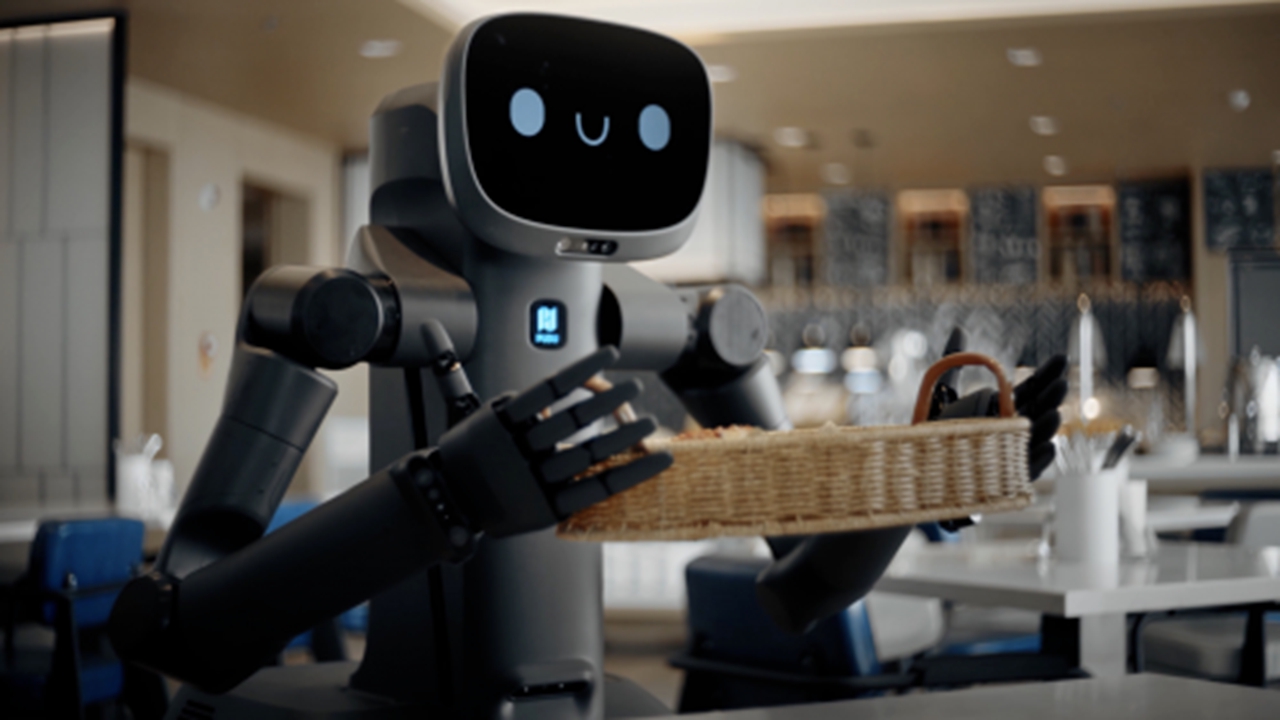
Service robots are no longer confined to pre-programmed, repetitive tasks. The integration of Artificial Intelligence (AI) and embodied intelligence—a paradigm that combines computational reasoning with physical embodiment—has significantly enhanced their autonomous capabilities and adaptability in dynamic, unstructured environments.
This fusion allows service robots to perceive complex surroundings, reason about actions, and adjust behavior in real-time, enabling them to operate safely and efficiently in hospitals, logistics hubs, retail environments, and private homes. Unlike traditional robots, which rely on deterministic programming, AI-driven embodied systems exhibit learning-based flexibility, making them better suited to unpredictable human-centric environments.
This article provides a detailed analysis of the technical, operational, and market aspects of this fusion, focusing on:
- Theoretical foundations of embodied intelligence
- AI integration in perception, decision-making, and control
- Applications across service robotics sectors
- Market trends, adoption drivers, and economic implications
- Challenges, limitations, and future research directions
1. Understanding Embodied Intelligence in Robotics
1.1 Conceptual Overview
Embodied intelligence emphasizes that cognition is deeply rooted in a robot’s physical interactions with the world. In contrast to classical AI, which operates in abstract computational spaces, embodied AI systems learn through physical engagement, interpreting sensory data to guide motor actions.
Core principles include:
- Sensorimotor coupling: Perception and action are intertwined; movement influences perception and vice versa
- Adaptive learning: Robots adjust behavior based on environmental feedback
- Context-aware decision-making: Understanding situational context improves task execution in dynamic spaces
1.2 Embodied Intelligence vs. Traditional AI in Service Robots
| Aspect | Traditional AI | Embodied AI Fusion |
|---|---|---|
| Perception | Predefined triggers, limited adaptability | Continuous, multimodal sensory integration |
| Learning | Offline, dataset-driven | Real-time, environment-driven adaptation |
| Mobility | Fixed paths, programmed motion | Autonomous, adaptive navigation |
| Interaction | Scripted responses | Context-sensitive, socially aware |
2. AI Integration in Service Robots
2.1 Perception and Multimodal Sensing
- Vision systems: Depth cameras, LiDAR, RGB-D sensors detect objects, humans, and spatial constraints
- Tactile and force sensors: Enable manipulation of objects with varying textures and weights
- Auditory processing: Facilitates voice recognition, environmental sound awareness, and human interaction
- Sensor fusion: Integrates multiple modalities to provide robust, context-aware perception
2.2 Learning and Decision-Making
- Reinforcement learning (RL): Robots optimize sequences of actions based on reward-driven outcomes
- Imitation learning: Enables replication of human actions for skill acquisition
- Predictive modeling: Anticipates environmental changes and human behavior for proactive action
- Self-supervised learning: Exploits continuous interaction with the environment to improve performance over time
2.3 Motion Control and Autonomous Navigation
- Adaptive path planning: AI algorithms adjust routes in real-time to avoid obstacles and optimize efficiency
- Dexterous manipulation: Machine learning-driven control allows grasping and handling of diverse objects
- Dynamic balance and stabilization: Essential for mobile service robots operating in crowded or irregular spaces
2.4 Human-Robot Collaboration
- AI and embodied intelligence enable robots to predict human actions, adjust behavior, and safely share workspaces
- Applications include collaborative healthcare assistance, co-working in offices, and shared logistics environments
- Robots can learn social cues, movement patterns, and task preferences, enhancing adaptability and user experience
3. Applications in Service Robotics
3.1 Healthcare
- Patient transport and monitoring: Autonomous navigation in hospitals, avoiding obstacles and crowds
- Rehabilitation robots: Adaptive exercise guidance based on patient feedback
- Surgical support: AI-driven robotic assistants provide real-time instrument handling and adaptive positioning
3.2 Logistics and Warehousing
- Robots navigate dynamic warehouse environments with changing obstacles and variable load sizes
- AI-embodied intelligence allows task prioritization, efficient item retrieval, and collaborative coordination
- Reduced human labor dependency and increased operational efficiency
3.3 Hospitality and Retail
- Service robots assist with customer guidance, delivery of goods, and interactive engagement
- Context-aware AI enables adaptive behavior in crowded or unpredictable environments
- Robots learn from human interactions, improving personalization and service quality
3.4 Domestic Applications
- Home robots adapt to furniture layout, dynamic obstacles (pets, children), and user preferences
- Examples: autonomous cleaning, item fetching, and personal assistance
- Embodied AI ensures robustness, safety, and intuitive human-robot interaction
4. Market Trends and Drivers
4.1 Growing Demand for Adaptive Service Robots
- Aging populations, labor shortages, and increasing demand for personalized services drive adoption
- Service industries increasingly require robots capable of handling unstructured, human-centric environments
4.2 Cost Efficiency and ROI
- Adaptive robots improve efficiency, reduce errors, and maximize operational uptime
- AI-embodied intelligence reduces the need for continuous human supervision, improving return on investment
4.3 Technological Investments
- Startups and established companies focus on AI-driven perception, autonomous mobility, and collaborative interaction
- Governments fund research in robot autonomy, embodied AI, and human-robot collaboration
4.4 Standardization and Regulatory Support
- Safety regulations, interoperability standards, and ethical AI guidelines encourage robust deployment and user trust
- Market adoption is accelerated by clear regulatory frameworks for collaborative robots in human environments
5. Challenges and Limitations
5.1 Technical Complexity
- Integrating AI, perception, and physical interaction requires robust software-hardware co-design
- Real-time decision-making under environmental uncertainty remains a significant challenge
5.2 Safety and Reliability
- Embodied intelligence increases interaction with humans, raising safety and ethical concerns
- Systems must ensure fail-safe operation, redundancy, and reliable perception
5.3 Energy Constraints
- AI computation and continuous mobility demand high energy
- Battery efficiency, lightweight materials, and energy-optimized actuators are critical
5.4 Data and Training Challenges
- Real-world training requires large-scale interaction data, often difficult to acquire
- Sim-to-real transfer techniques help but may not fully replicate unpredictable environments
6. Case Studies of AI-Embodied Intelligence in Service Robots
6.1 Autonomous Hospital Robots
- Navigate corridors, deliver medication, and assist patients
- AI perception integrates LiDAR, cameras, and tactile feedback for dynamic navigation and obstacle avoidance
6.2 Logistic Fleet Robots
- Warehouse robots use multi-robot coordination, dynamic path planning, and object manipulation
- Embodied intelligence allows handling of varying load sizes and complex item arrangements
6.3 Domestic Service Robots
- Home cleaning and assistance robots adapt to furniture layout, moving obstacles, and user interactions
- Real-time learning improves efficiency and reduces human intervention
7. Future Directions
7.1 Advanced Embodied AI
- Fusion of reinforcement learning, predictive modeling, and sensorimotor control
- Robots learn generalizable skills transferable across tasks and environments
7.2 Human-Centered Autonomy
- Anticipatory interaction models allow robots to predict human behavior and respond proactively
- Enhances collaboration, safety, and user satisfaction
7.3 Integration with IoT and Digital Twins
- Enables fleet management, remote monitoring, and predictive maintenance
- Digital twins allow simulation-driven optimization for real-world deployment
7.4 Adaptive Learning and Self-Improvement
- Continuous learning from interaction data improves task performance
- Reduces dependency on pre-programmed instructions and enhances operational flexibility
8. Strategic Implications for Industry
- Invest in Multimodal Sensing and AI Perception – Ensures robust operation in dynamic human environments
- Prioritize Safety and Human-Centric Design – Regulatory compliance and ethical standards are critical
- Adopt Modular and Scalable Platforms – Supports rapid deployment and task adaptation
- Encourage Interdisciplinary Collaboration – Combines AI, robotics engineering, and human factors
- Focus on Real-World Learning – Continuous embodied learning enhances autonomy and reduces supervision needs
Conclusion
The fusion of AI and embodied intelligence is reshaping the capabilities of service robots, enabling unprecedented autonomy, adaptability, and human-robot collaboration. Key insights include:
- Embodied AI moves beyond abstract computation to learning through physical interaction
- Service robots can operate safely in dynamic, unstructured environments
- Market adoption is driven by efficiency gains, labor optimization, and enhanced user experience
- Challenges remain in technical complexity, energy efficiency, safety, and regulatory compliance
As research progresses, the fusion of AI and embodied intelligence promises to unlock new applications, accelerate service robot deployment, and redefine human-robot interaction, making intelligent, autonomous robots a core component of future human environments.