









Introduction
As robotics technology continues to evolve beyond traditional industrial automation, microrobotics—the study and development of robots at the millimeter, micrometer, and even nanometer scale—is emerging as one of the most transformative and strategic directions in future robotics research and commercialization. Unlike conventional robots designed for strength, speed, or payload capacity, microrobots prioritize precision, adaptability, collective intelligence, and access to environments previously unreachable by machines.
The growing importance of microrobots is driven by multiple converging trends:
- Advances in microfabrication, materials science, and MEMS technologies
- Breakthroughs in bioinspired design and soft robotics
- Increasing demand for minimally invasive medical technologies
- The rise of swarm intelligence and distributed robotic systems
- Expanding applications in biomedicine, environmental monitoring, precision manufacturing, and defense
This article provides an in-depth, professional, and forward-looking analysis of why microrobots are becoming a cornerstone of future robotics. It explores technical foundations, design paradigms, application domains, challenges, market implications, and long-term research trajectories, offering insights that go beyond surface-level technological descriptions.
1. Defining Microrobotics and Its Strategic Importance
1.1 What Are Microrobots?
Microrobots are robotic systems whose characteristic dimensions typically range from tens of micrometers to a few centimeters. While definitions vary, microrobotics generally includes:
- Microscale robots (sub-millimeter to millimeter scale)
- Small-scale autonomous robots (millimeter to centimeter scale)
- Nano- and bio-hybrid robots, often operating in fluidic or biological environments
What distinguishes microrobots is not merely their size, but their operational philosophy:
- They emphasize precision over power
- They often operate in swarms rather than as individual agents
- They rely heavily on external actuation, bioinspired locomotion, and intelligent coordination
1.2 Why Microrobotics Matters for the Future
Microrobotics represents a paradigm shift in how robotics contributes to society:
- From macro manipulation to micro intervention
- From centralized intelligence to collective behavior
- From rigid mechanical systems to soft, adaptive machines
In many emerging use cases—such as targeted drug delivery, micro-assembly, or environmental sensing—large robots are either inefficient or impossible to deploy, making microrobots not just an alternative, but a necessity.
2. Core Technologies Enabling Microrobotics
2.1 Microfabrication and Manufacturing Techniques
The rise of microrobotics would not be possible without advances in manufacturing technologies, including:
- MEMS (Micro-Electro-Mechanical Systems) fabrication
- Micro- and nano-3D printing
- Photolithography and laser micromachining
- Soft material casting and microfluidic fabrication
These techniques enable:
- High-precision structures at micro scale
- Integration of sensors, actuators, and electronics
- Mass production of microrobots at relatively low marginal cost
2.2 Actuation and Locomotion Mechanisms
Traditional motors are impractical at micro scales, leading to alternative actuation strategies:
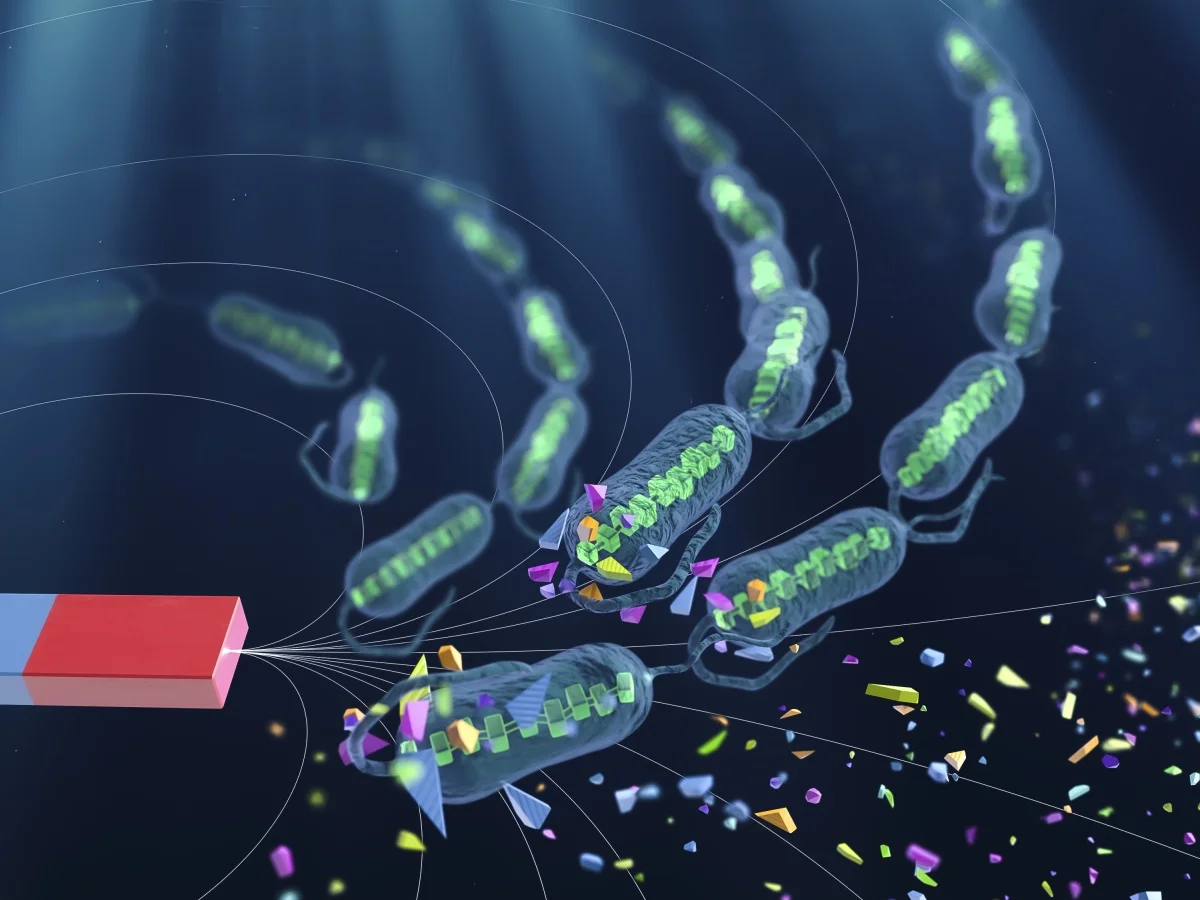
- Magnetic actuation
- External magnetic fields guide and propel microrobots
- Widely used in medical microrobotics
- Electrostatic and piezoelectric actuation
- High precision with low energy requirements
- Chemical and catalytic propulsion
- Self-propulsion in fluids using chemical reactions
- Bioinspired locomotion
- Mimicking bacteria flagella, insect legs, or cilia
Each approach involves trade-offs between controllability, energy efficiency, autonomy, and scalability.
3. Bioinspiration: Nature as a Design Blueprint
3.1 Why Bioinspiration Is Central to Microrobotics
At micro scales, physical laws differ significantly from those governing large machines. Viscosity, surface tension, and friction dominate dynamics. Nature has already solved many of these challenges through evolution.
Bioinspired microrobotics draws from:
- Bacteria and microorganisms
- Insects and arthropods
- Fish larvae and aquatic organisms
- Cellular motility mechanisms
3.2 Examples of Bioinspired Microrobots
- Flagella-inspired swimmers for fluid navigation
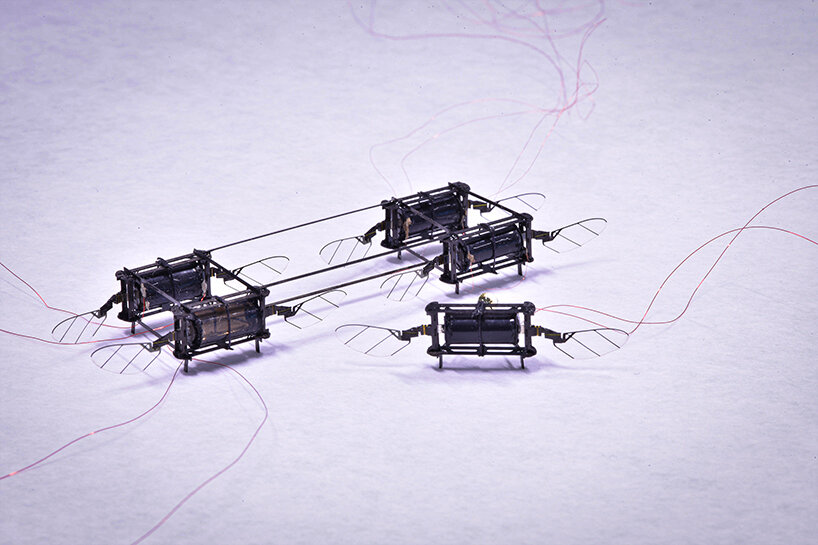
- Insect-inspired crawling microrobots for confined spaces
- Cilia-based surface locomotion systems
- Soft worm-like robots for deformable navigation
Bioinspired designs often result in:
- Higher energy efficiency
- Increased robustness in uncertain environments
- Simpler mechanical structures with emergent behavior
4. Swarm Intelligence and Collective Behavior
4.1 From Individual Robots to Robotic Collectives
One of the defining characteristics of microrobotics is the shift from single, highly capable robots to large populations of simple agents.
Swarm microrobots exhibit:
- Self-organization
- Distributed sensing
- Collective decision-making
- Fault tolerance
4.2 Applications of Swarm Microrobotics
- Medical swarms for targeted therapy
- Environmental sensing over large or hazardous areas
- Micro-assembly tasks requiring parallelism
- Search-and-rescue in confined or collapsed structures
Swarm approaches reduce reliance on individual robot complexity and instead leverage emergent intelligence.
5. Medical and Biomedical Applications
5.1 Targeted Drug Delivery
Microrobots can deliver drugs directly to specific tissues or tumors, offering:
- Reduced systemic side effects
- Higher therapeutic efficiency
- Real-time controllability
Magnetically guided microrobots are particularly promising in vascular and gastrointestinal applications.
5.2 Minimally Invasive Surgery
Microrobots enable:
- Navigation through blood vessels
- Localized tissue intervention
- Reduced surgical trauma
Future systems may combine imaging, sensing, and actuation into fully autonomous surgical microrobots.
5.3 Diagnostics and Biosensing
Microrobots can act as:
- Mobile biosensors
- Agents for early disease detection
- Platforms for localized sampling
This represents a major shift toward precision and personalized medicine.
6. Industrial and Environmental Applications
6.1 Precision Manufacturing and Micro-Assembly
As electronic and mechanical components continue to shrink, microrobots offer:
- High-precision manipulation
- Parallelized assembly processes
- Reduced reliance on clean-room human labor
Applications include:
- Semiconductor manufacturing
- Micro-optics assembly
- MEMS device production
6.2 Environmental Monitoring and Remediation
Microrobots are well-suited for:
- Water quality monitoring
- Detection of chemical or biological contaminants
- Inspection of pipelines and confined infrastructure
Swarm microrobots can provide high spatial and temporal resolution data.
7. Defense, Security, and Space Exploration
7.1 Defense and Surveillance
Potential applications include:
- Reconnaissance in confined or hostile environments
- Distributed sensing and communication
- Minimal detectability due to small size
These uses raise important ethical and regulatory considerations, discussed later.
7.2 Space and Extreme Environments
Microrobots can:
- Explore narrow crevices on planetary surfaces
- Operate in environments dangerous for humans or large robots
- Be deployed in large numbers with redundancy
8. Key Technical and Scientific Challenges
8.1 Power and Energy Constraints
- Limited onboard energy storage
- Reliance on external fields or energy harvesting
- Trade-offs between autonomy and controllability
8.2 Sensing and Localization
- Difficulty integrating sensors at micro scale
- Dependence on external imaging or tracking systems
- Limited onboard computation
8.3 Control and Coordination
- High sensitivity to noise and disturbances
- Complexity of swarm coordination
- Bridging simulation-to-reality gaps
8.4 Safety, Ethics, and Regulation
- Biocompatibility in medical applications
- Environmental impact of large-scale deployment
- Dual-use concerns in military contexts
9. Market and Industry Implications
9.1 Emerging Commercial Ecosystem
Microrobotics is transitioning from lab research to early commercialization in:
- Medical devices
- Diagnostics
- Specialized industrial tools
Startups, universities, and large technology firms are investing heavily in this domain.
9.2 Long-Term Economic Impact
Microrobotics has the potential to:
- Create new medical and manufacturing markets
- Reduce healthcare costs through precision intervention
- Enable automation in previously inaccessible domains
10. Future Research Directions
10.1 AI-Driven Microrobotics
Integration of:
- Machine learning for adaptive control
- Swarm intelligence algorithms
- Self-supervised learning in constrained environments
10.2 Soft and Hybrid Microrobots
Combining:
- Soft materials
- Bio-hybrid components (e.g., living cells)
- Morphological computation
10.3 From Microrobots to Robotic Ecosystems
Future systems may involve:
- Hierarchies of micro-, meso-, and macro-robots
- Coordinated operation across scales
- Fully autonomous micro-robotic infrastructures
Conclusion
Microrobotics is no longer a niche research topic—it is rapidly becoming one of the most important strategic directions in the future of robotics. By embracing miniaturization, bioinspiration, swarm intelligence, and precision interaction, microrobots unlock capabilities that conventional robots cannot achieve.
Despite significant challenges in power, control, sensing, and regulation, the trajectory is clear: microrobots will play a critical role in medicine, manufacturing, environmental stewardship, defense, and space exploration.
As technology continues to mature, microrobotics will not replace traditional robots—but will fundamentally expand what robotics can do, redefining autonomy, intelligence, and interaction at the smallest scales.