









Introduction
The robotics industry has emerged as one of the most consequential sectors in the global technology economy. Over the past two decades, rapid advances in artificial intelligence, machine learning, sensors, and mechanical design have transformed robots from niche, expensive tools used predominantly in heavy manufacturing into versatile systems deployed across logistics, healthcare, agriculture, services, and even consumer domains. As both industrial and service robotics technologies mature, their economic footprint expands beyond equipment sales into productivity gains, labor transformation, supply chain optimization, and the creation of new business models.
This article provides a comprehensive, professional analysis of the robotics industry’s scale and its multifaceted economic impact. It examines historical trends, market drivers, sector-specific contributions, macroeconomic effects, challenges, and forward-looking implications.
Key topics include:
- Definitions and segmentation of the robotics market
- Growth dynamics and key market indicators
- Economic impacts at micro and macro scales
- Sectoral transformations driven by robotics
- Labor market implications
- Policy, investment, and strategic considerations
- Future trends and potential disruptions
1. Defining the Robotics Industry
1.1 What Constitutes the Robotics Industry?
The robotics industry encompasses the development, production, distribution, deployment, and service of robotic systems and their enabling technologies. Core components include:
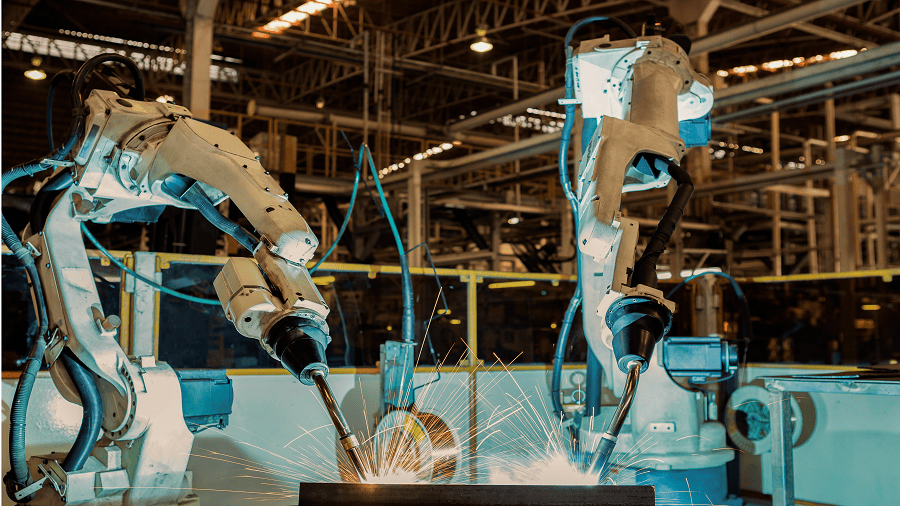
- Industrial Robots: Automated manipulators and automation systems used in manufacturing, assembly, painting, welding, material handling, etc.
- Service Robots: Robots designed for non-industrial applications including healthcare, logistics, retail, hospitality, and domestic use.
- Software and AI Platforms: Control systems, perception stacks, simulation tools, and data analytics that enable autonomous behavior and optimization.
- Sensors and Actuators: Perception hardware (LiDAR, cameras, tactile sensors) and motion systems (servomotors, hydraulic/pneumatic drives).
- Integration and Maintenance Services: System integration, deployment, customization, and lifecycle support.
1.2 Market Segmentation
The robotics industry can be segmented along several dimensions:
- By Application: Manufacturing, logistics & warehousing, healthcare, agriculture, consumer, defense, and exploration.
- By Technology: Fixed automation, mobile robotics, collaborative robots (cobots), autonomous guided vehicles (AGVs), drone systems, and microrobots.
- By Component Type: Hardware platforms, software/AI, sensors, service/maintenance.
Clear segmentation enables more precise analysis of where economic value is created and how different submarkets grow.
2. Historical Growth and Current Market Scale
2.1 Evolution of Robotics Deployment
Robotics adoption accelerated significantly in the late 20th century with industrial automation in automotive and electronics manufacturing. The advent of affordable computing, improved control systems, and standardized platforms in the 2000s expanded adoption into small and medium enterprises (SMEs). The proliferation of AI and machine learning in the 2010s further extended robotics capabilities into unstructured environments.
2.2 Global Market Size and Forecasts
Recent industry estimates indicate that:
- The global robotics market reached tens of billions of USD in annual revenue, with projections to grow at double-digit compound annual growth rates (CAGR) over the next decade.
- Industrial robots account for a significant share of current revenue, while service robotics (especially logistics and healthcare) is the fastest-growing segment.
- Robotics software and AI platforms represent a rapidly increasing portion of overall value, as software-enabled capabilities differentiate system performance and drive recurring service revenues.
Market size estimates vary by source, but consistent trends show strong year-over-year expansion driven by automation demand, labor shortages, digital transformation initiatives, and new use-case adoption.
3. Microeconomic Impacts
3.1 Productivity and Efficiency Gains
One of the most direct economic impacts of robotics is the increase in productivity per labor unit:
- Industrial Efficiency: Robots deliver consistent precision, reduced cycle times, and high uptime, particularly in repetitive manufacturing tasks.
- Service Automation: Robots enhance throughput in automated warehouses, hospitals, and retail environments.
- Optimization and Data Analytics: AI-enabled robotics systems can autonomously optimize routes, schedules, and task sequencing, improving operational efficiency.
These improvements translate into lower unit costs, higher output quality, and enhanced competitiveness for adopting firms.
3.2 Cost Structure Transformation
- Capital vs. Operating Costs: While robots require upfront capital investment, long-term operating costs can be lower than human labor in repetitive, hazardous, or precision-intensive tasks. Cost structures shift toward capital expenditure and software licensing over labor expenditure.
- Maintenance and Lifecycle Services: The rise of robot-as-a-service (RaaS) and subscription models further shifts costs from upfront purchase to recurring operational expenses.
3.3 Firm-Level Strategic Value
Firms that integrate robotics effectively can realize:
- Faster time to market
- Higher consistency and quality control
- Innovation in product and service delivery
- Enhanced resilience to labor market fluctuations
These strategic advantages often lead to increased market share and profitability.
4. Macroeconomic Impacts
4.1 Aggregate Productivity and GDP Growth
At the macroeconomic level, robotics contributes to:
- Total Factor Productivity (TFP): Robotics enables more output from the same set of inputs, raising TFP.
- GDP Contribution: Increased productivity and output scale contribute positively to national GDP. Economies with higher robotics adoption often experience faster growth in manufacturing and services sectors.
While isolating robotics’ contribution from other technological drivers is complex, econometric analyses generally find a positive correlation between automation intensity and national productivity indicators.
4.2 Trade and Competitiveness
- Robotics can reshape comparative advantage by reducing dependence on low-wage labor.
- High-automation economies may reshore manufacturing previously offshored for labor cost reasons.
- Export of robotics technology, components, and services becomes a key driver of high-value trade flows.
4.3 Regional Economic Development
Regions with robust robotics ecosystems (manufacturing hubs, research clusters, startups) often experience:
- High-tech job creation
- Attraction of skilled labor and capital
- Growth of ancillary service and software sectors
These clustering effects resemble those seen in other deep technology domains.
5. Sector-Specific Economic Impacts
5.1 Manufacturing
Manufacturing remains the largest adopter of robotics:
- Automotive, electronics, and consumer goods sectors extensively deploy robots.
- Collaborative robots (cobots) enable flexible automation, reducing barriers for smaller manufacturers.
Economic impacts in manufacturing include:
- Reduced defect rates
- Increased throughput
- Enhanced capacity for customization and small-batch production
5.2 Logistics and Supply Chain
Logistics automation—especially robotics in warehousing and distribution—represents a major growth area:
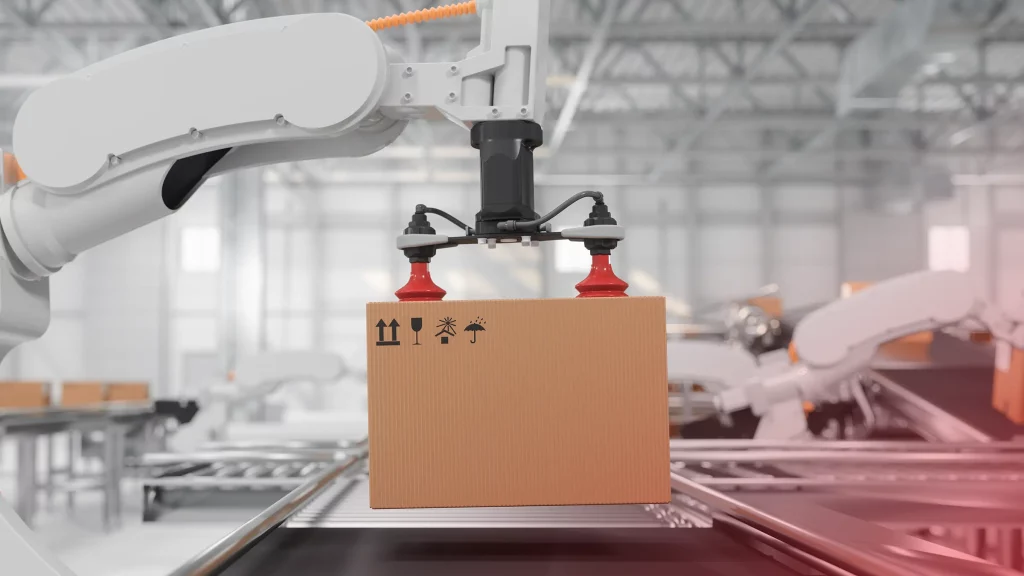
- Automated storage and retrieval systems improve order fulfillment speed.
- Autonomous mobile robots streamline intra-facility movement.
- Robotics supports just-in-time and on-demand logistics, critical for e-commerce scale.
Economic benefits include lower lead times, reduced inventory costs, and improved service levels, contributing to supply chain efficiency.
5.3 Healthcare
Service robots in healthcare economically impact:
- Surgical precision and reduced operation time
- Enhanced throughput in diagnostics and rehabilitation
- Lower healthcare worker burden
Though adoption is slower due to regulation and safety considerations, medical robotics represents a high-growth, high-value segment.
5.4 Agriculture
Agricultural robotics enhances:
- Precision farming (crop monitoring, targeted spraying)
- Autonomous harvesting
- Resource efficiency (water, fertilizer)
These innovations improve yield, reduce waste, and lower reliance on seasonal labor.
5.5 Consumer and Service Markets
Consumer service robots—vacuum cleaners, lawn mowers, personal assistants—spur economic activity by expanding markets and creating new product categories.
6. Labor Market Dynamics
6.1 Job Displacement vs. Job Creation
A central economic concern is the impact of robotics on employment. Research indicates:
- Displacement: Automation may reduce demand for routine manual or cognitive tasks.
- Creation: New jobs arise in robot design, programming, maintenance, human-robot collaboration roles, data analytics, and system integration.
Historical patterns of automation suggest that while specific roles may disappear, overall employment shifts toward higher-value, technology-enabled work.
6.2 Skills and Reskilling Imperatives
Robotics adoption increases demand for:
- Robotics technicians and engineers
- AI and software specialists
- Human-machine interface designers
- Data scientists and system integrators
Educational and workforce training systems must adapt to provide reskilling and lifelong learning pathways.
7. Investment Trends and Financing
7.1 Venture Capital and Corporate Investment
Global investment trends show:
- Strong venture capital flows into robotics startups
- Strategic corporate ventures by manufacturing and tech giants
- Growth in robotics-focused funds
Early-stage investments often prioritize AI-enabled robotics, autonomy algorithms, perception systems, and service robotics.
7.2 Public Funding and Policy Initiatives
Governments worldwide recognize robotics as a strategic technology:
- National robotics strategies and roadmaps
- Grants for research and development
- Public-private partnerships
These initiatives help seed innovation ecosystems and accelerate commercialization.
7.3 Mergers and Acquisitions
Industry consolidation is visible in:
- Large technology firms acquiring robotics and AI startups
- Component suppliers integrating vertically
- Software providers expanding into robotic platforms
M&A activity reflects a maturing industry seeking scale, intellectual property, and talent.
8. Business Models and Commercial Innovation
8.1 Hardware Sales vs. Services
Traditional revenue models centered on robot hardware sales. However, the industry is shifting toward:
- Robot-as-a-Service (RaaS)
- Subscription-based software and cloud analytics
- Pay-per-use fleet management
- Outcome-based service contracts
These service-oriented models lower adoption barriers and provide recurring revenue streams for providers.
8.2 Platform Ecosystems and Standards
Open software frameworks (e.g., ROS), modular hardware interfaces, and standardized communication protocols enable:
- Multi-vendor interoperability
- Rapid innovation cycles
- Shared data ecosystems
Platformization fosters network effects similar to those in digital technology markets.
9. Challenges and Risks
9.1 Technical Barriers
- Robust autonomous perception in unstructured environments
- Safe human-robot interaction
- Reliable long-term operation and maintenance
Technical challenges affect economic adoption rates and ROI timelines.
9.2 Regulatory and Ethical Considerations
- Safety standards for collaborative robots
- Data privacy with connected robotic systems
- Liability frameworks for autonomous decision-making
Regulatory uncertainty can slow adoption and increase compliance costs.
9.3 Economic and Social Equity
- Ensuring that gains from robotics are equitably distributed
- Supporting workers in transition
- Avoiding technological concentration that exacerbates inequality
Policymakers must balance innovation with inclusive growth strategies.
10. The Future of the Robotics Economy
10.1 Convergence with AI and IoT
Robotics integrated with AI, edge computing, and the Internet of Things will enable:
- Smarter autonomous systems
- Predictive maintenance and self-optimization
- Seamless human-machine ecosystems
This convergence expands economic impact beyond isolated automation to system-wide intelligence.
10.2 Global Diffusion and Localization
While advanced economies lead adoption, cost declines and service models will enable diffusion into emerging markets. Localization of robotics solutions for cultural, regulatory, and industrial contexts increases global economic participation.
10.3 Long-Term Strategic Roles
Robotics will play strategic roles in:
- Resilient manufacturing
- Sustainable agriculture
- Personalized healthcare
- Aging population support
These applications have profound economic and societal implications.
Conclusion
The robotics industry is one of the most dynamic sectors shaping the 21st-century economy. From industrial automation and service delivery to healthcare, agriculture, and consumer markets, robots are driving productivity gains, creating new business models, and transforming labor markets.