








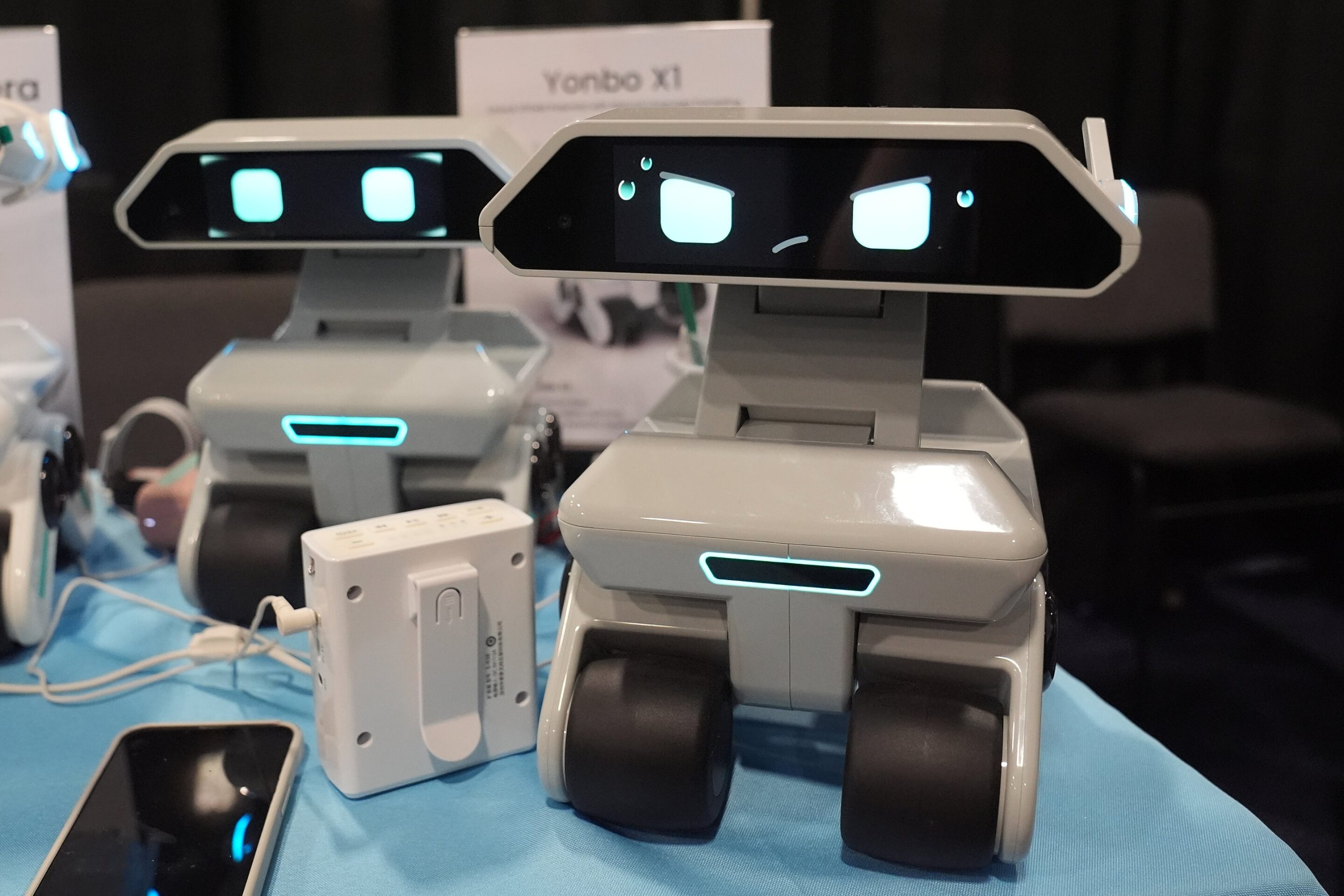

Introduction: CES 2026 — A Landmark for Robotics Hardware
The 2026 Consumer Electronics Show (CES) in Las Vegas (January 6–9, 2026) has rapidly become a pivotal milestone for robotics hardware, pushing the boundary between lab prototypes and real‑world deployments. Once a venue for speculative concepts, CES today showcases functioning systems that embody Physical AI, robust autonomy, and human‑centric design. Across industrial, household, mobility, and service domains, hardware innovations integrate advanced sensors, actuators, AI inferencing, and connectivity to create robots capable of useful work, meaningful interaction, and scalable deployment in the coming years.
This comprehensive article explores the key robotics hardware unveiled at CES 2026, from humanoid robots and collaborative industrial machines to household assistants and advanced mobile platforms. We’ll analyze their technical underpinnings, market readiness, hardware innovations, and prospects for practical application.
1. The Rise of Humanoid Robotics: From Demonstrations to Deployable Machines
1.1 Boston Dynamics × Hyundai Atlas 3.0 — Industrial‑Ready Humanoid
One of the most compelling robotics hardware debuts at CES 2026 was Boston Dynamics’ latest humanoid robot, Atlas, presented through the Hyundai Motor Group booth. Atlas stood out not just as a demo platform but as a production‑oriented machine designed for industrial use rather than mere showmanship.
Technical Highlights:
- Enhanced Mechanical Design: Atlas 3.0 boasts multiple degrees of freedom enabling human‑like gait, balance, and manipulation in complex environments.
- Industrial Specifications: Updated models can lift meaningful loads (up to 50 kg) and are built to operate in temperature ranges from −20 °C to 40 °C, with waterproofing for durability in harsh conditions.
- Autonomy and AI: The robot incorporates AI for real‑time perception and task adaptation, demonstrating stable, autonomous sequencing of industrial tasks beyond scripted demos.
- Commercial Roadmap: Hyundai aims to mass‑produce and deploy the Atlas series in factories from 2028, with goals of tens of thousands of units per year.
Atlas’s Best Robot award at the event signals a shift toward machines that are not future fantasies but practical, field‑ready hardware with clear industrial roles.
1.2 Next‑Gen Humanoids from Global Exhibitors
CES 2026 hosted a global cohort of humanoid robots representing diverse hardware architectures beyond Atlas:
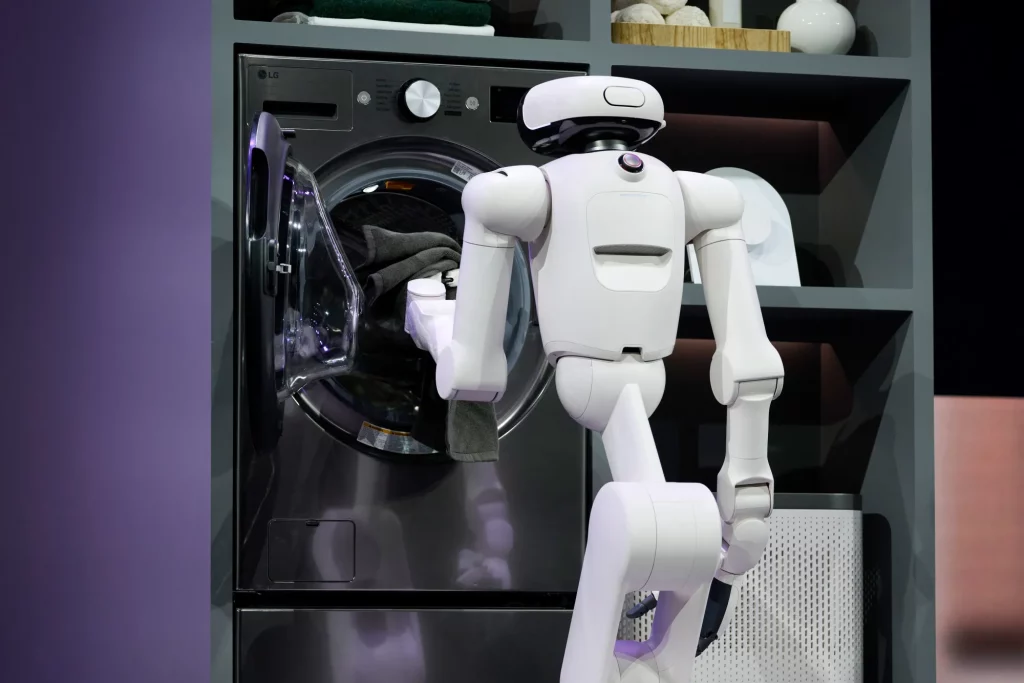
- LG CLOiD: An articulated home robot with multi‑joint arms and five‑fingered hands capable of interacting with appliances and utensils — a step toward consumer 생활 robotics in domestic environments.
- AgiBot A2 Series: A tall (169 cm) robot showcased for hospitality and public service roles, integrated with 360° lidar and HD cameras for autonomous navigation.
- NEURA 4NE1 Gen 3: With high‑torque joints and patented artificial skin for proximity sensing, this humanoid bridges industrial precision with household capabilities, powered by sophisticated AI and multimodal sensors.
These platforms reflect a broader global trend toward humanoid robotics with multi‑sensor fusion, advanced motion hardware, and AI perception stacks, moving beyond purely experimental systems into hardware that can tackle service, hospitality, and collaborative tasks.
2. Household Robotics: Moving Toward Zero‑Labor Homes
2.1 LG CLOiD — A Multifunctional Home Robot
LG Electronics’ CLOiD stood among CES 2026’s most talked‑about household robotics hardware. Designed with dual articulated arms and sophisticated hands, CLOiD represents a leap in domestic automation.
Capabilities:
- Performs daily chores such as laundry handling, dishwasher use, and food preparation.
- Integrated with LG’s smart home ecosystem, allowing coordinated automation across devices.
- Uses vision, force feedback, and AI for contextual understanding of home environments.
Although demonstrations showed relatively slow task execution (e.g., folding a towel ~30 sec in early tests), CLOiD’s hardware — especially the multi‑degree‑of‑freedom arms and tactile interfaces — marks a significant step toward functional home assistants.
2.2 SwitchBot Onero H1 — Accessible Home Automation
Another novel entrant was SwitchBot’s Onero H1 humanoid assistant — a wheeled platform with articulated arms providing 22 degrees of freedom for manipulation and perception.
- Vision‑Language‑Action Stack: Enables high‑level task interpretation and contextual response in cluttered home environments.
- Smart Integration: Onero works within the broader SwitchBot smart home ecosystem, pairing movement and task execution with connected appliances.
While consumer‑use robots still face affordability and safety hurdles, hardware like Onero demonstrates increasing physical capability and sensory integration in home robotics platforms.
3. Specialized Robotics Hardware for Task‑Focused Roles
3.1 Roborock Saros 20 and Multifunction Cleaning Bots
Household robotics innovation was not limited to humanoids. Consumer appliance makers showcased hardware that pushes traditional categories:
- Roborock Saros 20: A robot vacuum with AdaptiLift obstacle negotiation, strong suction, and advanced navigation for home cleaning.
- Dreame Cyber 10 Ultra: Featuring a bionic, multi‑joint arm capable of picking up objects and cleaning in narrow spaces — a hybrid between cleaning bot and mobile manipulation hardware.
These platforms combine locomotion, manipulation, and AI perception into compact hardware packages — illustrating how specialized robots are leveraging modular hardware integration for higher autonomy in routine household chores.
3.2 Modular Yard and Pool Robots
CES 2026 also highlighted hardware for outdoor environments:
- Yarbo’s Modular Yard Robot: Incorporates interchangeable modules to handle mowing, leaf blowing, and snow removal across seasons.
- Ecovacs Ultramarine Pool Robot: A pool navigation platform potentially using existing indoor robot navigation technologies in aquatic settings.
These innovations demonstrate robotics hardware adapting to domain‑specific challenges — e.g., terrain, water barriers, and environmental variability — requiring modular design, waterproofing, and autonomous navigation in unique physical domains.
4. Industrial and Collaborative Robotics: Hardware for High‑Performance Workflows
4.1 Hyundai’s AI Robotics Suite
At CES 2026, Hyundai Motor Group presented a broad portfolio of AI robotics hardware that exemplifies the trend toward integrated industrial robotics solutions.
The exhibit included:
- Boston Dynamics’ Spot and Stretch platforms: Hardware for autonomous inspection and logistics tasks.
- MobED: A four‑wheeled, terrain‑adaptive robot that won a CES Best of Innovation award for robust motion hardware.
- Automatic Charging Robot (ACR) and Parking Robots: Hardware components that support autonomous energy maintenance and deployment in automotive environments.
- Collaborative Robots (Cobots) and Autonomous Mobile Robots (AMRs): Designed for palletizing, material transport, and SLAM‑based navigation in warehouses.
This showcases how industrial robotics hardware is no longer siloed: mobility platforms, sensor fusion stacks, AI perception units, and collaborative actuators are designed together to enable flexible, human‑robot workflows.
4.2 AEON and Logistics‑Friendly Robots
Robotics hardware also addressed industrial challenges through AEON humanoids and autonomous delivery robots:
- AEON Humanoid: Engineered for close human collaboration, with safety‑centric hardware and dexterous manipulators.
- Go‑Le Robotics’ AA‑2: An autonomous delivery bot with light, energy‑efficient hardware and elevator‑capable mobility systems for multi‑floor delivery in mixed‑use buildings.
These exemplify how hardware mobility, navigation sensors, and body design are converging to enable real‑world tasks that go beyond static environments.
5. Innovation in Sensors, Actuators, and AI Compute
While headline demos often focus on entire robots, CES 2026 also emphasized hardware building blocks that enable higher autonomy:
5.1 Advanced Sensor Suites
Robotics exhibits featured sensors essential for fine motion and environmental perception:
- Multi‑modal vision stacks: LiDAR, RGB‑D cameras, and IMUs for spatial mapping.
- Tactile sensors and proximity arrays: Embedded in humanoid hands and service robot grippers to detect touch and object presence.
- 360‑degree perception arrays: As part of industrial and delivery robots to ensure safe navigation in dynamic environments.
These sensors form the physical foundation that allows robots to build accurate world models, avoid obstacles, and execute tasks reliably.
5.2 Actuators and Mobility Platforms
Innovations in hardware actuators and mobility were visible, such as:
- Terrain‑adaptive wheel and leg systems for stair climbing and threshold negotiation in household cleaning robots.
- Collaborative cobot arms with force‑controlled joints for safe interaction with humans and environments.
This hardware reflects designs that balance power, precision, and safety across use cases.
5.3 AI Compute Integration
The backbone of modern robotics hardware at CES 2026 is onboard AI compute — enabling real‑time inference, perception, and decision making without excessive reliance on remote servers. Many showcased robots embed hardware capable of running vision‑language‑action models and reinforcement learning agents directly on device, accelerating autonomy and robustness.
6. Themes and Trends: What CES 2026 Robotics Hardware Signals for the Future
6.1 Physical AI Takes Center Stage
A recurring theme across robotics hardware at CES 2026 is Physical AI — the capacity for robots to perceive, learn, and act autonomously in complex, real‑world scenarios, with hardware tightly integrated with advanced AI models.
From household assistants that recognize objects and navigate cluttered rooms, to industrial platforms that self‑charge and adapt to workflow changes, the hardware is designed around AI‑centric sensing and compute.
6.2 Human‑Robot Collaboration and Safety
Hardware designs increasingly prioritize safe human interactions, with sensors and actuators calibrated for proximity, compliance, and collaborative behavior in shared spaces — whether in factories, offices, or homes.
6.3 Application‑Specific Hardware Diversity
CES 2026 demonstrated a wide diversity of robots each optimized for specific domains:
- Industrial automation: Cobots, AMRs, and humanoids designed for logistics and production.
- Home robotics: Household assistants with manipulation hardware and perception systems.
- Outdoor and specialized robots: Yard mowers, pool cleaners, and delivery bots with purpose‑built mobility and modular hardware.
This diversity underlines how hardware customization is becoming a competitive advantage in robotics ecosystems.
7. Challenges and Practical Considerations
Despite remarkable progress, robotics hardware at CES 2026 still faces real‑world constraints:
7.1 Power and Energy Management
Autonomy demands significant onboard compute and sensing, which challenges hardware designers to balance performance with energy efficiency — particularly for mobile robots operating away from charging docks.
7.2 Safety and Regulation
Progress in collaborative hardware requires rigorous evaluation frameworks to ensure safe physical interaction with humans and reliability across unpredictable environments — a frontier that lags behind raw hardware capability.
7.3 Software–Hardware Integration Complexity
The sophistication of sensors, compute units, and actuators increases the complexity of software integration and system optimization, requiring standardized interfaces and robust middleware.
Conclusion: CES 2026 Marks a New Era for Robotics Hardware
CES 2026’s robotics showcase was not just a series of eye‑catching demos; it was a strategic milestone that evidenced the maturation of hardware capable of underpinning real robotic autonomy across broad application domains. With humanoid platforms poised for industrial take‑off, household robots advancing toward practical usefulness, industrial automation systems integrating collaborative capabilities, and specialized robots tackling niche tasks, the event highlighted how hardware innovation is driving robotics toward impact and deployment at scale.
From perception systems and actuators to AI compute stacks and domain‑focused chassis designs, the hardware unveiled at CES 2026 points toward a future where robots are not only technically impressive but useful, safe, and integrated into everyday life and work. As companies transition from prototype to production readiness, the innovations showcased at this year’s CES will almost certainly influence the robotics landscape for years to come — heralding a future in which robots are partners in productivity, safety, and daily living.