









Introduction
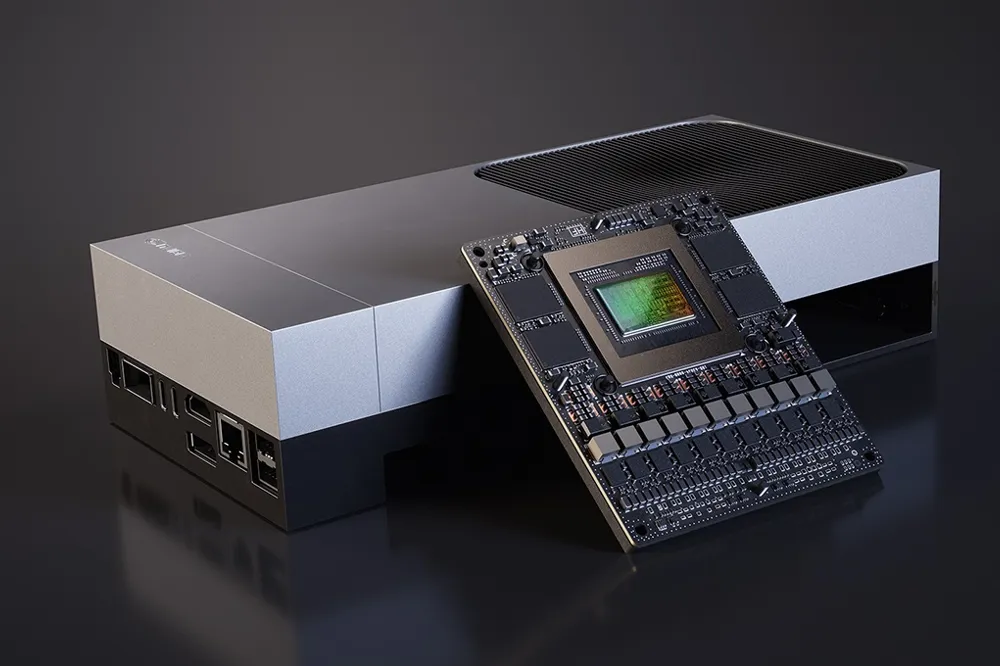
At CES 2026 in Las Vegas, NVIDIA made one of the most consequential announcements in the history of robotics and embodied artificial intelligence. The company unveiled a suite of new physical AI models, open frameworks, and development tools specifically designed to accelerate robotics development across industries—from general-purpose humanoids to autonomous systems such as vehicles and industrial robots. These technologies mark a fundamental shift in how AI is applied to the physical world and are widely viewed as catalyzing the transition from abstract research toward practical, scalable robot deployments.
The term “Physical AI” was central to NVIDIA’s keynote strategy at CES 2026, indicating a new era where AI systems — rather than merely interpreting data — are capable of acting and reasoning within real-world physics-constrained environments. CEOs, engineers, and industry leaders are increasingly recognizing that enabling robots to understand and interact with the physical world is essential for applications ranging from manufacturing automation to autonomous mobility and service robotics.
This comprehensive article provides a professional and detailed exploration of NVIDIA’s CES 2026 announcements, the technological innovations behind them, and their significance for the global robotics ecosystem. It examines the new models, simulation frameworks, development environments, and strategic implications for developers, industries, and future robots empowered by physical AI.
1. Shifting the Paradigm: What is Physical AI?
1.1 From Generative AI to Physical AI
Traditional AI, including large language models, excels in processing and generating information in digital contexts. Physical AI, by contrast, refers to AI systems that can perceive, reason, plan, and act in the physical world, taking account of real-world dynamics such as gravity, friction, momentum, and object interactions. These systems must integrate perception and action within physically realistic environments, requiring models that understand both the semantics and dynamics of real-world scenarios.
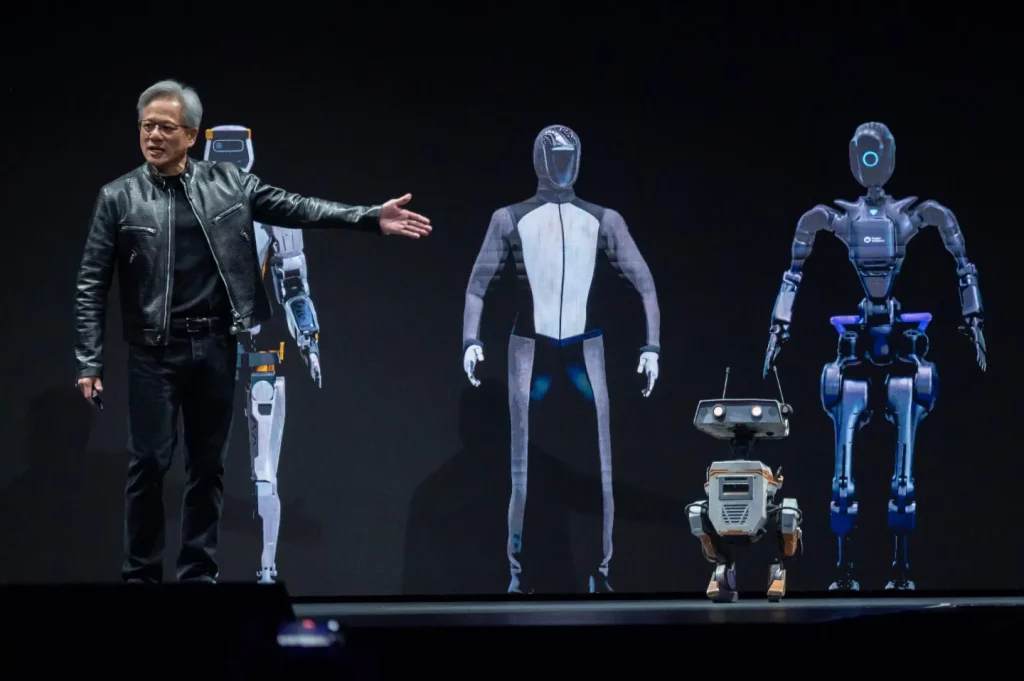
At CES 2026, NVIDIA CEO Jensen Huang described physical AI as a transformative evolution — a shift from AI that “understands language” to AI that can “understand and manipulate the physical world”. Huang argued that this transition is the next major frontier for artificial intelligence, with the potential to impact millions of factories, warehouses, vehicles, and everyday robotic agents around the globe.
1.2 The Importance of Physical AI for Robotics
Physical AI is foundational for robotics because it bridges two historically separate domains:
- Perception and cognition—the ability to interpret sensory data.
- Action and control—the ability to plan and execute physical movements.
For robots to operate effectively outside controlled environments (e.g., laboratories or structured factory floors), they must be capable of closed-loop reasoning, which ties sensory input directly into physical actions while respecting the constraints of real-world physics.
This capability is essential not only for traditional industrial robots but for general-purpose humanoids, autonomous vehicles, field robots, and collaborative systems that will operate in homes, hospitals, cities, and workplaces.
2. NVIDIA’s Physical AI Announcements at CES 2026
2.1 New Physical AI Models
NVIDIA showcased several groundbreaking physical AI models designed to empower robots with advanced reasoning and planning capabilities:
2.1.1 Cosmos World Foundation Models
The Cosmos family of world foundation models enables developers to generate large volumes of photorealistic synthetic data for training and validating physical AI systems. These models can simulate complex environments and edge-case scenarios that are prohibitively expensive or dangerous to capture in the real world.
Key capabilities include:
- Realistic video and multi-camera simulation from simple prompts
- Physical reasoning and trajectory prediction
- Scenario modeling for robotics and autonomous systems
Such synthetic data dramatically speeds up training cycles and improves robustness by exposing models to a broad distribution of physical phenomena before real-world deployment.
2.1.2 Cosmos Transfer and Predict Models
Latest iterations such as Cosmos Transfer 2.5 and Cosmos Predict 2.5 integrate adaptive multimodal world generation, enabling:
- Fast generation of diverse simulation environments
- Prediction of future physical states
- Support for multi-view simulation scenarios for richer training data
These models are now available on platforms such as Hugging Face, allowing broad community access and accelerating collaborative innovation.
2.1.3 Isaac GR00T N1.6
The Isaac GR00T N1.6 model is specifically targeted at humanoid robotics, combining vision, language, and action into an open Vision-Language-Action (VLA) framework. It provides robots with:
- Context-aware planning and task execution
- Simultaneous locomotion and manipulation abilities
- Enhanced reasoning via integration with Cosmos Reason
This positions humanoid robots to tackle complex tasks that require coordination of whole-body actions — a major step toward general-purpose robotic autonomy.
2.2 Simulation and Development Tools
2.2.1 NVIDIA Isaac Sim — Virtual Training Ground
Simulation remains indispensable for physical AI. NVIDIA’s Isaac Sim provides a high-fidelity physics simulation environment where robots can learn and be tested before real-world deployment. With omnidirectional simulation, developers can:
- Train policies using reinforcement learning
- Test control algorithms in millions of virtual scenarios
- Transfer skills from simulation to reality with higher safety and reliability
By combining Isaac Sim with Cosmos and other foundational models, NVIDIA is offering a complete software stack from virtual training to real-world execution.
2.3 Open Models and Ecosystem Access
NVIDIA’s strategy emphasizes open access to models and frameworks, enabling broad adoption across the robotics community. By publishing physical AI models under open licenses, developers around the world can contribute to and benefit from shared progress in:
- Robotics research and development
- Autonomous mobility systems
- Industrial automation
- Service and assistive robotics
This openness accelerates innovation and democratizes access to cutting-edge AI technologies.
3. Strategic Implications for Robotics Developers
3.1 Lowering Barriers to Entry
By providing open models and tools, NVIDIA significantly lowers the barrier to entry for robotics startups, research groups, and integrators. Developers no longer need bespoke proprietary stacks from scratch; instead, they can leverage robust simulation environments, pretrained models, and real-world data generation pipelines to accelerate their development timelines.
3.2 Unifying Training and Deployment Workflows
One of the persistent challenges in robotics has been the simulation-to-real gap—the difficulty of transferring models trained in virtual environments into real robots without performance degradation. With NVIDIA’s integrated stack spanning simulation (Cosmos + Isaac Sim), reasoning models (GR00T), and standardized pipelines, developers can:
- Train policies that respect physics constraints
- Validate control strategies in complex environments
- Deploy with confidence that simulated behaviors generalize to real hardware
This unified workflow is a crucial enabler for scaling robotics solutions from research to commercial deployment.
3.3 Advancing Humanoid and General-Purpose Robots
The availability of models like Isaac GR00T N1.6 reflects a growing push toward general-purpose humanoid robots that can tackle real-world, open-ended tasks. By coupling reasoning with physical action, these models help robots:
- Interpret high-level instructions
- Break tasks into executable steps
- Plan interactions that account for real-world physics
This capability is central to robotics applications ranging from logistics and manufacturing to healthcare and home automation.
4. Broader Industry and Ecosystem Impact
4.1 Cross-Industry Adoption
NVIDIA’s physical AI technologies are broadly applicable across sectors:
- Manufacturing: Robotics-powered smart factories with adaptive automation
- Autonomous Vehicles: Level-4 capable systems trained with physical AI reasoning
- Logistics: Robots capable of navigating and manipulating in unstructured environments
- Healthcare: Assistive robots that can interact safely and intelligently with humans
The availability of robust simulation and real-time control models accelerates enterprise adoption and portfolio diversification across industries.
4.2 Democratizing Physical AI Innovation
Open access to physical AI models fosters a global innovation ecosystem, enabling collaborations between:
- Universities and research institutions
- Robotics startups and independent developers
- Global tech partners aiming to integrate physical AI stacks into their products
Such collaboration is essential to overcoming shared challenges and extending capabilities across platforms and domains.
5. Challenges and Forward-Looking Considerations
5.1 Closing the Reality Gap
Despite advances, translating simulated intelligence into robust real-world performance remains a challenge. Effective physical AI requires continual improvements in:
- Sensor fidelity and perception integration
- Safety and ethical behavior modeling
- Validation in unpredictable environments
Ongoing research and benchmark evaluation will be essential to refine physical AI systems.
5.2 Standardization and Interoperability
As multiple players adopt physical AI tools and models, developing standards for interoperability — across simulation platforms, robot architectures, and deployment environments — will be crucial for long-term scalability.
5.3 Ethics and Safety
Deploying robots with advanced physical reasoning in human environments raises important questions about:
- Accountability and risk mitigation
- Transparent decision-making
- Human–machine interaction safeguards
These considerations must be integrated into the development lifecycle alongside technical performance.
Conclusion
NVIDIA’s CES 2026 announcements represent a milestone moment for robotics and embodied intelligence. By unveiling new physical AI models, open frameworks, and development tools, the company has laid out a vision for a future where robots are not merely programmed, but trained to understand and act within the physical world.
The combination of foundational models (Cosmos, GR00T), high-fidelity simulation platforms (Isaac Sim), and open access aligns with the industry shift toward robotics systems that are more capable, scalable, and grounded in real-world physics. As developers, enterprises, and researchers begin to incorporate these technologies, we can expect an acceleration in robotics innovation — spanning manufacturing, logistics, autonomous vehicles, service robotics, and beyond.
In essence, CES 2026 showcased not just incremental product updates, but a strategic platform shift — one that could define the trajectory of physical AI and next-generation robotic systems for years to come.