










Introduction
The global economy is entering a period where robotics and AI-driven automation are poised to become central pillars of economic expansion. Over the last decade, robots have shifted from industrial factory automation to service robots, autonomous logistics, healthcare assistance, and even social and collaborative roles. Their potential to enhance productivity, reduce labor costs, and enable entirely new industries suggests that robotics could become a core driver of national and global economic growth.
While debates around automation and employment remain prominent, evidence indicates that strategically deployed robotics accelerates industrial efficiency, fuels technological innovation, and opens new economic frontiers. This article provides a comprehensive, professional analysis of the economic impact of robotics, discussing:
- The role of robots in modern economies
- Productivity enhancement and labor transformation
- Robotics-driven innovation across sectors
- Investment, policy, and industrial trends
- Challenges and risks
- Strategic frameworks for maximizing economic benefits
1. The Expanding Role of Robots in Modern Economies
1.1 Industrial Transformation
Robots have long been associated with manufacturing efficiency, but their role is now extending to new industrial paradigms:
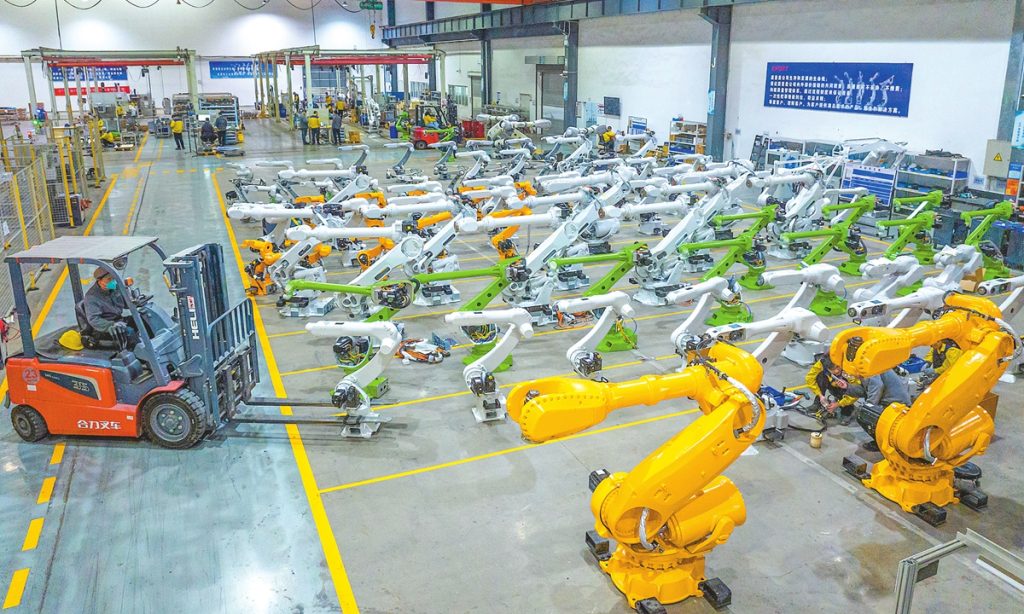
- Flexible manufacturing: Cobots and modular robotic systems allow companies to switch between products rapidly
- High-precision assembly: Robots perform tasks beyond human consistency and accuracy
- Autonomous logistics: Robots streamline warehouse operations, reducing operational costs and delivery times
1.2 Service Sector Penetration
- Healthcare: Robotic surgery, patient monitoring, and rehabilitation support improve outcomes and reduce human labor intensity
- Retail and hospitality: Automated inventory management, robotic cleaners, and customer-facing robots enhance service efficiency
- Agriculture: Autonomous harvesters and drones improve yields and reduce manual labor dependence
1.3 Emerging Industries Enabled by Robotics
- Space exploration and defense: Robots can operate in hazardous environments, opening entirely new sectors
- Advanced materials and nanomanufacturing: High-precision robotic systems enable previously impossible production techniques
- AI-integrated robotics platforms: Combine robotics with real-time analytics for intelligent economic operations
2. Productivity Enhancement and Labor Transformation
2.1 Increasing Output Per Worker
- Robots complement human labor by performing repetitive, dangerous, or highly precise tasks
- Studies show that countries with higher robot density in manufacturing see a 5–10% boost in labor productivity
2.2 Labor Market Shifts
- Low-skill manual tasks may be displaced, but new roles emerge in:
- Robot programming and maintenance
- AI model training and evaluation
- Data-driven operational oversight
- This shift emphasizes the need for workforce upskilling, which directly affects economic growth by enhancing human capital
2.3 Reducing Production Costs and Cycle Times
- Robotics minimizes defects, reduces downtime, and accelerates production cycles
- Efficiency gains allow companies to scale operations, reduce unit costs, and increase competitiveness
3. Robotics-Driven Innovation Across Sectors
3.1 Manufacturing Innovation
- Adoption of collaborative robots (cobots) enables SMEs to compete with larger corporations
- Modular robotics allows customized, on-demand production, driving industrial diversification
3.2 Healthcare and Life Sciences
- Robots enhance surgical precision, rehabilitation, and diagnostic speed
- Automation in labs accelerates drug discovery and genomic research, creating new economic opportunities
3.3 Logistics and Supply Chain
- Autonomous vehicles, drones, and warehouse robots reduce costs and increase reliability
- Robotics-driven logistics supports just-in-time manufacturing and global trade efficiency
3.4 Construction and Infrastructure
- Robots reduce labor-intensive tasks like bricklaying, welding, and inspection
- High-precision robotics improves quality, safety, and project completion speed
4. Investment Trends and Economic Implications
4.1 Capital Flow into Robotics
- Global robotics market value exceeded $80 billion in 2025, projected to reach $140–150 billion by 2030
- Investment is not limited to manufacturing but extends to:
- AI-integrated service robots
- Autonomous vehicles
- Robotics startups specializing in modular and adaptive systems
4.2 Return on Investment (ROI)
- Companies implementing robotics often see 20–40% ROI through increased throughput and reduced operational errors
- Long-term investments in robotics enable economies of scale and industry-wide cost reductions
4.3 Economic Multipliers
- Robotics drives indirect growth: supply chain expansion, software development, maintenance services, and data analytics industries all benefit
- Regional adoption can stimulate high-tech clusters, creating innovation hubs and enhancing national GDP
5. Policy, Regulation, and Strategic Frameworks
5.1 National Robotics Strategies
- Countries with proactive robotics policies experience faster industrial automation adoption
- Strategies include:
- Tax incentives for robotic investments
- Robotics R&D funding
- Education and workforce reskilling programs
5.2 Safety, Standardization, and Interoperability
- Standardization ensures cost-effective integration of robots across industries
- Safety regulations are crucial to minimize risks in human-robot collaborative environments
5.3 International Collaboration
- Cross-border partnerships accelerate innovation while allowing countries to adapt robotics technologies to local economic needs
6. Challenges and Risks
6.1 Workforce Displacement
- Automation may reduce demand for repetitive tasks, creating temporary unemployment
- Long-term mitigation requires reskilling programs and educational reform
6.2 High Initial Investment
- SMEs may struggle with upfront costs
- Shared robotics facilities and as-a-service models can reduce barriers to entry
6.3 Ethical and Social Concerns
- AI-powered robots in service sectors raise questions about privacy, liability, and human oversight
- Public acceptance is critical for widespread economic impact
6.4 Technological Dependence
- Overreliance on foreign robotics technology may limit local innovation capacity and economic sovereignty
7. Case Studies of Robotics Driving Economic Growth
7.1 Automotive Manufacturing in Japan and Germany
- High-density robotic assembly lines increase production efficiency by 30–50%
- Enables global competitiveness while creating high-value robotics and AI sectors
7.2 Logistics Automation in China
- Warehouse robots reduce labor costs and optimize delivery
- Boosts e-commerce efficiency, directly contributing to GDP growth in logistics and retail
7.3 Healthcare Robotics in the United States
- Robotic-assisted surgeries reduce patient recovery time, optimize hospital resource utilization
- Supports growth in healthcare innovation and medical technology exports
8. Future Trends and Economic Outlook
8.1 AI-Integrated Autonomous Systems
- Combining AI with robotics enables self-learning factories, autonomous logistics, and precision agriculture
- Enhances productivity across sectors, creating new markets and revenue streams
8.2 Collaborative and Modular Robotics
- Flexible platforms allow rapid adaptation to changing industrial demands
- Lower barriers to adoption for SMEs, promoting inclusive economic growth
8.3 Robotics as a Service (RaaS)
- Subscription-based models democratize access, spurring innovation in small enterprises
- Reduces capital constraints, expanding robotics’ economic impact
8.4 Regional Economic Clusters
- Robotics hubs encourage innovation spillovers, high-tech job creation, and local GDP growth
- Synergy between universities, industry, and government fosters sustainable economic expansion
9. Strategies to Maximize Economic Benefits
- Invest in Localized R&D – Tailor robots to local industry and workforce requirements
- Upskill the Workforce – Ensure human labor complements robotics to maximize efficiency
- Promote Public-Private Partnerships – Encourage joint innovation and pilot programs
- Adopt Adaptive Robotics Platforms – Enable versatile, cost-effective automation solutions
- Ensure Regulatory Readiness – Develop safety, interoperability, and ethical frameworks
Conclusion
Robots are poised to become a central engine of economic growth in the coming decades. By enhancing productivity, fostering innovation, and opening new industrial frontiers, robotics can transform economies at both national and global levels.