









Introduction
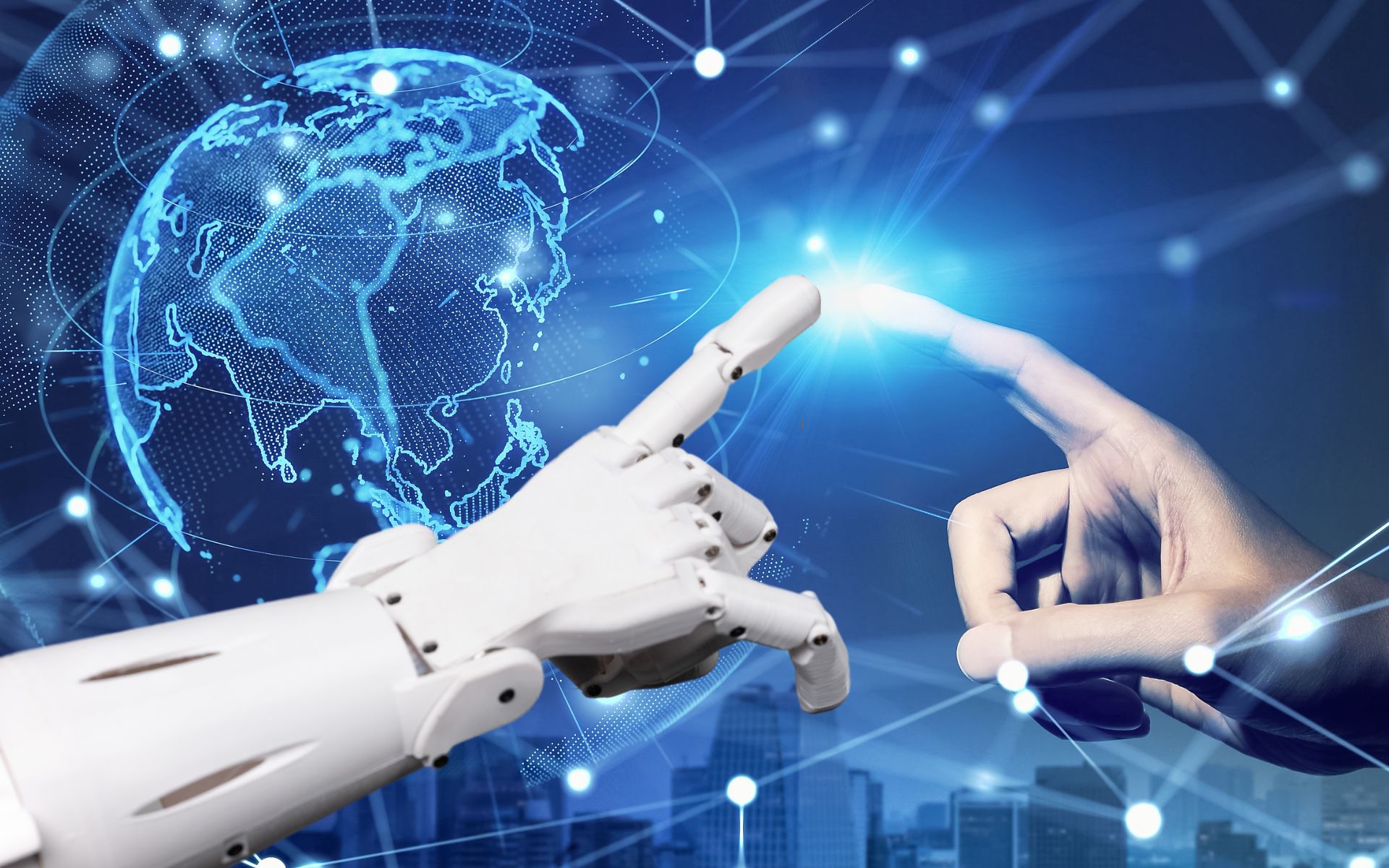
In the modern robotics landscape, incremental innovation—continuous improvements rather than disruptive leaps—has become a central strategy for sustaining competitiveness across industrial and service sectors. Three technological pillars are emerging as primary enablers of this innovation: Digital Twins (DT), Collaborative Robots (Cobots), and Autonomous Intelligent Systems (AIS).
- Digital Twins provide a virtual replica of physical systems, enabling simulation, predictive maintenance, and optimization.
- Collaborative robots allow humans and robots to work safely and efficiently side by side, enhancing flexibility and productivity.
- Autonomous intelligent robots leverage AI to perceive, plan, and act independently, supporting operations in dynamic, unstructured environments.
The convergence of these technologies is transforming manufacturing, logistics, healthcare, and service industries, providing incremental improvements in efficiency, safety, and adaptability, while laying the foundation for long-term strategic gains. This article explores these technologies in depth, their integration, industrial applications, strategic implications, challenges, and future directions.
1. Digital Twins: Virtual Mirrors for Continuous Optimization
1.1 Concept and Functionality
A Digital Twin is a virtual representation of a physical system, process, or robot, continuously updated with real-time data. Key capabilities include:
- Simulation: Testing operational scenarios without impacting real-world systems
- Predictive maintenance: Using sensor data and analytics to forecast failures and optimize servicing schedules
- Performance monitoring: Evaluating efficiency, energy consumption, and operational bottlenecks
1.2 Digital Twins in Robotics
In robotics, Digital Twins enable:
- Robot behavior simulation: Virtual testing of motion planning, manipulations, and task sequences
- Workflow optimization: Fine-tuning collaborative operations between multiple robots and humans
- Training and learning: Simulated environments for reinforcement learning or imitation learning without risking hardware
1.3 Strategic Value
- Reduced downtime: Predictive insights minimize disruptions
- Cost efficiency: Virtual trials reduce resource waste during prototyping
- Accelerated innovation cycles: New operational strategies can be tested and validated digitally before deployment
2. Collaborative Robots (Cobots): Enabling Human-Robot Synergy
2.1 Evolution and Core Capabilities
Unlike traditional industrial robots, which operate in segregated spaces, Cobots are designed to:
- Work alongside humans safely using sensors, soft materials, and force-limiting actuators
- Adjust speed, trajectory, and force dynamically according to human activity
- Perform repetitive or physically demanding tasks, freeing humans for decision-making, creativity, and supervision
2.2 Applications of Collaborative Robots
- Manufacturing: Assembly lines with shared human-robot workstations
- Logistics: Order picking, sorting, and material handling with adaptive interaction
- Healthcare: Assistance in rehabilitation, surgery support, and patient handling
- Service industries: Food service, cleaning, and hospitality tasks requiring close human contact
2.3 Strategic Implications
- Flexibility: Cobots adapt to changing tasks without extensive reprogramming
- Safety-first operations: Reduce workplace accidents and improve human confidence in automation
- Incremental productivity gains: Enhance efficiency without major infrastructural changes
3. Autonomous Intelligence in Robotics
3.1 Core Principles
Autonomous intelligence involves robots that:
- Perceive their environment using multimodal sensors
- Reason and make decisions using AI algorithms, reinforcement learning, and predictive models
- Act adaptively to achieve objectives in dynamic and unstructured environments
3.2 AI-Enabled Autonomy
- Path planning and navigation: AI algorithms allow robots to traverse unpredictable environments safely
- Manipulation and dexterity: Intelligent control enables handling of diverse objects and complex tasks
- Self-learning: Robots improve over time by learning from interactions and outcomes
3.3 Application Domains
- Smart logistics: Autonomous mobile robots optimize warehouse operations in real-time
- Healthcare robotics: Adaptive patient assistance and surgical support
- Service and hospitality: Autonomous cleaning, delivery, and customer interaction
3.4 Strategic Significance
- Reduces dependency on preprogrammed routines, increasing operational resilience
- Supports scalable deployment in environments with unpredictable human activity
- Enables incremental improvements in productivity, accuracy, and safety
4. Synergy Between Digital Twins, Cobots, and Autonomous Intelligence
4.1 Integrated Robotics Ecosystem
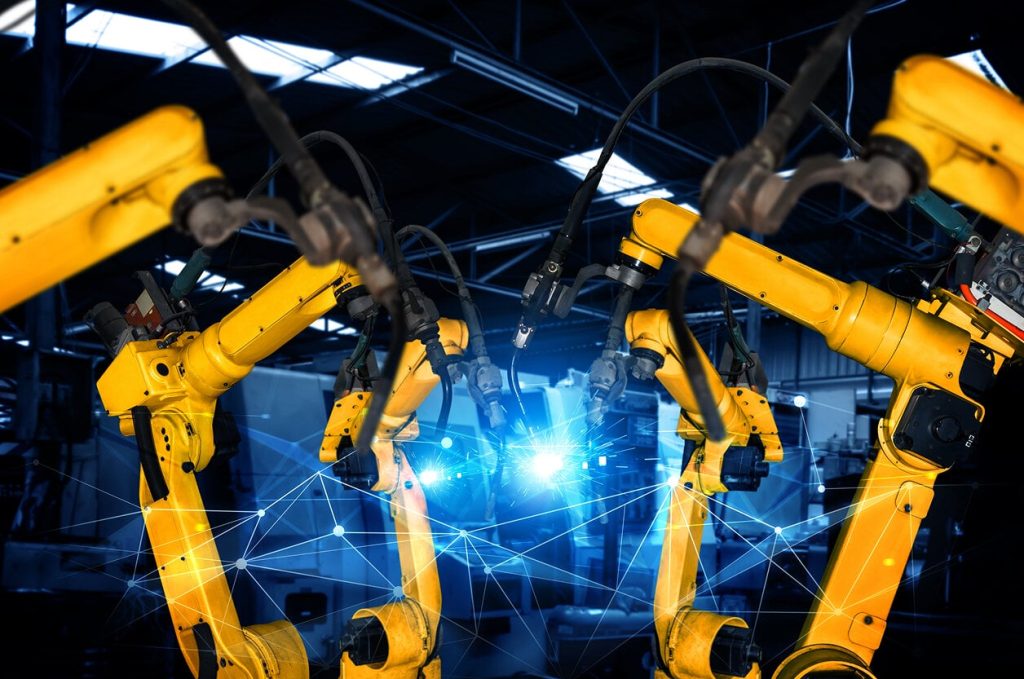
The combined use of DT, Cobots, and AIS creates a synergistic loop:
- Digital Twin Simulation: Validates strategies and anticipates bottlenecks
- Cobot Execution: Applies optimized strategies in human-robot collaborative settings
- Autonomous Learning: Robots adapt to deviations, continuously improving performance
This synergy accelerates incremental innovation, allowing enterprises to enhance productivity, safety, and flexibility without massive infrastructure overhaul.
4.2 Examples of Integration
- Smart factories: Cobots with DT-based predictive analytics navigate shared production lines autonomously, reducing errors
- Healthcare robotics: Autonomous patient assistance robots use DT simulations to optimize interaction patterns
- Warehouse operations: Fleet of autonomous mobile robots coordinated via digital twins, learning collaborative strategies with human operators
5. Economic and Strategic Implications
5.1 Driving Incremental Innovation
- Small, continuous improvements can yield significant efficiency and quality gains
- Reduces risks associated with large-scale disruptive changes
- Facilitates data-driven decision-making for both operations and strategy
5.2 Enhancing Workforce Productivity
- Cobots augment human labor, enabling employees to focus on high-value tasks
- Autonomous robots reduce reliance on repetitive manual work, optimizing workforce allocation
- Digital twins support real-time monitoring and process improvement, guiding human decision-making
5.3 Competitive Advantage
- Early adopters gain operational efficiency, adaptability, and resilience
- Companies can scale incremental innovations quickly, enhancing market responsiveness
- Long-term strategy focuses on continuous learning and adaptive operations, rather than one-off mechanization
6. Technical Challenges and Considerations
6.1 Integration Complexity
- Harmonizing digital twin simulations, cobot control, and autonomous AI systems requires robust software-hardware integration
- Real-time synchronization of virtual and physical systems is computationally demanding
6.2 Data and Sensor Reliability
- Autonomous systems rely on accurate, high-fidelity sensor data
- Sensor failures or data inconsistencies can propagate errors into both DT simulations and real-world operations
6.3 Safety and Human Interaction
- Collaborative operations necessitate rigorous safety protocols and ethical AI frameworks
- Systems must handle edge cases where human behavior deviates from expected patterns
6.4 Scalability and Cost
- Deployment at scale requires modular hardware, cloud-edge hybrid computing, and cost-effective sensors
- Balancing incremental gains against investment costs is critical
7. Future Directions
7.1 AI-Enhanced Digital Twins
- Combining AI with digital twins enables predictive, self-optimizing operations
- Simulations can anticipate supply chain disruptions, maintenance needs, and human interaction patterns
7.2 Next-Generation Cobots
- Enhanced dexterity, multimodal sensing, and adaptive learning allow closer human-robot collaboration
- Robots can learn user-specific preferences, improving efficiency and ergonomics
7.3 Fully Autonomous Intelligent Systems
- Autonomous robots capable of coordinating multiple tasks and learning from distributed experiences
- Integration with DT and Cobots creates intelligent ecosystems that continuously optimize themselves
7.4 Industry-Wide Digital Transformation
- Incremental innovations in robotics drive broader smart factory, smart logistics, and smart service sector evolution
- Enables resilient, data-driven operations adaptable to changing market demands
8. Strategic Recommendations for Industry
- Adopt a Layered Innovation Strategy – Combine DT simulations, Cobots, and autonomous intelligence incrementally
- Invest in AI-Integrated Platforms – Ensure hardware and software can support learning and adaptation
- Prioritize Human-Robot Safety and Collaboration – Implement robust safety protocols for shared workspaces
- Leverage Data for Continuous Improvement – Use insights from DT and AI for ongoing optimization
- Plan for Scalable Deployment – Design modular systems to accommodate expanding operations and future upgrades
Conclusion
Digital Twins, Collaborative Robots, and Autonomous Intelligent Systems are key enablers of incremental innovation in modern robotics. Together, they allow organizations to:
- Achieve continuous operational improvements without disruptive overhauls
- Enhance human-robot collaboration, safety, and productivity
- Develop flexible, adaptable systems capable of learning from their environment
- Maintain strategic advantage in dynamic, competitive industries
In a rapidly evolving industrial landscape, the integration of these technologies ensures that incremental innovation becomes a sustainable growth engine, driving efficiency, resilience, and long-term competitiveness.