









Introduction
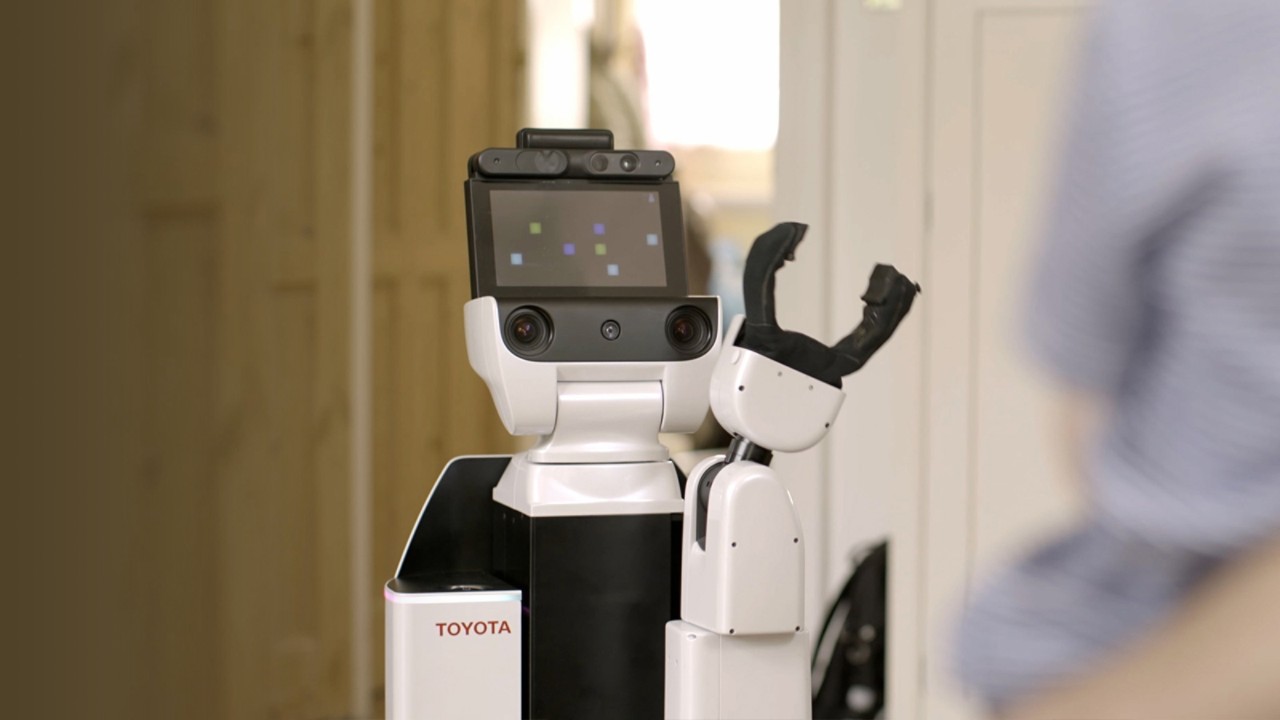
Robots are no longer simple programmable machines confined to controlled factory floors — they are becoming increasingly autonomous, adaptive, and capable of performing a wide range of complex tasks in unstructured real‑world environments. Yet this evolution is not primarily enabled by software alone: it is grounded in continuous breakthroughs in hardware and chip innovation. Without significant improvements in foundational hardware — from sensors and actuators to embedded processors and AI accelerators — robots cannot reliably perceive, decide, or interact with the world around them.
In this article, we explore why hardware self‑performance improvement is the cornerstone of practical robotics deployment. We cover the technological foundations, industry dynamics, key innovations in sensors, actuators, embedded computing, and AI chips, integration challenges, industrial examples, and future prospects. Throughout, we emphasize how hardware drives the feasibility, efficiency, reliability, and safety of robotic systems in real applications.
1. Why Hardware Matters in Robotics
Robotics is inherently a cyber‑physical discipline — it involves tight coupling between computation and physical interaction. While sophisticated algorithms and AI models can interpret data and plan behaviors, it is the hardware layer that translates digital intent into real motion and sensing. When hardware performance is constrained, even the most advanced AI cannot overcome physical limitations such as latency, reliability, energy efficiency, and safety.
For robots to be deployed outside controlled laboratory environments — in warehouses, healthcare facilities, logistics centres, public spaces, or homes — their hardware must be able to:
- Sense accurately and robustly across diverse conditions
- Act with precision, speed, and safety
- Compute locally with high performance and low latency
- Operate energy‑efficiently for long durations
As the Shenzhen municipal robotics development plan illustrates, breakthroughs in both core components and AI chips are central to realizing embodied intelligence — the ability for robots to interact meaningfully with the physical world.
Hardware improvement is not optional — it’s a prerequisite for real‑world performance.
2. Sensors: The Foundation of Perception
A robot’s perception system determines how well it can interpret its environment. Without rich and reliable sensory input, decision‑making and control are severely limited.
2.1 Vision and Depth Sensing
Vision sensors (RGB cameras, depth cameras, stereo systems) are ubiquitous in robotics. They provide rich environmental data enabling object recognition, navigation, and scene understanding. Advances in depth sensing — such as RealSense cameras spun out from Intel — indicate the strategic importance and commercial potential of specialized sensor hardware tailored for robotics.
Key trends include:
- Higher resolution and dynamic range for better object detection
- Lower power consumption and embedded preprocessing
- Sensor fusion hardware that combines vision with other modalities (e.g., LiDAR, radar, IMU)
Vision hardware directly affects a robot’s ability to perceive motion, obstacles, people, and complex spatial configurations.
2.2 Tactile and Force Sensing
Physical interaction with objects — particularly in manipulation tasks — demands high‑resolution tactile sensing. Integrated flexible tactile sensor arrays are being developed that deliver rich spatial and pressure information, providing robots with “touch” capabilities that mirror human sensory experience.
Tactile hardware expands a robot’s perceptual dimension into physical contact, enabling delicate, adaptive handling in scenarios such as:
- Grasping fragile items
- Human‑robot collaboration
- Fine manipulation in cluttered environments
2.3 Multimodal Perception and Sensor Fusion
Increasingly, robots must combine inputs from visual, depth, auditory, proprioceptive, and tactile modalities. Hardware architectures that support multimodal sensor fusion at the edge — such as specialized signal processors and real‑time data buses — reduce latency and increase reliability. This fusion directly enhances situational awareness and decision quality.
3. Actuators and Mobility: Precision Meets Power
Sensors tell a robot what is happening; actuators determine how it interacts with the world.
3.1 Precision Actuation
For robots performing manipulation, locomotion, or collaborative tasks, precision and responsiveness are essential. Advances in servo motors, harmonic drives, and joint designs yield:
- Higher torque density
- Lower backlash and mechanical play
- Greater energy efficiency
Improved actuators allow robots to behave smoothly and reliably, which is critical for deploying robots in environments shared with humans.
3.2 Compliance and Safety Hardware
Human–robot collaboration (HRC) demands physical compliance — robots must not only act correctly but also safely. Series elastic actuators (SEAs) and hardware compliance mechanisms allow robots to absorb shocks, avoid injury, and interact smoothly during tasks such as assembly, material handling, or caregiving.
4. Embedded Compute and AI‑Optimized Chips
While sensors and actuators handle perception and motion, processing hardware serves as the robot’s brain — executing models, planning motion, and interpreting data.
4.1 General Compute vs Specialized AI Chips
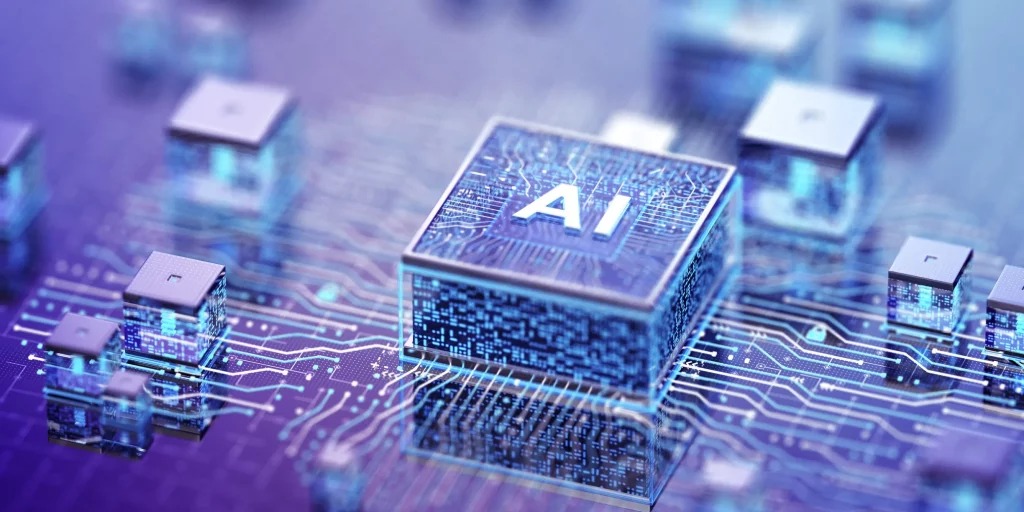
Traditional CPUs deliver general purpose computing but often struggle with the heavy parallel workloads of modern AI. Specialized AI chips — including NPUs (Neural Processing Units), GPUs, and custom accelerators — are now central to robotic performance. These chips are engineered for:
- Real‑time neural network inference
- Low‑latency sensor processing
- High throughput for multimodal data
For instance, Nvidia’s Jetson AGX Thor module represents a new generation of robotics‑centric compute platforms that deliver orders of magnitude greater AI compute performance and energy efficiency, enabling robots to run complex perception, planning, and control models locally.
The availability of affordable yet powerful compute hardware is lowering barriers to building advanced robots capable of operating in dynamic environments.
4.2 Custom Architectures for Control and AI
Architecture strategy is evolving. Beyond general GPU cores, robotics chips increasingly integrate:
- Heterogeneous compute units (CPU + GPU + NPU)
- Real‑time accelerators for control loops
- Low‑power modes for energy efficiency
- Edge cloud integration for hybrid processing
This trend reflects the broader industry view that AI, chip, and robotics ecosystems must converge — embodied by initiatives emphasizing the joint development of integrated hardware and software stacks.
4.3 Strategic Importance of Autonomous Chip Development
Many countries, including China, view autonomous development of robot‑specific chips as a strategic priority because these chips underpin economic competitiveness and technological sovereignty. Policies and research strategies are being developed to strengthen domestic core chip capabilities, reduce reliance on foreign technology, and elevate robotic hardware performance to global leadership.
5. System Integration: Bringing It All Together
A robot’s performance is not just about isolated components — it depends on how hardware elements integrate into a coherent system.
5.1 Hardware‑Software Co‑Design
Optimizing performance requires co‑design of hardware and software such that:
- Sensor drivers and middleware support real‑time data flows
- AI models are quantized and optimized for specific hardware
- Low‑level control loops use hardware acceleration
Frameworks like RobotCore demonstrate how embedded hardware acceleration can dramatically increase responsiveness and efficiency in real robotic stacks.
5.2 Standards and Interfaces
Standardizing interfaces between components (e.g., sensors, compute modules, and actuators) enhances modularity and reduces integration overhead. This is critical in complex robots — especially humanoids or advanced manipulators — where components must interact seamlessly under diverse workloads.
6. Performance, Efficiency, and Real‑World Reliability
Hardware innovation drives several performance vectors critical for real‑world robotic deployment:
6.1 Latency and Real‑Time Response
In dynamic environments, robots must perceive and act with minimal delay. Hardware acceleration ensures low‑latency processing, allowing robots to respond quickly to moving obstacles, human contacts, or changing mission goals.
6.2 Energy Efficiency and Autonomy
Many robots are battery‑powered and must balance compute, sensing, and actuation within tight energy budgets. Hardware designs that optimize power efficiency directly improve operational duration and reduce downtime, which is essential for applications such as service robots and autonomous mobile robots.
6.3 Robustness and Reliability
Industrial deployments demand reliable hardware that can withstand extended use and harsh conditions. Innovations in hardware durability — from rugged sensors to high‑MTBF (mean time between failures) processors — reduce maintenance costs and increase uptime.
7. Industrial and Societal Applications Enabled by Hardware Innovation
The practical impact of improved robotics hardware shows up in numerous deployment contexts:
7.1 Manufacturing and Flexible Automation
Next‑generation robots in factories perform complex tasks that were previously manual — from precision assembly to dynamic pick‑and‑place operations. Higher hardware performance enables:
- Adaptive real‑time planning
- Safety in human–robot collaborations
- Efficiency in small‑batch manufacturing
7.2 Warehousing, Logistics, and Supply Chain
Autonomous robots equipped with advanced compute and sensor systems can navigate cluttered spaces, interpret dynamic environments, and collaborate with human workers — improving logistics throughput without extensive infrastructure changes.
7.3 Healthcare and Assistance
Care robots benefit from precise hardware: low‑latency sensing for safety, efficient compute for nonverbal interaction, and robust actuators for delicate tasks. These capabilities expand robots’ roles from routine assistance to clinical applications.
7.4 Autonomous Vehicles and Field Robotics
Higher hardware performance enables real‑time perception and decision‑making on edge processors, which is essential for safety‑critical field robotics applications such as self‑driving cars and search‑and‑rescue drones.
8. Challenges and Future Research Directions
Though progress is significant, several challenges remain:
8.1 Balancing Compute Power and Energy Efficiency
Delivering high AI compute while maintaining acceptable power consumption is a core challenge, especially for mobile robots without continuous power supply.
8.2 Reducing Cost and Increasing Accessibility
High‑performance hardware often comes with high costs. Making advanced compute platforms and sensors affordable and scalable is necessary for broader adoption.
8.3 Integrating Heterogeneous Systems
Integrating custom chips, sensors, actuators, and AI models while maintaining system stability requires sophisticated engineering and validation tools.
8.4 Security and Safety in Embedded Systems
Hardware layers must include security features — both to protect data and ensure safety in interactions with humans and critical infrastructure.
Conclusion
Hardware and chip innovation are not secondary considerations in robotics — they are the foundation on which real‑world robotic systems are built. Improvements in sensors, actuators, embedded compute, and specialized AI chips determine whether robots can operate reliably, efficiently, safely, and autonomously outside controlled environments.
From advanced AI modules like Nvidia’s Jetson AGX Thor that enable real‑time AI inference on robots’ edge platforms, to national strategies for independent robot chip development, the sector is investing heavily in hardware as a critical enabler of practical robotics deployment.
As robotics continues to expand across industry, healthcare, logistics, and daily life, the co‑evolution of hardware innovation and intelligent algorithms will remain essential. Only by improving the self‑performance of hardware can robots fulfill their potential — not as laboratory curiosities, but as practical tools and collaborators in the real world.