









Introduction: The Rise of Industrial Humanoid Robotics
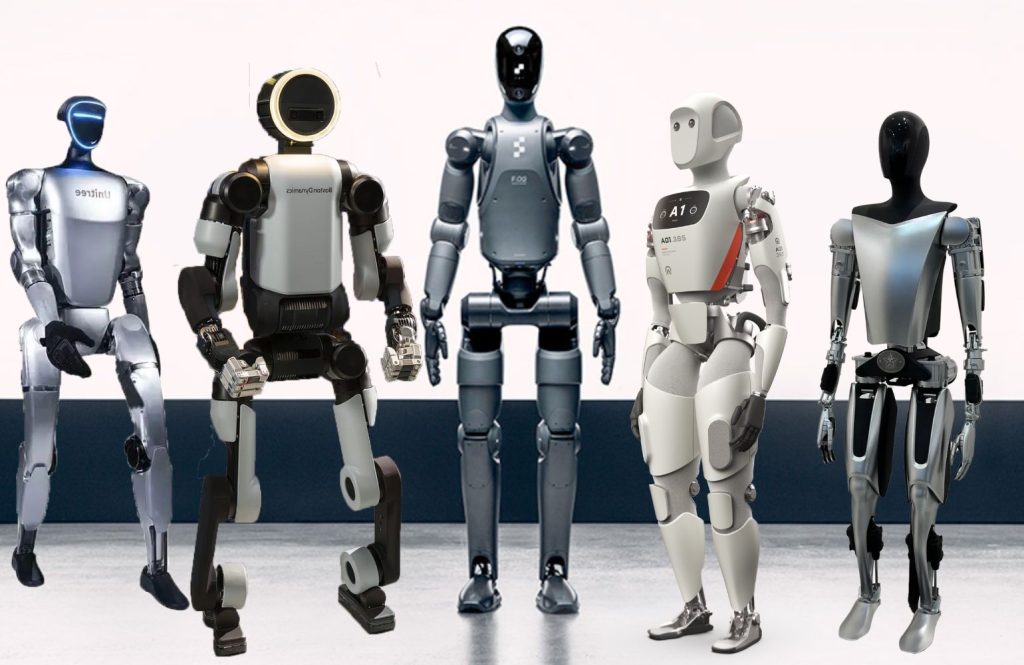
Humanoid robots are no longer confined to laboratories or controlled demonstrations. Leading companies such as Boston Dynamics, Agility Robotics, and Unitree are increasingly emphasizing industrial-scale deployment. Unlike traditional industrial robots, which are often fixed and task-specific, humanoid robots combine mobility, dexterity, and adaptive intelligence, allowing them to operate in human-centric environments at scale.
Industrial-scale deployment requires a convergence of hardware robustness, advanced AI perception, safety compliance, and operational integration. This article explores the strategic, technical, and practical aspects of deploying humanoid robots at industrial scales, focusing on approaches emphasized by key manufacturers.
1. Market Drivers for Industrial Humanoid Deployment
1.1 Labor Shortages and Workforce Augmentation
- Global manufacturing and logistics sectors face shrinking skilled labor pools.
- Humanoid robots provide continuous operation in complex environments, complementing human workers.
1.2 Demand for Flexibility and Customization
- Traditional industrial automation excels at repetitive tasks, but modern factories require adaptability for varied product lines.
- Humanoids, with their versatile manipulators and mobility, can handle diverse operations.
1.3 Safety and Ergonomics
- Tasks that are physically strenuous, repetitive, or hazardous can be reassigned to humanoid robots.
- Human operators focus on cognitive tasks, reducing fatigue and injury risks.
2. Key Players and Their Industrial Strategies
2.1 Boston Dynamics
- Emphasizes deployable robots like Atlas and Stretch, integrating mobility, perception, and manipulation.
- Strategy: Develop robust platforms capable of long-duration operations in industrial settings, including warehouses, factories, and logistics centers.
- Atlas demonstrates dynamic agility, including walking, climbing, and precise manipulation, highlighting feasibility for environments designed for humans.
2.2 Agility Robotics
- Focuses on bipedal mobility for industrial inspection and delivery tasks.
- Emphasizes lightweight, energy-efficient humanoid designs suitable for repetitive industrial pathways.
2.3 Unitree and Other Regional Innovators
- Concentrate on cost-effective, modular humanoid systems for industrial adoption.
- Integration with AI-driven control systems and cloud monitoring facilitates scalable deployment.
3. Industrial-Scale Deployment Pathways
3.1 Task Identification
- Key tasks suitable for humanoids include:
- Inventory transport and warehouse replenishment
- Inspection of machinery and hard-to-reach areas
- Assembly in human-centric workstations
- Safety monitoring and compliance enforcement
3.2 Pilot Projects
- Initial deployment focuses on low-risk, repetitive, or logistics-intensive tasks.
- Companies conduct controlled pilots to evaluate mobility, manipulation, and AI perception in operational contexts.
3.3 Scaling Up
- After successful pilots, humanoid robots are integrated across multiple workstations and facilities.
- Deployment includes fleet coordination, predictive maintenance, and AI-driven scheduling.
4. Technical Foundations
4.1 Hardware Design
- Actuators and joints: High-torque, low-latency drives for precise motion.
- Energy management: Efficient batteries and regenerative mechanisms for long-duration operations.
- Sensors: Multi-modal arrays including LiDAR, cameras, IMUs, and tactile sensors for environment perception.
4.2 Software and AI
- Perception: Vision and depth sensing enable obstacle detection and human interaction.
- Control: Advanced motion planning, adaptive locomotion, and force control allow humanoids to navigate complex environments.
- Learning: Reinforcement learning and AI optimization enable continuous improvement in task execution.
4.3 Safety and Compliance
- ISO 10218 and ISO/TS 15066 standards guide interaction safety in industrial settings.
- Safety layers include proximity detection, dynamic speed adjustment, and force-limited motion.
5. Case Studies
5.1 Boston Dynamics in Logistics
- Stretch robot, optimized for box handling, demonstrates autonomous pick-and-place at warehouse scale.
- Atlas humanoid tests in factory inspection and material movement, highlighting mobility across human-designed environments.
5.2 Agility Robotics in Manufacturing
- Digit platform used for intra-factory delivery of tools and components, reducing human travel time.
- Demonstrates integration with factory ERP and production scheduling systems.
5.3 Collaborative Deployment
- Humanoids work alongside traditional cobots for task handover and assembly support, creating hybrid automation ecosystems.
6. Challenges in Industrial-Scale Deployment
6.1 Technical Limitations
- Energy consumption and battery life constrain continuous operations.
- Manipulation dexterity is still limited compared to specialized industrial robots.
6.2 Integration Complexity
- Interfacing humanoids with existing production lines, IoT networks, and ERP systems requires robust middleware.
- Real-time coordination among multiple robots and human workers is nontrivial.
6.3 Economic Considerations
- High upfront costs and maintenance expenses necessitate careful ROI planning.
- Cost-benefit improves with fleet deployment and multi-task utilization.
6.4 Human-Robot Collaboration
- Trust, predictability, and ergonomics are critical for acceptance.
- Training programs for human operators are necessary to ensure smooth collaboration.
7. Strategies for Effective Deployment
7.1 Modular Design
- Modular limbs, sensors, and AI packages allow adaptation to diverse tasks and environments.
- Simplifies maintenance and future upgrades.
7.2 Fleet Management
- Centralized monitoring coordinates multiple humanoid units for task allocation, predictive maintenance, and safety compliance.
7.3 Continuous Learning
- AI-driven reinforcement learning allows robots to improve task efficiency and adaptability.
- Integration of digital twins facilitates simulation-driven optimization before real-world deployment.
8. Industrial Impact
8.1 Productivity
- Humanoids increase throughput in logistics, assembly, and inspection tasks.
- Enable 24/7 operations without fatigue, increasing overall efficiency.
8.2 Workforce Transformation
- Human operators focus on supervision, decision-making, and creative problem-solving.
- Humanoids take on repetitive, hazardous, or ergonomically challenging tasks.
8.3 Safety and Quality
- Reduced human exposure to dangerous or strenuous tasks.
- Consistent execution ensures higher quality and lower error rates.
9. Future Directions
9.1 AI and Adaptive Intelligence
- Deep learning and computer vision will enable humanoids to navigate dynamically changing industrial environments.
- Predictive algorithms allow robots to anticipate human actions and workflow changes.
9.2 Human-Robot Symbiosis
- Improved gesture recognition, speech interfaces, and shared workspace prediction enhance collaboration.
- Integration into mixed human-robot teams enables dynamic task assignment and cooperative assembly.
9.3 Economic Scaling
- Reduction in hardware costs, standardization, and software platform improvements will make industrial humanoids economically viable for mid-scale deployment.
10. Strategic Takeaways
- Key manufacturers like Boston Dynamics emphasize robust mobility, versatile manipulation, and AI integration for industrial-scale humanoid deployment.
- Successful implementation depends on careful pilot projects, modular design, fleet management, and operator training.
- Humanoid robots complement traditional automation, extending human capabilities and enabling flexible, resilient, and intelligent industrial operations.
- The future industrial landscape will feature hybrid ecosystems where humanoids, cobots, and traditional robots collaborate seamlessly.
Conclusion
Industrial-scale deployment of humanoid robots is transitioning from experimental demonstration to practical implementation, driven by workforce demands, operational flexibility, and technological maturity.