









Introduction
The integration of Artificial Intelligence (AI) into modern systems has redefined the boundaries of autonomy and intelligence across industries. From autonomous vehicles and drones to smart manufacturing and predictive maintenance, AI enables systems to perceive, reason, and act independently, often surpassing human capabilities in speed, precision, and data processing.
AI-driven autonomy is no longer a theoretical concept; it is increasingly becoming a practical reality that impacts logistics, healthcare, defense, energy, and more. At the same time, intelligence powered by AI enhances decision-making, operational efficiency, and adaptability, transforming how businesses and societies function.
Despite its potential, deploying AI-driven autonomous systems is a complex endeavor. It requires sophisticated algorithms, robust sensor networks, high-performance computing, and careful consideration of safety, ethics, and regulatory compliance. This article examines the technological foundations, real-world applications, challenges, and future directions of AI-driven autonomy and intelligence.
1. Defining AI-Driven Autonomy and Intelligence
1.1 Autonomy in AI Systems
Autonomy refers to a system’s ability to operate without human intervention. AI-driven autonomous systems are capable of:
- Perception: Recognizing and interpreting the environment using sensors and data.
- Decision-making: Determining actions based on real-time analysis.
- Execution: Performing tasks with minimal or no human guidance.
Examples include autonomous vehicles navigating urban environments, warehouse robots managing inventory, and drones performing surveillance missions.
1.2 Intelligence in AI Systems
Intelligence in AI encompasses cognitive capabilities that allow systems to:
- Learn from experience (machine learning)
- Adapt to changing conditions (adaptive algorithms)
- Predict outcomes (predictive analytics)
- Optimize performance over time (reinforcement learning)
Unlike conventional automation, which follows fixed rules, AI-driven intelligence enables systems to interpret complex data, identify patterns, and make context-aware decisions, often in uncertain or dynamic environments.
2. Technological Foundations
2.1 Machine Learning and Deep Learning
Machine learning (ML) provides systems with the ability to learn from data, improving performance without explicit programming. Deep learning (DL), a subset of ML, uses neural networks to model complex patterns, enabling tasks such as:
- Image recognition
- Natural language understanding
- Predictive maintenance
These capabilities are foundational to autonomous systems, allowing them to perceive environments, interpret sensor data, and optimize actions dynamically.
2.2 Sensor Fusion and Perception Systems
Autonomous AI systems rely on an array of sensors—LiDAR, radar, cameras, and ultrasonic devices. Sensor fusion combines these data streams to create an accurate and holistic understanding of the environment. This is critical for:
- Obstacle detection and avoidance
- Navigation in unstructured environments
- Environmental awareness in real-time
2.3 Edge Computing and Real-Time Processing
High-performance computing enables real-time processing of massive data streams. Edge computing brings computation closer to the data source, reducing latency and enabling immediate decision-making—essential for autonomous vehicles, industrial robots, and smart infrastructure.
2.4 Reinforcement Learning and Adaptive Behavior
Reinforcement learning (RL) allows AI systems to learn optimal behavior through trial and error. This capability enables autonomous systems to improve performance over time, adapt to unforeseen scenarios, and operate in environments where pre-programmed rules are insufficient.
3. Applications Across Industries
3.1 Autonomous Vehicles
AI-driven autonomy is transforming transportation. Self-driving cars, trucks, and delivery robots use sensor fusion, deep learning, and predictive analytics to:
- Navigate complex traffic scenarios
- Optimize route planning
- Reduce human error and increase safety
Autonomous trucks, for example, are deployed for long-haul routes, offering cost savings and consistent operational efficiency, while reducing driver fatigue and accident risk.
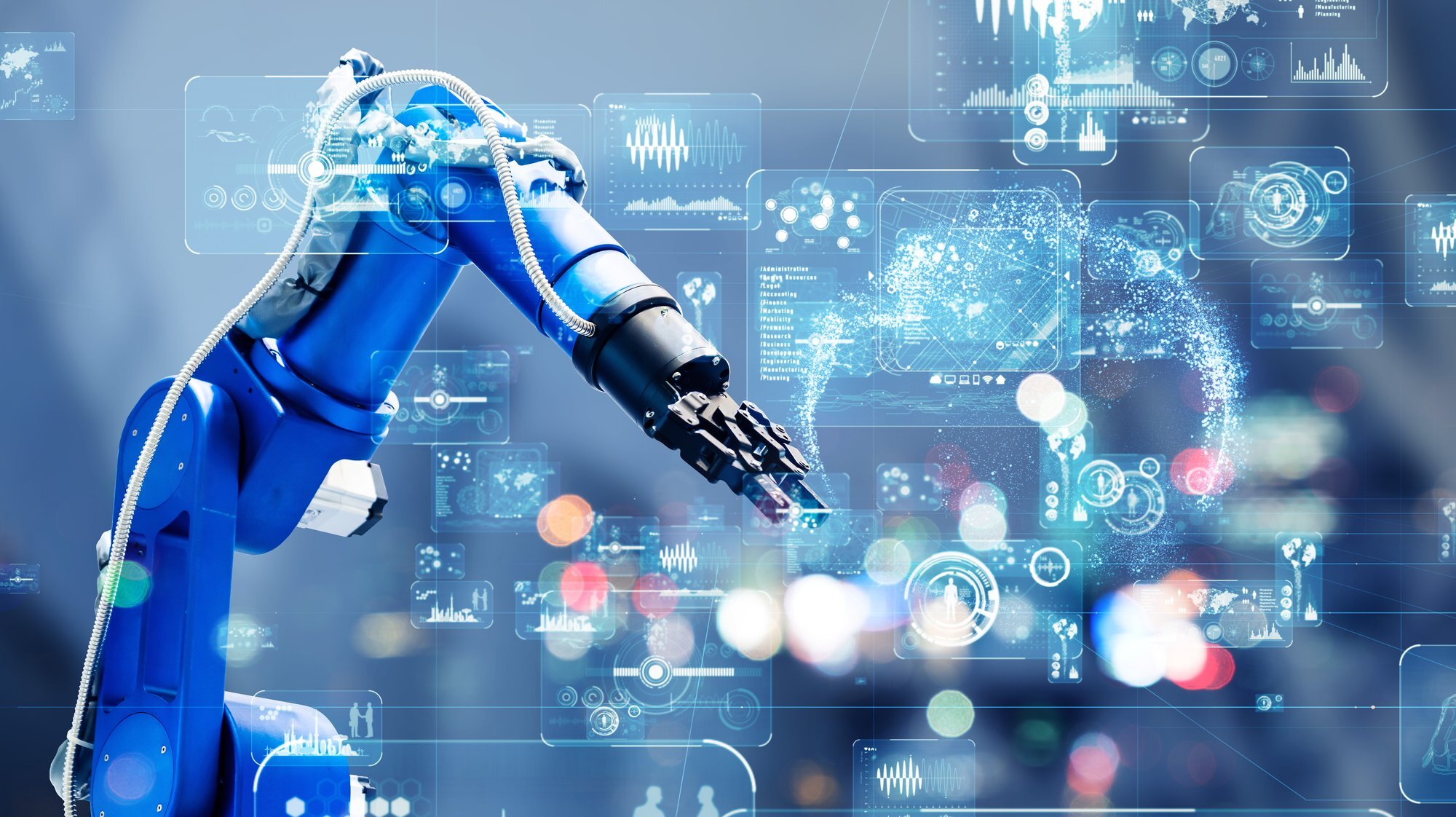
3.2 Robotics in Manufacturing
Industrial robots equipped with AI are achieving levels of precision and adaptability previously unattainable:
- Collaborative robots (cobots) work alongside humans for complex assembly tasks
- Predictive maintenance reduces downtime by forecasting equipment failures
- Quality inspection systems detect defects with higher accuracy than human operators
AI-driven autonomy allows robots to dynamically adjust operations based on real-time sensor data, improving efficiency and reducing errors.
3.3 Healthcare and Medical Diagnostics
AI-driven autonomous systems in healthcare enhance both diagnostic accuracy and operational efficiency:
- Imaging systems identify anomalies in medical scans with high precision
- AI-assisted surgical robots provide real-time decision support during operations
- Autonomous patient monitoring and predictive analytics improve hospital workflow and patient outcomes
3.4 Logistics and Supply Chain
Autonomous AI systems optimize logistics operations:
- Warehouse robots handle inventory sorting, packing, and transportation
- AI-driven route optimization improves delivery efficiency and reduces fuel consumption
- Predictive analytics anticipate supply-demand fluctuations, minimizing stockouts and overstock
3.5 Defense and Security
Autonomous systems in defense leverage AI to:
- Conduct surveillance and reconnaissance missions
- Identify threats using pattern recognition and anomaly detection
- Deploy unmanned vehicles in hazardous environments, reducing human risk
4. Advantages of AI-Driven Autonomy and Intelligence
4.1 Operational Efficiency
Autonomous systems reduce human dependency, streamline workflows, and optimize resource utilization. For example:
- Factories achieve continuous production with minimal downtime
- Logistics networks operate 24/7 without human fatigue limitations
4.2 Safety and Risk Reduction
AI-driven systems improve safety by performing tasks in hazardous environments:
- Mines, chemical plants, and construction sites benefit from autonomous inspection and handling
- Self-driving vehicles reduce accidents caused by human error
4.3 Decision-Making Enhancement
Intelligent systems analyze complex datasets in real-time, supporting decision-making with predictive insights and scenario simulations.
4.4 Scalability and Adaptability
AI-driven autonomy allows systems to scale rapidly and adapt to changing operational conditions without extensive human intervention.
5. Challenges and Limitations
5.1 Technical Challenges
- Sensor limitations and environmental variability can reduce system reliability
- AI algorithms may fail in unstructured or unpredictable conditions
- Integration with legacy systems remains complex
5.2 Cost and Investment
- High upfront costs for AI hardware, sensors, and infrastructure
- Ongoing operational and maintenance expenses
- Need for specialized personnel increases total cost of ownership
5.3 Ethical and Legal Concerns
- Accountability in autonomous decision-making
- Privacy and data security issues
- Regulatory compliance and cross-border legal considerations
5.4 Workforce Implications
- Job displacement in routine or manual tasks
- Need for reskilling and upskilling to manage autonomous systems
6. Strategies for Effective Deployment
6.1 Phased Implementation
- Start with pilot programs in controlled environments
- Gradually expand autonomy and intelligence as systems mature
6.2 Hybrid Human-AI Collaboration
- Combine human oversight with autonomous decision-making
- Utilize cobots and assisted systems to balance efficiency and control
6.3 Continuous Learning and Adaptation
- Implement reinforcement learning and adaptive algorithms to improve performance over time
- Use feedback loops to refine AI behavior and decision-making
6.4 Risk Management and Compliance
- Develop robust cybersecurity protocols
- Ensure regulatory compliance for autonomous operations
- Establish clear accountability and ethical guidelines
7. Case Studies
7.1 Tesla and Autonomous Driving
Tesla’s self-driving technology leverages deep neural networks and real-time sensor data to navigate urban roads autonomously. Continuous updates and fleet learning allow vehicles to adapt to new scenarios, demonstrating scalable AI-driven autonomy.
7.2 Amazon Robotics in Warehousing
Amazon deploys AI-driven autonomous robots to manage inventory, optimize picking paths, and reduce human labor for repetitive tasks. This enhances efficiency, reduces errors, and supports a scalable logistics model.
7.3 AI-Assisted Surgery
The da Vinci Surgical System combines AI with robotic precision to assist surgeons in minimally invasive procedures. Real-time image analysis and predictive modeling improve patient outcomes and reduce surgical risk.
7.4 Defense Drones
Autonomous drones use AI for reconnaissance, target detection, and mission planning. These systems reduce human exposure to danger while executing complex operational tasks efficiently.
8. Future Outlook
8.1 Increasing Autonomy
AI systems will progressively move from semi-autonomous to fully autonomous operations, reducing human oversight in predictable and controlled scenarios.
8.2 Cognitive AI and Generalization
Future AI will possess greater cognitive capabilities, enabling cross-domain generalization and decision-making in unfamiliar situations.
8.3 Integration Across Industries
Autonomous AI will converge with IoT, 5G, and edge computing, creating intelligent ecosystems across manufacturing, logistics, healthcare, and smart cities.
8.4 Ethical and Societal Frameworks
Establishing ethical guidelines, safety standards, and societal frameworks will be critical to ensure responsible AI-driven autonomy.
Conclusion
AI-driven autonomy and intelligence are transforming the operational and strategic landscape across industries. By enabling systems to perceive, reason, and act independently, AI improves efficiency, safety, and decision-making capabilities while offering scalable, adaptable solutions.
Despite immense potential, challenges remain in technical reliability, cost, ethics, workforce adaptation, and regulatory compliance. Strategic deployment—including phased implementation, human-AI collaboration, continuous learning, and risk management—can mitigate these constraints.
Ultimately, AI-driven autonomy represents not merely a technological evolution, but a paradigm shift in how industries operate, decisions are made, and human labor interacts with intelligent systems. Organizations that embrace these innovations thoughtfully and strategically will secure a competitive edge in an increasingly autonomous and intelligent future.