









Introduction
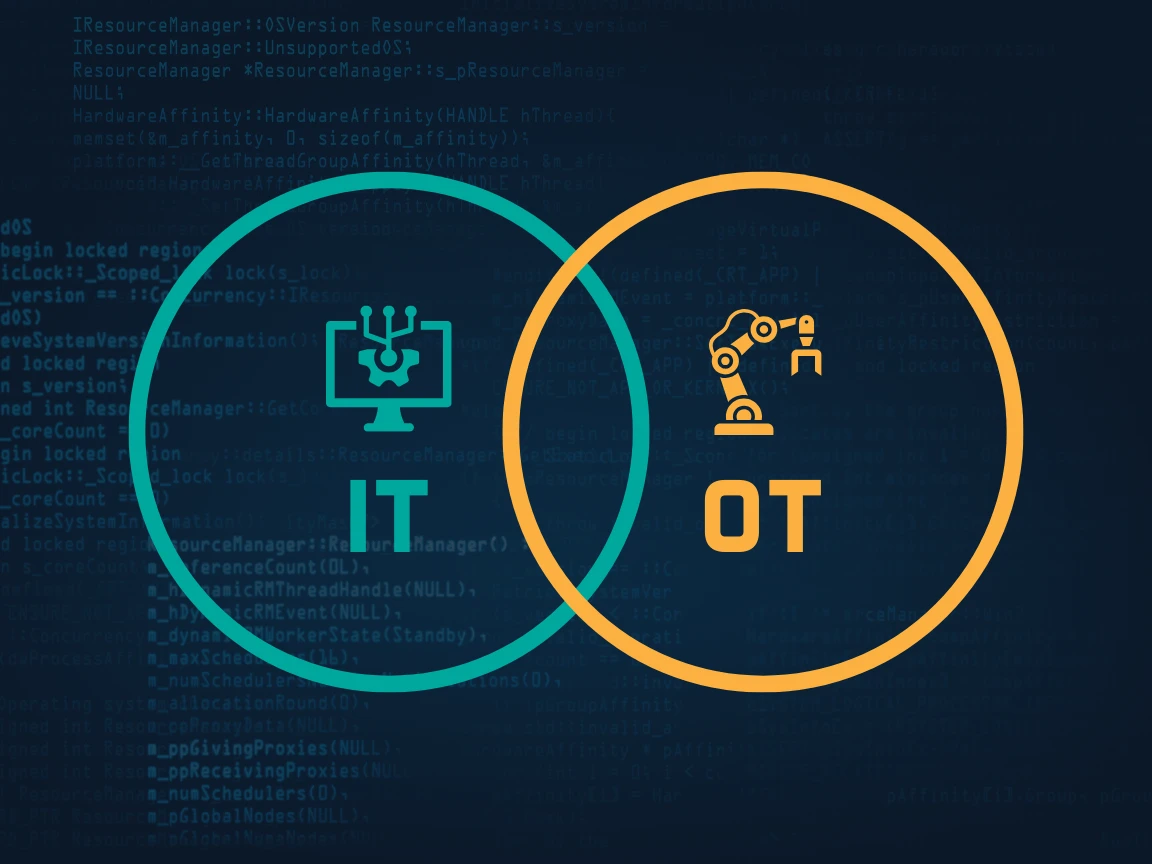
For much of their history, robots have operated as isolated systems—standalone machines performing predefined tasks within tightly controlled environments. Industrial robots were traditionally separated from enterprise information systems, while service robots functioned independently with limited connectivity and contextual awareness. This separation reflected both technological constraints and organizational silos between Information Technology (IT) and Operational Technology (OT).
However, this paradigm is rapidly changing. As robotics, artificial intelligence, cloud computing, and industrial networking technologies mature, robots are evolving into fully connected, data-driven components of larger digital ecosystems. The future of robotics lies not in isolation, but in the deep convergence of IT and OT, where robots seamlessly integrate physical operations with digital intelligence, enterprise systems, and real-time analytics.
This convergence fundamentally transforms how robots are designed, deployed, managed, and optimized. Robots become cyber-physical agents that not only act in the physical world, but also participate actively in information flows, business processes, and decision-making frameworks. This article explores the drivers, architectures, applications, benefits, challenges, and long-term implications of IT–OT integration in robotics.
1. From Isolated Machines to Connected Systems
1.1 The Legacy of Isolated Robotics
Historically, robots were engineered to maximize reliability and determinism. As a result:
- They operated in closed environments
- Communication with external systems was minimal or nonexistent
- Control logic was embedded locally
- Updates required manual intervention
This isolation reduced complexity and risk but severely limited flexibility, scalability, and intelligence.
1.2 The Rise of Connectivity and Digitalization
Modern industries demand agility, transparency, and continuous optimization. This has driven:
- Widespread adoption of industrial networking
- Integration of sensors and data platforms
- Real-time monitoring and analytics
Robots are now expected to interact with enterprise resource planning (ERP), manufacturing execution systems (MES), warehouse management systems (WMS), and cloud-based AI platforms. Isolation is no longer viable.
2. Understanding IT and OT in the Context of Robotics
2.1 Information Technology (IT)
IT focuses on data-centric systems such as:
- Enterprise software and databases
- Cloud computing and analytics
- Cybersecurity and identity management
- Business intelligence and decision support
IT systems emphasize scalability, data integrity, and interoperability.
2.2 Operational Technology (OT)
OT encompasses systems that control physical processes, including:
- Industrial control systems (ICS)
- Programmable logic controllers (PLCs)
- Sensors, actuators, and robots
- Real-time monitoring and control networks
OT prioritizes reliability, safety, and deterministic performance.
2.3 The Historical Divide
Traditionally, IT and OT evolved separately, with different:
- Architectures
- Standards
- Skill sets
- Security models
Robotics has historically belonged to the OT domain. The future demands deep integration across this divide.
3. Why IT–OT Integration Is Essential for Future Robotics
3.1 Increasing System Complexity
Robots are no longer simple mechanical tools. They now incorporate:
- Advanced perception systems
- AI-driven decision-making
- Multi-robot coordination
Managing this complexity requires integration with IT systems for data processing, orchestration, and optimization.
3.2 Demand for Real-Time Intelligence
Isolated robots lack access to:
- Enterprise-wide data
- Historical performance insights
- Predictive analytics
IT–OT integration enables robots to act based on real-time and contextual intelligence, not just local sensor input.
3.3 Scalability and Flexibility
Modern operations require robots to:
- Be deployed and updated remotely
- Adapt to changing workflows
- Scale across sites and geographies
These capabilities depend on IT infrastructure.
4. Architecture of IT–OT Integrated Robotics Systems
4.1 Cyber-Physical Systems
Integrated robots function as cyber-physical systems, tightly coupling:
- Physical actions
- Digital models
- Networked intelligence
This enables continuous feedback between the physical and digital worlds.
4.2 Edge–Cloud Collaboration
Future robotic systems leverage:
- Edge computing for real-time control and safety
- Cloud computing for AI training, analytics, and orchestration
This hybrid architecture balances responsiveness with scalability.
4.3 Digital Twins
Digital twins create virtual representations of robots and their environments, allowing:
- Simulation and optimization
- Predictive maintenance
- Scenario testing
Digital twins rely on IT–OT data integration to remain accurate and actionable.
4.4 Unified Data Platforms
Standardized data pipelines allow robots to:
- Share operational data
- Consume enterprise insights
- Participate in cross-functional workflows
This unification is a cornerstone of IT–OT convergence.
5. Applications Across Key Domains
5.1 Smart Manufacturing
In smart factories, integrated robots:
- Adjust production based on demand forecasts
- Coordinate with supply chain systems
- Optimize energy and resource usage
Robots become active participants in manufacturing strategy, not just execution.
5.2 Logistics and Supply Chains
Warehouse and delivery robots integrated with IT systems can:
- Respond dynamically to order priorities
- Optimize routes based on real-time data
- Coordinate across facilities
This integration enables end-to-end visibility and efficiency.
5.3 Energy and Utilities
Robotic inspection and maintenance systems:
- Stream data to centralized analytics platforms
- Trigger maintenance workflows automatically
- Improve reliability of critical infrastructure
5.4 Healthcare and Medical Robotics
Integrated medical robots:
- Access patient data securely
- Adapt procedures based on clinical systems
- Feed performance data back into care optimization platforms
5.5 Construction and Infrastructure
Robots on construction sites:
- Integrate with project management software
- Adapt schedules based on progress data
- Enhance safety through real-time monitoring
6. Benefits of Deep IT–OT Integration in Robotics
6.1 Enhanced Autonomy and Intelligence
Access to enterprise data and analytics allows robots to:
- Make context-aware decisions
- Plan actions aligned with business objectives
6.2 Operational Transparency
Integrated systems provide:
- Real-time visibility into robot performance
- Unified monitoring across assets
6.3 Continuous Optimization
Data-driven feedback loops enable:
- Predictive maintenance
- Performance tuning
- Process improvement
6.4 Scalability and Resilience
IT–OT integration supports:
- Remote deployment and management
- Rapid scaling
- Improved fault tolerance
7. Cybersecurity and Risk Considerations
7.1 Expanded Attack Surface
Connectivity increases exposure to cyber threats. Protecting integrated robots requires:
- Zero-trust architectures
- Secure communication protocols
- Continuous monitoring
7.2 Safety and Reliability
Cyber incidents can have physical consequences. IT–OT integration must ensure:
- Deterministic control
- Fail-safe mechanisms
- Separation of critical safety functions
7.3 Governance and Compliance
Organizations must address:
- Data privacy regulations
- Industry safety standards
- Cross-domain accountability
8. Organizational and Workforce Implications
8.1 Breaking Down Silos
IT–OT convergence requires collaboration between:
- Software engineers
- Automation specialists
- Data scientists
- Operations teams
8.2 New Skill Requirements
Future robotics professionals must understand:
- Networking and cloud platforms
- Data analytics and AI
- Industrial safety and control systems
8.3 Human–Robot Collaboration
Integrated robots enhance collaboration by:
- Sharing information transparently
- Aligning actions with human workflows
9. Case Studies
9.1 Smart Factory Robotics
Manufacturers deploying IT–OT integrated robots report:
- Reduced downtime through predictive maintenance
- Faster changeovers
- Improved product quality
9.2 Warehouse Automation
E-commerce companies integrate robotic fleets with enterprise systems, enabling:
- Dynamic task allocation
- Real-time performance optimization
9.3 Infrastructure Inspection
Robotic inspection systems integrated with asset management platforms extend asset life and reduce operational risk.
10. The Future of Integrated Robotics
10.1 Toward Autonomous Enterprises
Robots will increasingly act as intelligent nodes within autonomous enterprises, executing physical tasks aligned with digital strategy.
10.2 Multi-Agent, Multi-System Coordination
Robots, software agents, and humans will operate as coordinated ecosystems rather than isolated units.
10.3 Standardization and Interoperability
Open standards will accelerate adoption and reduce integration complexity.
Conclusion
The future of robotics lies in deep integration with Information Technology and Operational Technology. Robots will no longer function as isolated machines executing narrow tasks, but as intelligent, connected agents embedded within enterprise-wide digital ecosystems.
By converging IT and OT, organizations unlock unprecedented levels of autonomy, efficiency, transparency, and adaptability. While challenges in cybersecurity, safety, and organizational change remain, the benefits far outweigh the risks.
As this integration matures, robots will become strategic assets—bridging the physical and digital worlds, transforming operations, and redefining how work is designed and executed. The era of isolated robotics is ending, giving way to a future defined by connected, intelligent, and deeply integrated robotic systems.