









Introduction
Throughout human history, major technological revolutions have fundamentally reshaped economic structures, social organization, and the relationship between labor and capital. The agricultural revolution anchored societies around land and manual labor; the industrial revolution introduced mechanization and mass production; the information revolution digitized knowledge and accelerated globalization. Today, humanity stands at the threshold of a new transformation—one driven by artificial intelligence and robotics, where autonomous machines are not merely tools, but increasingly active participants in economic and social systems.
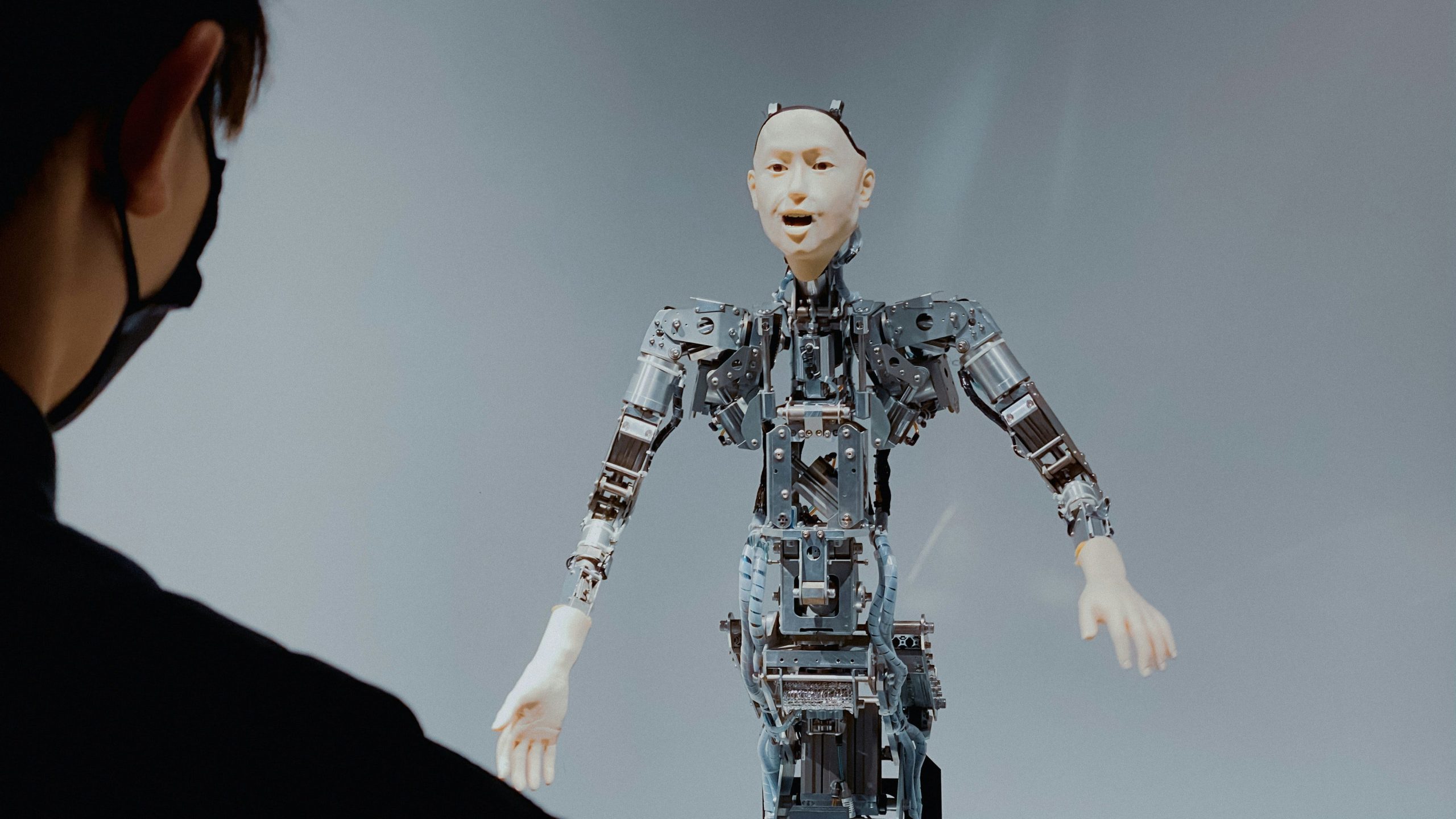
In forward-looking scenarios, it is no longer speculative to suggest that the number of robots may eventually exceed the global human population. This does not imply humanoid machines replacing people one-to-one, but rather the large-scale proliferation of industrial robots, service robots, autonomous vehicles, delivery units, domestic assistants, and embedded robotic systems operating across factories, cities, homes, and digital-physical infrastructures. As robots multiply, their collective presence may reshape global productivity, capital flows, labor structures, and even the foundational logic of economic growth.
This article explores the implications of a future in which robots numerically surpass humans and examines how such a shift could propel the global economy into a fundamentally new stage. From macroeconomic transformation and labor restructuring to capital dynamics, governance challenges, and long-term societal evolution, the analysis aims to provide a comprehensive and professional perspective on one of the most profound transitions of the 21st century.
1. The Technological Foundations of a Robot-Dense Future
1.1 Exponential Growth in Robotics Deployment
The possibility of robots outnumbering humans rests on several reinforcing technological trends:
- Cost Reduction: Advances in semiconductor manufacturing, sensor miniaturization, and mass production are rapidly lowering the cost of robotic hardware.
- AI Maturity: Machine learning, computer vision, and reinforcement learning enable robots to operate autonomously in unstructured environments.
- Modular Design: Standardized robotic modules allow rapid scaling, customization, and replication across industries.
- Cloud and Edge Computing: Distributed intelligence allows large robot fleets to share knowledge, learn collectively, and improve performance over time.
Unlike human population growth, which is constrained by biological and demographic limits, robot populations can expand exponentially, driven by investment cycles, industrial demand, and software scalability.
1.2 From Individual Machines to Robot Ecosystems
Future robots will not exist as isolated units. Instead, they will function as part of networked ecosystems:
- Factory floors populated by thousands of coordinated robotic arms.
- Cities supported by fleets of autonomous delivery robots, cleaners, inspectors, and maintenance units.
- Homes containing multiple specialized domestic robots embedded into everyday infrastructure.
- Digital twins and AI platforms coordinating robot behavior across regions and industries.
When counted collectively, such distributed systems could easily surpass human population numbers without any single robot resembling a human being.
2. Redefining Economic Growth in a Robot-Dominant World
2.1 Productivity Beyond Human Limitations
A robot-dense economy fundamentally alters the nature of productivity:
- Continuous Operation: Robots do not require rest, sleep, or retirement.
- Consistency and Precision: Performance does not degrade due to fatigue or emotion.
- Scalable Replication: Successful robotic systems can be duplicated instantly across locations.
As robot populations increase, economic output becomes progressively decoupled from human labor availability. Growth is driven instead by capital investment, software intelligence, and energy efficiency.
2.2 Transition from Labor-Constrained to Capital-Intelligence Economies
Historically, labor has been a central constraint on economic growth. In a robot-dominated future:
- Labor shortages become less relevant.
- Productivity scales with robot density per unit of capital rather than workers per factory.
- Nations and corporations compete on access to energy, AI models, data, and robotics ecosystems.
This shift marks a transition from labor-based economics to capital- and intelligence-based economics, redefining competitive advantage on a global scale.
3. Labor Markets in a World Where Robots Are Numerically Dominant
3.1 The End of Labor as the Primary Production Bottleneck
As robots outnumber humans, many traditional roles disappear or transform:
- Repetitive manufacturing, logistics, and administrative tasks become fully automated.
- Human labor concentrates on design, governance, creativity, strategy, and interpersonal services.
- Employment becomes less about physical output and more about value orchestration.
Rather than mass unemployment, the deeper challenge becomes economic relevance and income distribution.
3.2 Human Roles in a Robot-Abundant Economy
Humans remain central, but in different capacities:
- System Designers: Architects of robotic platforms, AI models, and economic frameworks.
- Supervisors and Ethicists: Ensuring safe, fair, and aligned robotic behavior.
- Creative and Social Contributors: Roles requiring empathy, cultural understanding, and originality.
- Decision Authorities: Humans retain ultimate accountability for economic and political decisions.
Work shifts from execution to direction, meaning, and governance.
4. Capital Accumulation and the Rise of Robotic Capitalism
4.1 Robots as Capital, Not Labor
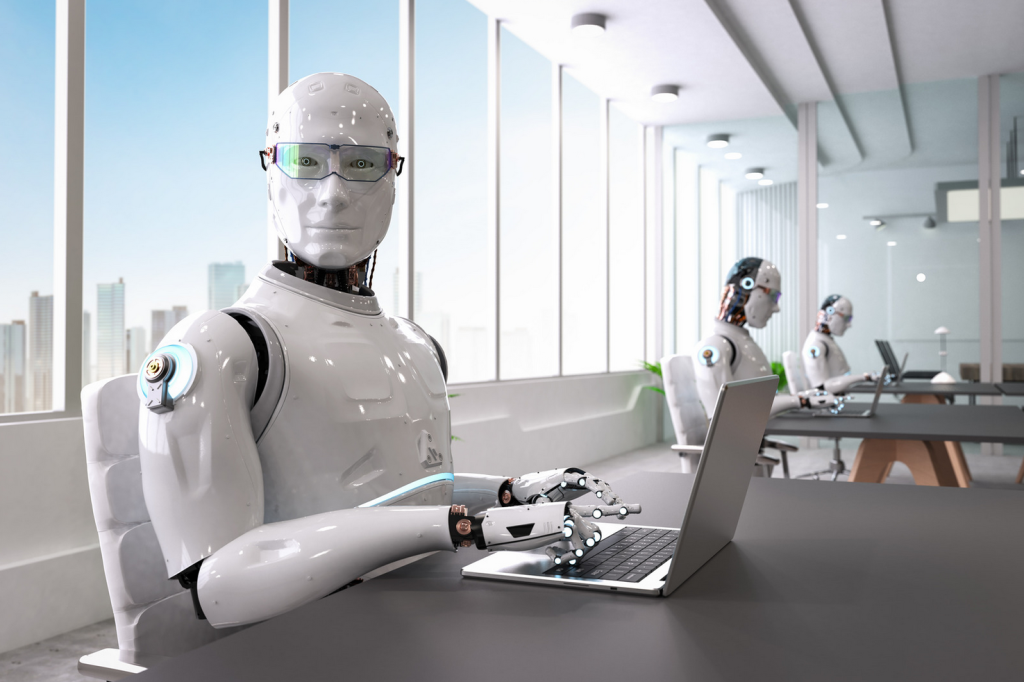
Economically, robots function as capital assets:
- They generate returns through productivity gains.
- They depreciate, require maintenance, and improve through software updates.
- Ownership determines who benefits from automation.
As robot populations grow, returns to capital may accelerate, potentially increasing wealth concentration if left unmanaged.
4.2 Financial Systems in a Robot-Dense Economy
Key transformations include:
- Robotics becoming a core asset class alongside real estate and equities.
- Widespread adoption of Robot-as-a-Service (RaaS) models.
- Data generated by robots becoming a monetizable economic resource.
- Energy markets gaining strategic importance as robotic populations scale.
Financial markets increasingly price not just companies, but robot density, autonomy levels, and AI capability.
5. Global Economic Structure and Geopolitical Implications
5.1 Shifting Comparative Advantages
In a world where robots outnumber humans:
- Low-cost labor advantages diminish.
- Countries with advanced robotics, AI, and energy infrastructure gain dominance.
- Manufacturing reshoring becomes economically viable due to automation.
Global trade patterns shift from labor arbitrage to technology and capital optimization.
5.2 Strategic Competition Over Robotics Ecosystems
Geopolitical competition intensifies around:
- Semiconductor supply chains.
- AI training infrastructure and data access.
- Robotics standards and interoperability frameworks.
- Energy security to power large robot populations.
Robotics becomes not just an economic factor, but a strategic pillar of national power.
6. Social Structures in a World Where Robots Are Everywhere
6.1 Daily Life in High-Robot-Density Societies
As robots become ubiquitous:
- Cities operate with autonomous maintenance, sanitation, and logistics.
- Homes rely on robots for domestic work, monitoring, and assistance.
- Public services integrate robots into healthcare, transportation, and safety.
Humans interact with robots as frequently as they once interacted with infrastructure.
6.2 Psychological and Cultural Impacts
High robot density influences social norms:
- Shifts in how humans perceive work, purpose, and identity.
- Redefinition of productivity and contribution.
- New cultural narratives around coexistence with intelligent machines.
Societies must actively shape these narratives to maintain human dignity and agency.
7. Governance, Ethics, and Systemic Risks
7.1 Managing Autonomous Scale
When robot populations exceed human numbers, governance becomes critical:
- Ensuring safety across billions of autonomous agents.
- Preventing systemic failures caused by software bugs or cyberattacks.
- Establishing accountability for autonomous economic actions.
Regulation must evolve from reactive control to system-level oversight.
7.2 Ethical Distribution of Robotic Wealth
Key policy questions emerge:
- Who owns the robots?
- How are the gains from automation distributed?
- Should societies implement universal basic income or automation dividends?
- How do we prevent permanent economic exclusion?
Without intentional design, robot abundance could amplify inequality rather than eliminate scarcity.
8. A New Stage of Global Economic Development
8.1 From Scarcity to Managed Abundance
Robot-dominated economies have the potential to:
- Dramatically reduce the cost of goods and services.
- Increase global productive capacity beyond historical limits.
- Enable sustainable resource optimization through precision automation.
Economic growth becomes less about extraction and more about optimization and coordination.
8.2 Redefining the Purpose of the Economy
As robots handle most production:
- The economy shifts from survival-driven to value-driven.
- Human well-being, education, creativity, and sustainability gain prominence.
- Success metrics evolve beyond GDP toward quality of life and resilience.
This transition represents not just a new economic stage, but a civilizational shift.
9. Long-Term Vision: Humans and Robots as Co-Evolving Agents
9.1 Symbiosis, Not Replacement
The future is not one where robots replace humanity, but where:
- Robots amplify human potential.
- Humans guide the ethical and strategic direction of automation.
- Co-evolution leads to more adaptive and resilient societies.
The key challenge lies not in robot numbers, but in human governance of abundance.
9.2 Designing a Human-Centered Robotic Civilization
To succeed, future societies must:
- Embed human values into AI and robotic systems.
- Ensure inclusive access to automation benefits.
- Maintain human agency, creativity, and purpose.
- Balance efficiency with meaning.
The question is not whether robots will outnumber humans—but what kind of world humans choose to build with them.
Conclusion
In future visions where robots may “outnumber humans,” the global economy enters an unprecedented stage of development. Productivity decouples from human labor, capital and intelligence redefine growth, and societies confront both extraordinary opportunity and profound responsibility.
Robots, in overwhelming numbers, could enable abundance, sustainability, and resilience—or deepen inequality and systemic risk. The outcome depends not on technology itself, but on economic design, governance choices, and human values.
If guided wisely, a robot-dense future may represent humanity’s transition from an age of constraint to an age of coordination—where intelligent machines handle scarcity, and humans focus on meaning, creativity, and collective progress.