









Introduction
The evolution of robotics and intelligent systems is entering a decisive structural transformation. While early generations of robots were dominated by tightly coupled hardware and narrowly defined functionality, the next phase of development is increasingly shaped by modular hardware architectures combined with software-defined capabilities. This shift represents not merely an incremental engineering improvement, but a fundamental rethinking of how robotic systems are designed, deployed, upgraded, and scaled.
In the emerging intelligent economy, robots are expected to operate across diverse environments—factories, homes, hospitals, warehouses, and cities—while adapting to rapidly changing tasks and requirements. Fixed-function, monolithic robotic systems are ill-suited to this level of complexity. Instead, modularity and software abstraction are becoming the dominant paradigm, enabling robots to evolve over time, integrate new capabilities, and respond dynamically to real-world conditions.
This article explores why modular hardware combined with software-defined capability is becoming the mainstream architecture for robotics and intelligent physical systems. It examines technological drivers, architectural principles, economic advantages, industry impacts, and long-term societal implications. Together, these forces are reshaping robotics into a platform-based, upgradeable, and intelligence-centric infrastructure for the physical world.
1. From Monolithic Machines to Modular Systems
1.1 The Legacy of Monolithic Robotic Design
Historically, robotic systems were designed as monolithic entities:
- Hardware and software were tightly integrated
- Functionality was fixed at the time of manufacturing
- Reconfiguration required physical redesign or replacement
- Software updates were limited or non-existent
This approach made sense when computing power was scarce, sensors were expensive, and robots operated in controlled environments. Reliability and predictability were prioritized over flexibility.
1.2 Structural Limitations of Monolithic Architectures
As application domains expanded, monolithic systems revealed serious limitations:
- Low adaptability to new tasks or environments
- High upgrade costs, often requiring full system replacement
- Slow innovation cycles, constrained by hardware redesign timelines
- Capital inefficiency, with underutilized or obsolete hardware
These constraints became increasingly incompatible with fast-changing economic and technological conditions.
2. The Rise of Modular Hardware Architectures
2.1 What Is Modular Hardware in Robotics?
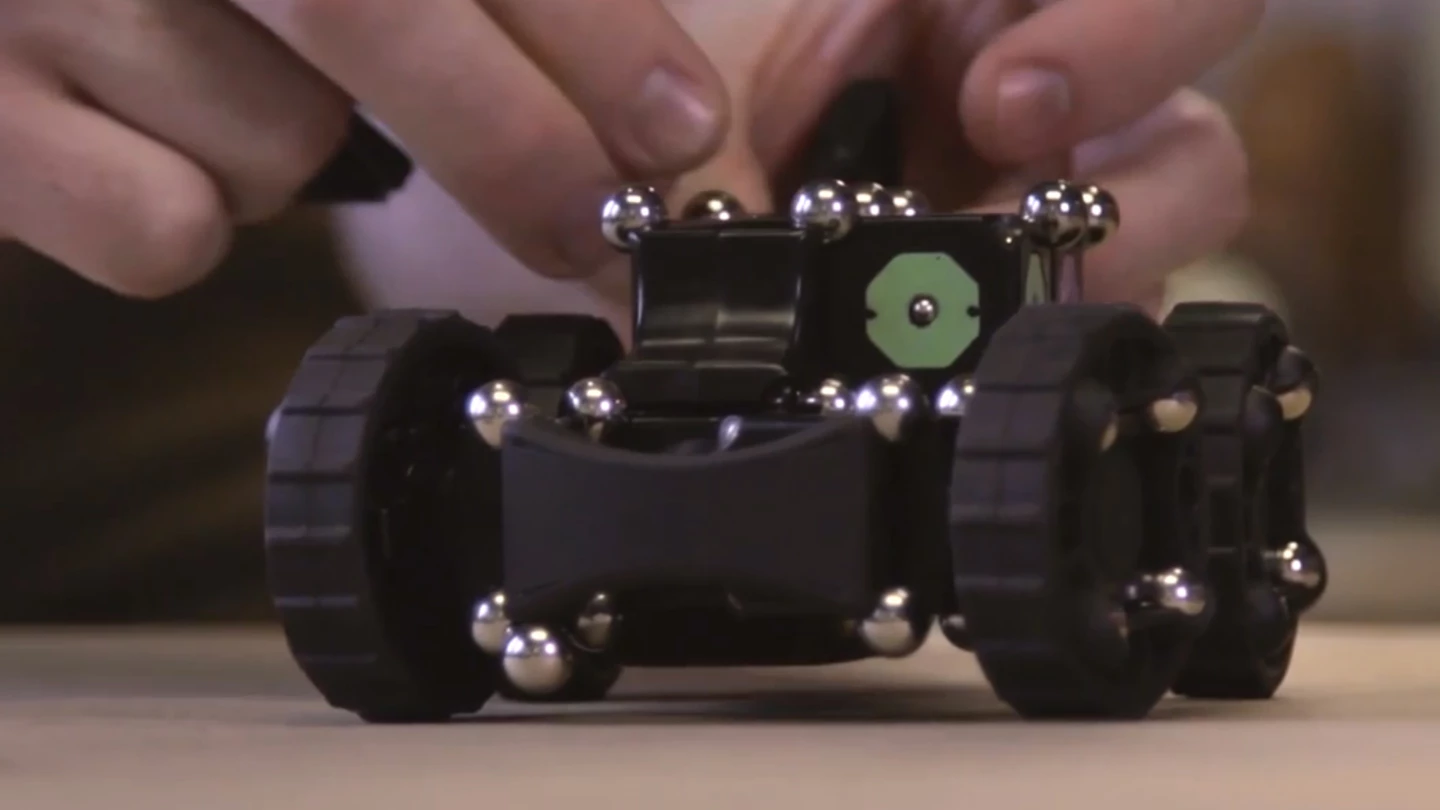
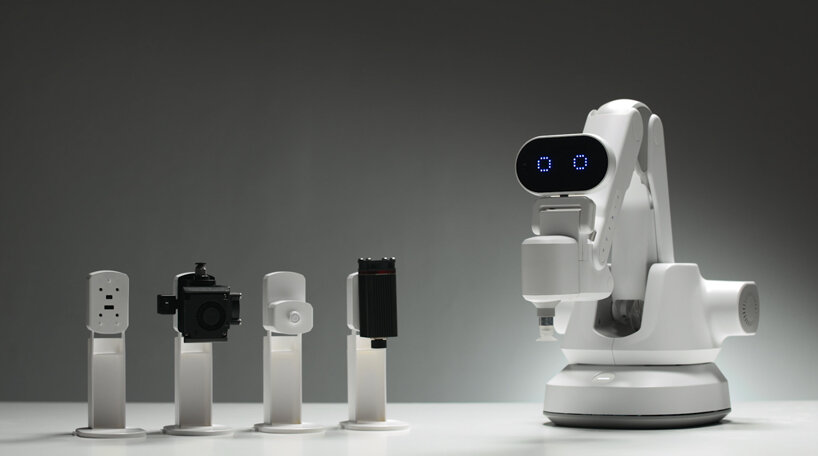
Modular hardware refers to the design of robotic systems as assemblies of standardized, interchangeable components, such as:
- Actuator modules (joints, motors)
- Sensor modules (vision, force, tactile)
- End-effectors (grippers, tools)
- Mobility bases (wheeled, legged, tracked)
- Power and communication modules
Each module is designed with standardized interfaces, enabling flexible configuration and rapid replacement.
2.2 Engineering Advantages of Modularity
Modular hardware offers several key benefits:
- Rapid customization without full redesign
- Easier maintenance and repair, reducing downtime
- Parallel development, allowing teams to innovate independently
- Scalability, from small service robots to industrial platforms
Modularity transforms hardware from a rigid constraint into a flexible building block.
2.3 Hardware as a Long-Lived Asset
In modular systems, hardware becomes a durable infrastructure:
- Components can be reused across generations
- Obsolete modules can be swapped without discarding the entire system
- Physical platforms remain relevant longer
This fundamentally changes the economics of robotics investment.
3. Software-Defined Capability: The Core Enabler
3.1 Defining Software-Defined Robotics
Software-defined robotics means that robot functionality is primarily determined by software rather than hardware configuration. Key characteristics include:
- Task logic abstracted from physical components
- Behavior defined through software updates
- Capabilities upgraded via algorithms and models
- Intelligence distributed across edge and cloud systems
This mirrors the evolution of software-defined networking and computing.
3.2 Decoupling Hardware and Function
By separating hardware from capability:
- The same robot can perform different tasks at different times
- New applications can be deployed without hardware changes
- Developers focus on software innovation rather than mechanical redesign
This decoupling is essential for scalability and ecosystem growth.
3.3 AI as the Engine of Software-Defined Capability
Artificial intelligence plays a central role:
- Machine learning enables generalization across tasks
- Perception models adapt to new environments
- Reinforcement learning supports continuous skill acquisition
- Foundation models allow cross-domain knowledge transfer
AI transforms robots from deterministic machines into adaptive systems.
4. Architectural Principles of Modular, Software-Defined Systems
4.1 Layered System Architecture
Modern robotic platforms typically adopt layered architectures:
- Hardware Abstraction Layer – Standardized access to modules
- Control Layer – Motion planning, force control, safety
- Perception Layer – Vision, localization, sensor fusion
- Cognitive Layer – Task reasoning, decision-making
- Application Layer – Domain-specific behaviors
Clear abstraction boundaries enable reuse, scalability, and maintainability.
4.2 Standard Interfaces and Interoperability
Standardization is critical:
- Mechanical interfaces
- Electrical connectors
- Communication protocols
- Software APIs
Interoperability enables multi-vendor ecosystems and accelerates innovation.
4.3 Skill-Based Software Models
Instead of task-specific code, systems rely on:
- Reusable skill primitives (grasp, navigate, inspect)
- Parameterized behaviors adaptable to context
- Learning-based generalization
This allows rapid deployment of new applications.
5. Economic Drivers Behind the Shift
5.1 Capital Efficiency and ROI
Modular, software-defined robots deliver:
- Higher utilization rates
- Longer asset lifecycles
- Reduced replacement costs
Organizations invest once in a platform and expand capability over time.
5.2 Reduced Total Cost of Ownership
While initial costs may be higher, long-term savings arise from:
- Lower maintenance costs
- Fewer specialized machines
- Software-based upgrades
This economic logic strongly favors platform-based systems.
5.3 Enabling New Business Models
The architecture supports new models such as:
- Robot-as-a-Service (RaaS)
- Subscription-based software capabilities
- App stores for robotic skills
Robotics begins to resemble the software economy.
6. Industry-Wide Impact and Adoption
6.1 Manufacturing and Industrial Automation
In industry, modular and software-defined robots enable:
- Rapid reconfiguration of production lines
- Small-batch and customized manufacturing
- Human-robot collaboration
Factories become adaptive systems rather than rigid pipelines.
6.2 Logistics and Warehousing
In logistics, platforms can:
- Pick, transport, sort, and inspect
- Adapt to changing inventory and layouts
- Scale across facilities
This replaces fleets of single-function machines.
6.3 Healthcare and Medical Robotics
In healthcare, modular systems support:
- Surgical assistance
- Hospital logistics
- Rehabilitation and monitoring
Software updates enable compliance and continuous improvement.
6.4 Service, Domestic, and Urban Robots
In homes and cities, flexibility is essential:
- Diverse environments
- Changing user needs
- Long service lifecycles
Modular, software-defined robots are the only viable approach.
7. Developer Ecosystems and Innovation Acceleration
7.1 From Product-Centric to Platform-Centric Innovation
Innovation shifts from hardware products to:
- Platforms and ecosystems
- Third-party developers
- Open APIs and SDKs
This dramatically accelerates the pace of innovation.
7.2 Network Effects in Robotics
As platforms grow:
- More developers build skills
- More applications attract users
- Data improves learning models
Network effects reinforce platform dominance.
8. Workforce and Organizational Transformation
8.1 Changing Skill Requirements
Demand shifts toward:
- Systems integration
- AI and data science
- Software deployment and lifecycle management
Mechanical specialization alone is no longer sufficient.
8.2 Human Roles in Software-Defined Robotics
Humans increasingly act as:
- Supervisors and orchestrators
- Goal setters and exception handlers
- Ethical and safety authorities
Robots execute; humans define intent.
9. Governance, Safety, and Standardization
9.1 Adaptive Safety Frameworks
Software-defined robots require:
- Context-aware safety systems
- Dynamic risk assessment
- Continuous monitoring
Safety becomes a software and systems problem, not just a mechanical one.
9.2 Regulatory Implications
Regulators must adapt to:
- Continuously updating systems
- Learning-based behavior
- Cross-domain deployment
Certification models evolve toward lifecycle-based oversight.
10. Challenges and Open Issues
10.1 Complexity Management
Modularity increases system complexity:
- Integration challenges
- Debugging across layers
- Dependency management
Strong system engineering is essential.
10.2 Security Risks
Software-defined systems increase attack surfaces:
- Cybersecurity becomes mission-critical
- Secure update mechanisms are required
- Hardware trust anchors gain importance
11. Long-Term Vision: Robotics as Physical Infrastructure
11.1 Convergence with Physical Intelligence
As modular platforms integrate causal reasoning and world models:
- Robots become general physical agents
- Capable of learning new tasks autonomously
- Operating safely across domains
This marks the emergence of physical intelligence infrastructure.
11.2 From Machines to Adaptive Systems
Robots evolve from static machines into:
- Continuously improving systems
- Shared societal infrastructure
- Long-term partners in economic activity
Conclusion
The convergence of modular hardware and software-defined capability is not a transient trend—it is becoming the dominant architecture of modern robotics. This paradigm enables flexibility, scalability, economic efficiency, and continuous innovation, addressing the limitations of monolithic, single-function machines.
As robotics expands into every sector of society, only systems that can evolve over time will remain viable. Modular, software-defined robots provide a foundation for this evolution, transforming robotics from a collection of specialized tools into a dynamic, intelligent infrastructure for the physical world.
In the coming decades, the most valuable robotic systems will not be those designed for a single task, but those designed to change, adapt, and grow alongside human needs.