









Introduction
For most of human history, tools have been passive instruments—extensions of human intent that act only when directly controlled. From stone axes to industrial machines, tools have amplified human capability while remaining fundamentally subordinate and disposable. Early robots, despite their sophistication, largely followed this same paradigm. They were programmable machines designed to execute predefined tasks with precision, efficiency, and repeatability, but without autonomy, continuity, or relational context.
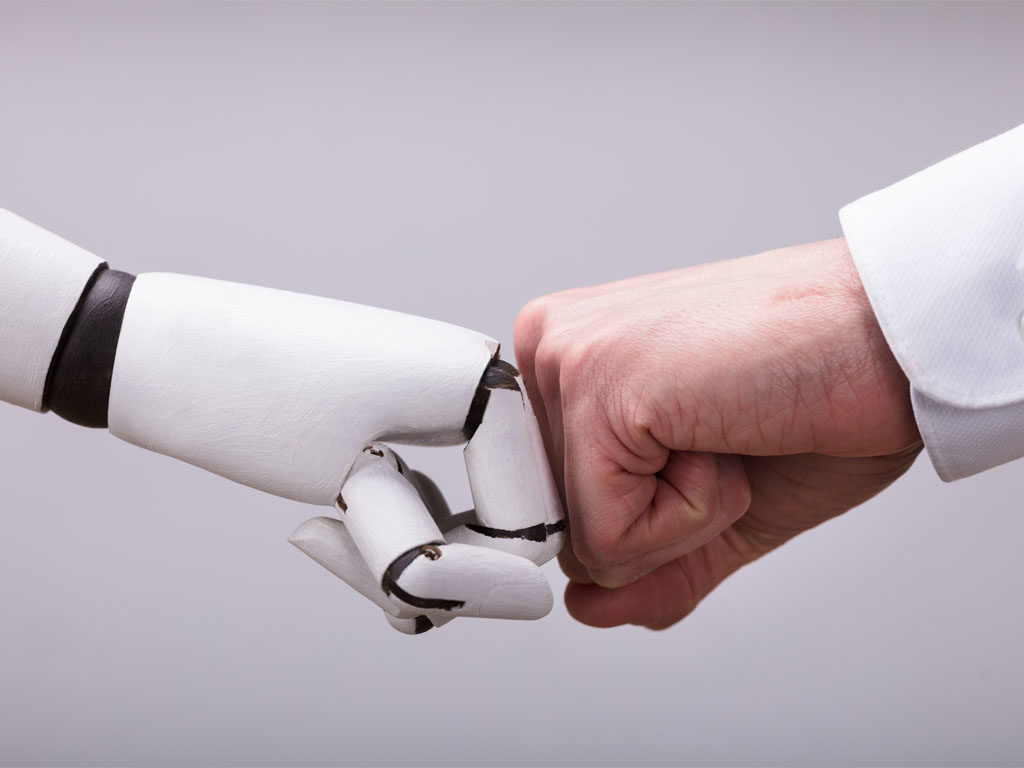
Today, this paradigm is undergoing a profound transformation. As artificial intelligence, embodied cognition, and system-level integration advance, robots are no longer limited to acting as short-lived, task-specific instruments. Instead, they are increasingly designed to operate as long-term collaborative entities—persistent partners that learn over time, adapt to human behavior, share environments with people, and participate continuously in workflows, households, and institutions.
This shift from “tool” to “collaborative entity” marks one of the most significant conceptual transitions in the history of robotics. It redefines the role of machines in economic production, social organization, and daily life. Robots are no longer merely used; they are worked with. This article explores the technological, economic, and societal forces driving this transition, examines its implications across industries, and analyzes how long-term human-robot collaboration will reshape the future of intelligent systems and human society.
1. The Traditional View of Robots as Tools
1.1 Characteristics of Tool-Oriented Robotics
Historically, robots have been designed with tool-like characteristics:
- Task specificity: Optimized for a narrow set of functions
- Limited autonomy: Operating under predefined rules or scripts
- Short interaction horizons: Reset after each task cycle
- Replaceability: Treated as interchangeable equipment
This model aligns well with manufacturing environments, where predictability and control are paramount.
1.2 Why the Tool Paradigm Is Becoming Insufficient
As robots move into unstructured environments—homes, hospitals, service industries—the tool paradigm reveals its limits:
- Tasks are variable and context-dependent
- Human behavior is unpredictable
- Environments change continuously
- Value emerges over long time horizons
In such settings, robots must adapt, remember, and coordinate rather than merely execute.
2. Defining the “Long-Term Collaborative Entity”
2.1 What Does Long-Term Collaboration Mean?
A long-term collaborative robot is not defined by emotional attachment or anthropomorphism, but by persistent functional partnership. Key characteristics include:
- Continuous operation over extended periods
- Learning from repeated interactions
- Accumulating context and shared experience
- Coordinating actions with humans and other agents
- Adapting goals and behavior dynamically
The robot becomes part of an ongoing system rather than a transient instrument.
2.2 Collaboration vs. Automation
Automation focuses on replacing human effort. Collaboration focuses on complementing human capabilities. In collaborative systems:
- Humans provide goals, judgment, and values
- Robots provide execution, consistency, and scalability
- Decision-making is distributed rather than centralized
This distinction is central to understanding the new role of robots.
3. Technological Foundations Enabling Long-Term Collaboration
3.1 Advances in Artificial Intelligence
Several AI breakthroughs underpin this evolution:
- Continual learning allows robots to improve without retraining from scratch
- World models enable prediction and planning over long time horizons
- Causal reasoning helps robots understand consequences of actions
- Multimodal perception supports richer interaction with humans
These capabilities allow robots to maintain coherence and competence over extended collaboration.
3.2 Memory and Identity in Robotic Systems
Long-term collaboration requires memory:
- Episodic memory of past interactions
- Semantic memory of tasks, environments, and users
- Procedural memory of learned skills
With memory comes a form of system identity, enabling robots to behave consistently and predictably over time.
3.3 Embodied Intelligence and Adaptation
Physical embodiment plays a crucial role:
- Robots learn through interaction, not just data ingestion
- Physical experience grounds abstract reasoning
- Adaptation occurs at both software and hardware levels
Embodiment transforms robots into participants in shared reality.
4. Human-Robot Collaboration in the Workplace
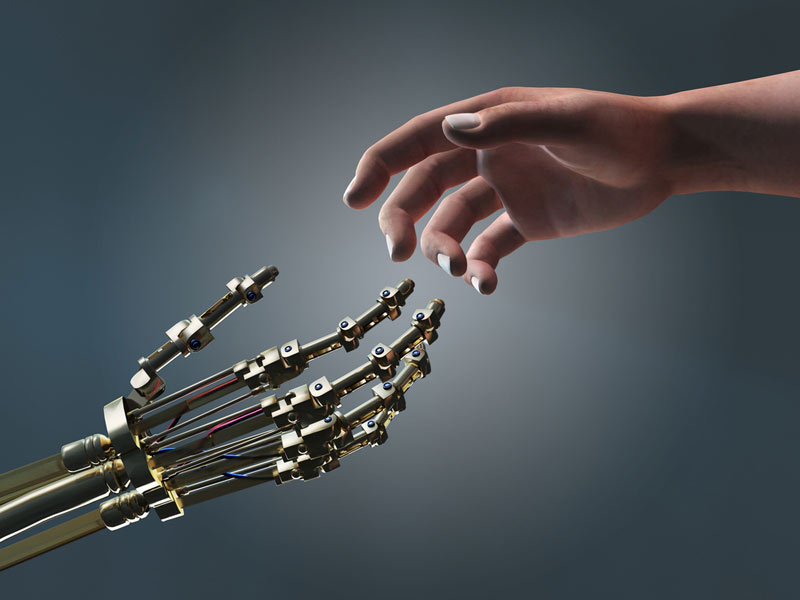
4.1 From Co-Location to Co-Agency
Early collaborative robots (cobots) focused on safety and proximity. The next stage emphasizes co-agency:
- Shared task planning
- Dynamic role allocation
- Mutual adaptation
Robots are no longer assistants waiting for commands, but partners contributing proactively.
4.2 Long-Term Collaboration in Manufacturing
In advanced manufacturing environments:
- Robots learn operator preferences and workflows
- Production lines adapt continuously
- Human workers focus on oversight and creativity
The robot becomes a stable member of the production team.
4.3 Knowledge Accumulation and Organizational Memory
Collaborative robots retain institutional knowledge:
- Best practices
- Failure modes
- Optimization strategies
This persistent memory enhances organizational resilience and efficiency.
5. Service and Healthcare Robots as Collaborative Entities
5.1 Healthcare: Trust and Continuity
In healthcare, long-term collaboration is essential:
- Robots assist nurses and physicians over extended periods
- Patient-specific data informs personalized care
- Consistency improves safety and outcomes
Robots become part of the care team, not temporary tools.
5.2 Elder Care and Assisted Living
For aging populations:
- Robots support daily activities
- Monitor health trends over time
- Provide continuity that human staffing shortages cannot
The value lies in sustained presence, not isolated tasks.
5.3 Ethical Dimensions of Persistent Collaboration
Long-term interaction raises ethical considerations:
- Privacy of accumulated data
- Transparency of learning and adaptation
- Respect for human autonomy
Ethical design must be embedded at the system level.
6. Domestic Robots and Long-Term Coexistence
6.1 From Appliances to Household Members
Domestic robots are evolving from single-function appliances to integrated household systems:
- Learning household routines
- Coordinating with smart home infrastructure
- Adapting to lifestyle changes
Their value increases with time and familiarity.
6.2 Social and Psychological Considerations
Long-term presence affects human behavior:
- Expectations of reliability and trust
- Emotional responses to consistent interaction
- Redefinition of responsibility and care
Design must avoid unhealthy dependency while supporting positive interaction.
7. Economic Implications of Long-Term Robotic Collaboration
7.1 Robots as Long-Lived Capital Assets
Collaborative robots differ economically from traditional machines:
- Value accumulates over time through learning
- Replacement costs increase due to lost knowledge
- Investment shifts from hardware to capability development
Robots become strategic assets rather than consumables.
7.2 Productivity Through Partnership
Collaboration enables:
- Higher-quality outcomes
- Reduced error rates
- Continuous optimization
Productivity gains emerge from synergy, not substitution.
7.3 New Business and Ownership Models
Long-term collaboration supports:
- Subscription-based robotics
- Capability licensing
- Shared robot infrastructure
Economic models adapt to persistent machine participation.
8. Governance, Responsibility, and Accountability
8.1 Shared Responsibility Models
As robots gain agency:
- Responsibility is distributed across designers, operators, and organizations
- Clear accountability frameworks are required
- Decision logs and explainability become critical
Governance must evolve alongside capability.
8.2 Regulation for Persistent Systems
Regulatory approaches must address:
- Continuous learning systems
- Cross-domain deployment
- Long-term data retention
Static certification models are no longer sufficient.
9. Cultural and Social Transformation
9.1 Redefining the Human-Machine Relationship
The shift to collaboration changes cultural narratives:
- From control to cooperation
- From replacement to partnership
- From fear to integration
Societal acceptance depends on shared understanding and trust.
9.2 Education and Skill Development
Humans must learn to work with collaborative entities:
- High-level task specification
- System supervision
- Ethical judgment
Education systems adapt accordingly.
10. Challenges and Risks
10.1 Over-Reliance and Skill Atrophy
Persistent collaboration risks:
- Human over-dependence
- Loss of manual or cognitive skills
Design must preserve human agency and competence.
10.2 Alignment and Long-Term Behavior Drift
Learning systems may drift over time:
- Misalignment with original goals
- Unintended behavior patterns
Continuous oversight and alignment mechanisms are essential.
11. Long-Term Vision: Robots as Stable Partners in Society
11.1 From Machines to Participants
In the long term, robots become:
- Participants in economic systems
- Contributors to organizational memory
- Stable elements of social infrastructure
Their presence reshapes how societies function.
11.2 Co-Evolution of Humans and Robots
Humans and robots evolve together:
- Technologies shape social norms
- Social values shape technological design
- Collaboration becomes a defining feature of civilization
This co-evolution defines the next stage of intelligent systems.
Conclusion
The transition of robots from “tools” to “long-term collaborative entities” represents a fundamental redefinition of their role in human society. Enabled by advances in artificial intelligence, embodied cognition, and system architecture, robots are becoming persistent partners that learn, adapt, and contribute over time. Their value no longer lies solely in task execution, but in sustained collaboration, shared knowledge, and mutual adaptation.
This shift carries profound implications for industry, healthcare, domestic life, and governance. It challenges existing economic models, ethical frameworks, and cultural assumptions. Yet, if guided thoughtfully, long-term collaboration between humans and robots offers the potential for more resilient organizations, more humane technologies, and a future in which intelligent machines amplify rather than diminish human agency.
In this emerging paradigm, robots are no longer merely used—they are collaborated with, shaping a future defined not by automation alone, but by enduring partnership.